
Working in front of the computer all day long, the work matters are as dense as a pile of rubbish, there are many emails, continuous meetings, temporary tasks that suddenly appear, etc… Do you feel that your brain is like a drawer full of clutter, with important things always at the bottom, and you will miss them all if you are not careful? Such chaos not only affects work efficiency, but can also cause anxiety for no reason. A study cited in the Harvard Business Review shows that interruptions and forgotten tasks are one of the main causes of increased stress and reduced productivity in the workplace. Fortunately, an efficient desktop to-do list tool can help you transform chaos into order, making your daily work priorities clear. Now, we set out to evaluate several mainstream desktop task reminder tools to see which one can fulfill your role of "desktop productivity manager" best.
Before we get started, let’s clarify the criteria for a good tool: it should be intuitive, non-intrusive, easy to use and integrate seamlessly into your workflow without adding additional management burden. The ideal tool is one that allows you to spend the least time managing tasks and put the most energy into the tasks themselves.
The comprehensive evaluation ranking is as follows:
★★★★★
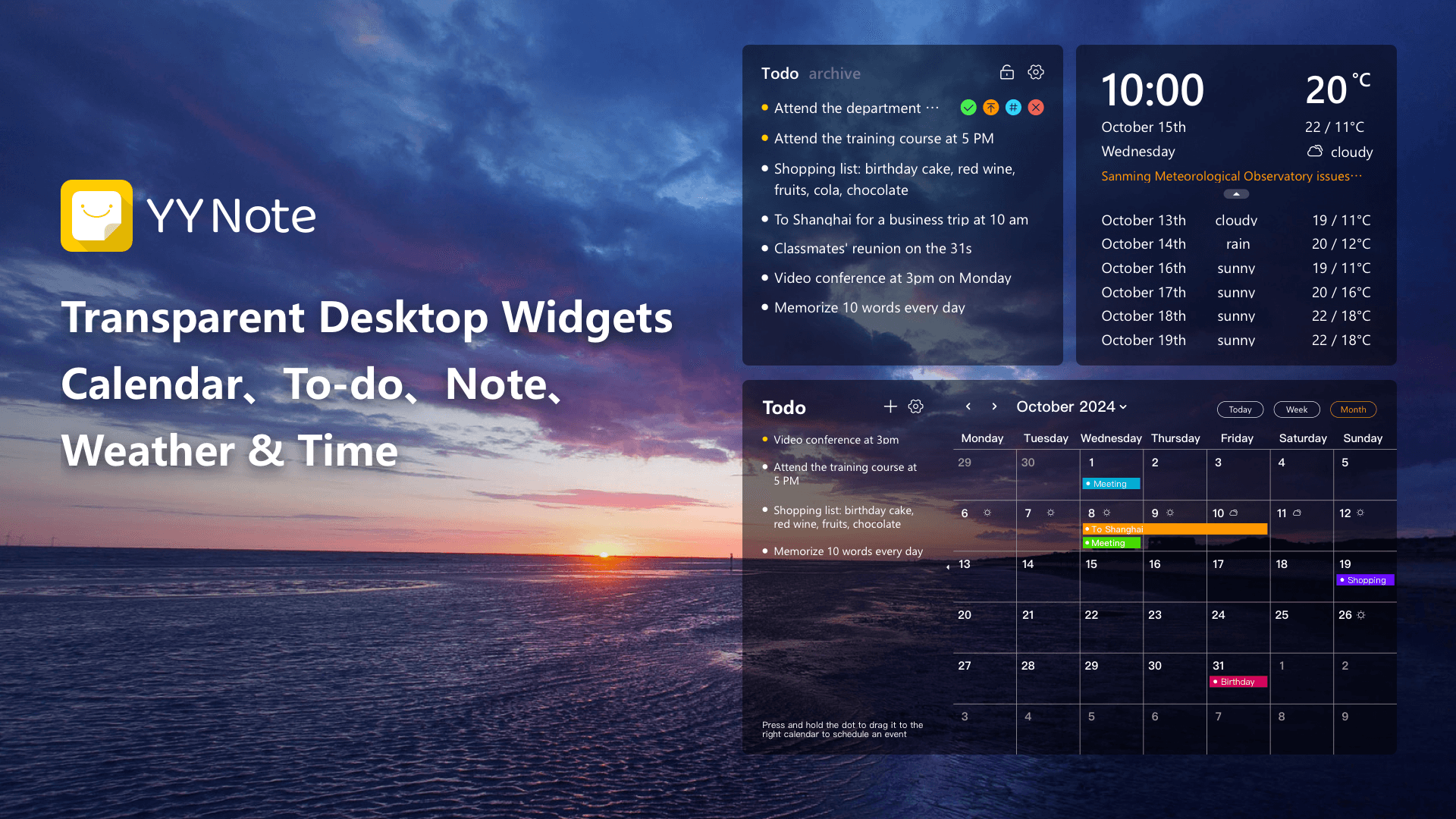
When you first see YYNote and face the desktop to-do list affectionately called the "little yellow bar" by users, you will immediately understand what "minimum effort, maximum return" means. It relies on a. The fully transparent plug-in form is directly embedded on the wallpaper of your computer desktop, without any borders or background interference. After booting, all your to-do items are clearly displayed in front of you, without clicking any software icons.
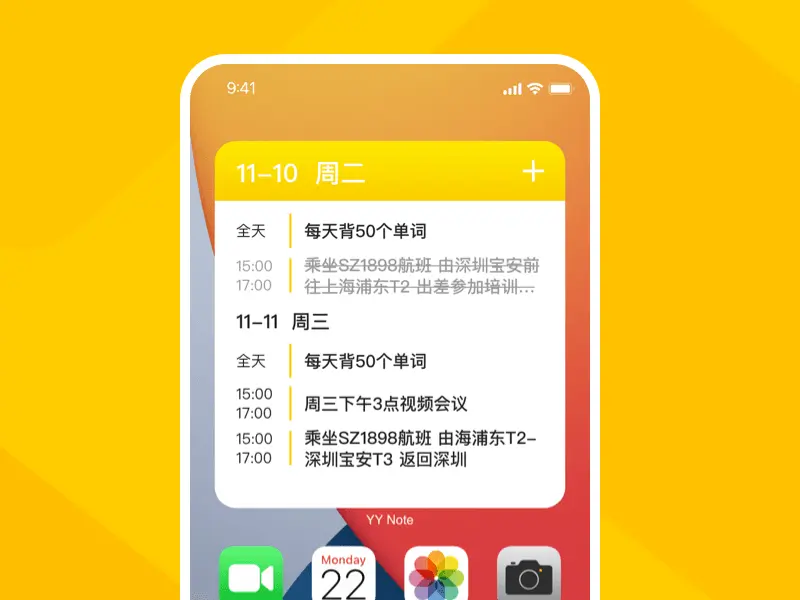
Its core value lies in "zero-step management" . You don't have to leave the window you're working on at the moment, and can take control of the day's tasks with just a quick glance at your desktop. Adding new items is as simple and straightforward as writing on that note, and it also supports intelligent recognition of dates and times. More importantly, it uses The category label function allows you to create multiple list views. For example, you can set up a list that only displays tasks with the "Today's Urgent" label, and you can also set up another list that will display "This Week's Projects" to achieve natural division and focus of tasks.
The recurring to-do function of YYNote is particularly outstanding and can support flexible rule settings, even if the lunar calendar repeats every year, it is very considerate to remind family members of birthdays or traditional festival-related matters. All its data supports multi-end synchronization and will be automatically hidden when close to the edge of the screen, which can protect privacy well. It can be said that it redefines the existence form of desktop to-do tools -. It's not a tool you need to open, but it naturally becomes a part of your work desktop .
<List Wizard: Full-featured, slightly complex> ★★★★☆
A task management software called List Wizard is very powerful. It has advanced functions such as project dashboards, sub-task decomposition, and team collaboration. It is suitable for handling complex projects. Its reminder functions are rich and diverse, and it supports email, in-app, and integrated third-party notifications.
However, this shows that its learning cost will be relatively high and the number of interface elements will be larger. For users who just want to manage their daily to-do list and pursue ultimate simplicity, some of its features may seem redundant. It is more like a "task management center" that you need to actively enter, but it is not a passively presented "desktop dashboard".

If your needs are very simple and you just want to write down a few things that come up at once, then the sticky notes provided by the system or some extremely simple third-party sticky notes applications are probably enough. They open quickly and there is basically no barrier to use.
However, it has significant shortcomings. It is relatively single in terms of functions. It generally lacks powerful classification functions, lacks powerful repeat reminder functions, does not have powerful multi-terminal synchronization functions, and is also relatively weak in search and archiving capabilities. Once a to-do list accumulates to a certain amount, it will become disorganized, difficult to find, and difficult to review. It is like a casually pasted paper note, which is easy to lose and cannot undertake systematic task management.
Choosing a desktop to-do tool is actually choosing a working habit and mode of thinking. Do you want the tool to be powerful enough but you need to adapt to it, or do you want the tool to be lightweight enough to fit into your natural workflow? After the comprehensive comparison, the computer desktop task reminder. With its unique transparent desktop embedded design and minimalist and efficient operating logic, YYNote is the most outstanding in reducing usage burden and improving visual focus . It perfectly interprets the concept that "tools should serve people, rather than engage in behaviors that interfere with others."
Imagine that in the future, your computer desktop will no longer be just a background image, but will become a dynamic, clear, and well-organized work command center. All tasks are arranged calmly. After completing one item and crossing another item out, it not only brings about an improvement in efficiency, but also a sense of calmness and ease in controlling the work.
Now, why not take a minute to download and experience YYNote for free now , and experience such an efficient and refreshing working mode for yourself? Use it to help you prevent forgetting, so that every day's work starts from a clear state, and ultimately boils down to achievement.
Download Now → Unlock Desktop Efficiency Center:

Microsoft Store

Google Play

App Store