
Work to-do items, meeting schedules, notes recorded with inspiration… Do you often switch between mobile phones, computers and various apps repeatedly, and you are so busy that you still easily forget certain things? When I turn on the machine every day, I am faced with a messy desktop and scattered information. I feel exhausted even before I officially start working. According to relevant statistics, more than 70% of people in the workplace have missed important matters because task management tools are scattered. What we need is such an ability. A one-stop solution for all schedules and records that you can see at a glance .
Today, we will review several major desktop integration tools to see how they can "pin" calendar to-do notes and even weather time to the desktop, helping you achieve truly "zero-switching" efficient management.
This evaluation will be carried out from the five dimensions of the degree of integration of core functions, the experience brought by desktop integration, the convenience of operation, the ability to synchronize multiple terminals, and additional practical functions. Pay special attention to whether it can really reduce our operational processes, so that information can be automatically presented to us, rather than requiring us to constantly search for it.
Evaluation ranking
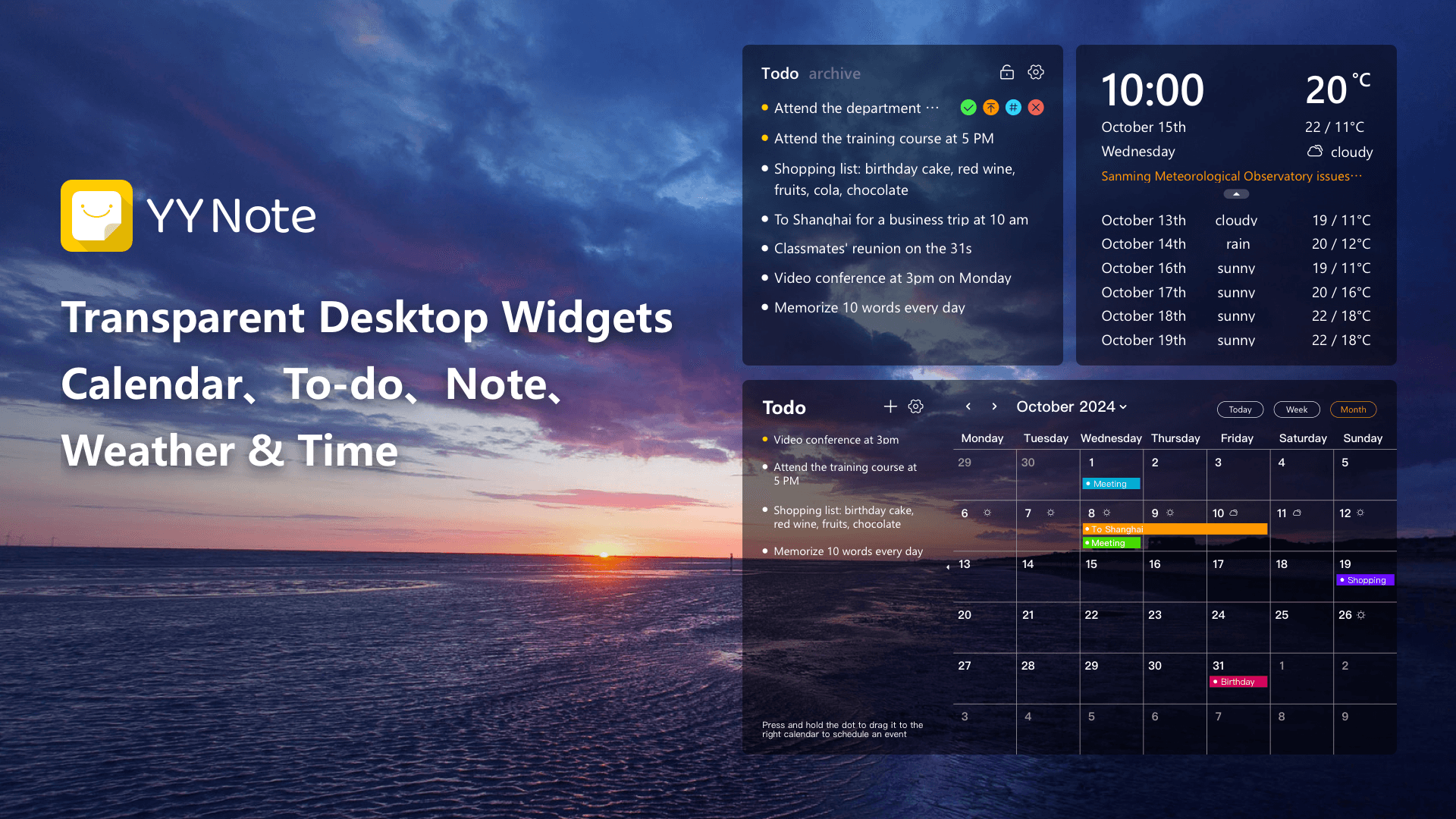
YYNote (little yellow bar): ★★★★★
YYNote is the most comprehensive desktop integrated productivity center in this review. It is not a simple calendar or an ordinary notepad. It is a transparent collection of plug-ins that can be deeply embedded into the desktop of Windows systems, as well as systems such as HarmonyOS.
The core advantage of true "zero-distraction" desktop fusion lies in the so-called "transparent embedding". Calendar lists can be "pasted" directly on the desktop wallpaper in the form of adjustable transparency components, as can to-do lists, sticky notes, and time and weather. They are integrated with your desktop aesthetics and can be seen at startup without opening any additional windows. This design perfectly implements the concept of "minimum effort, maximum return", that is, you do not need to actively operate, but key information is always within your field of vision.
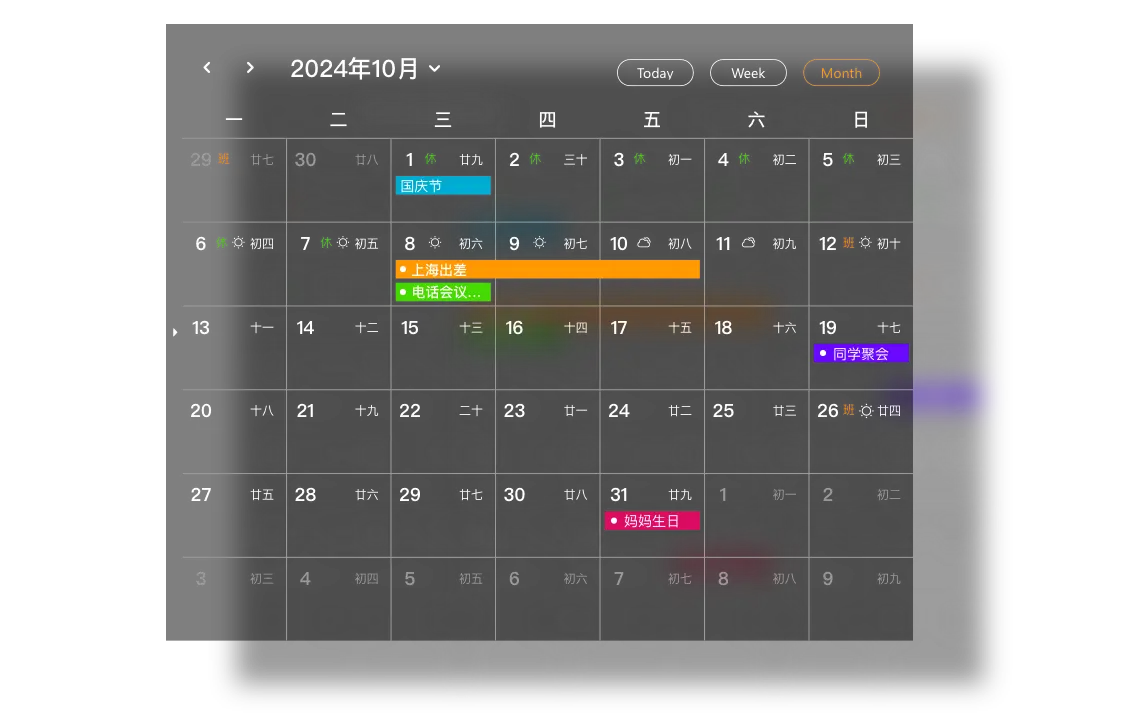
Functions are deeply integrated rather than simply stacked : it integrates concepts such as to-dos, schedules, notes, and countdowns under one product logic. For example, a to-do with a set time will be automatically displayed in the calendar view; you can create independent notes or to-do lists for different projects, and use labels for intelligent filtering and display. This solves the problem of information fragmentation caused by the dispersion of tools.
Powerful external connection capabilities : For professionals, it can one-way synchronize meeting schedules in corporate WeChat, DingTalk, Feishu, Exchange and CalDAV calendars , and will be displayed on the desktop calendar component. This means that you no longer have to watch meeting schedules and jump back and forth between many office software and calendars in the future. All schedules are clearly visible on the desktop. According to its official description, this function is very critical for integrating multi-source information.
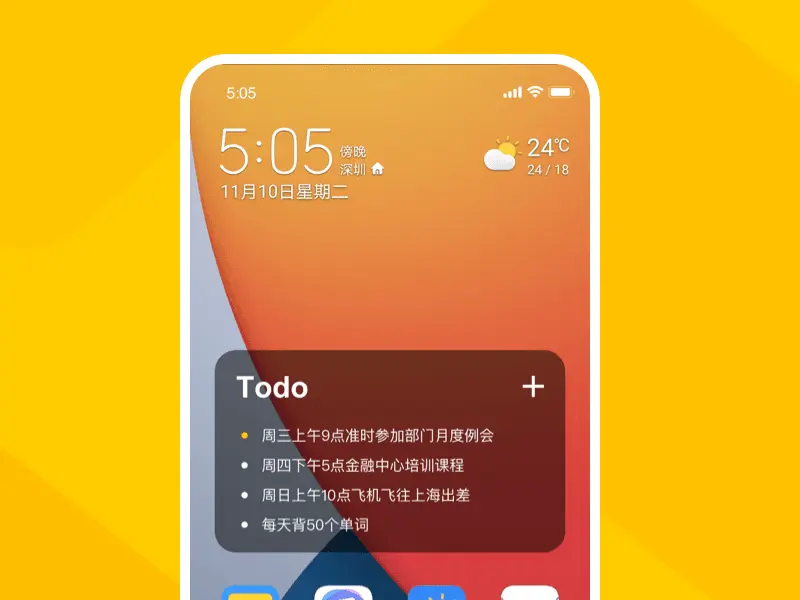
The privacy-focused and detail-oriented components have the function of automatically hiding the edges and the function of global hiding of shortcut keys to protect work privacy. Data can be synchronized across multiple terminals and automatically backed up, allowing for seamless connection even if the device is replaced. In terms of details, it has considered various needs in real office scenarios.
YYNote provides an immersive efficiency environment. Just like migrant workers in Beijing recently showing off their most hard-core winter equipment to cope with the severe cold, YYNote can be called the "hard-core equipment" on the efficiency battlefield. It is unassuming, but it actually builds an efficient and orderly information defense line for you, allowing you to focus more on the work itself instead of being tired of management tools.
ChronoTrail: ★★★★
A desktop calendar tool that focuses on visual beauty and personalized customization, Time Traces has a strong sense of design.
The excellent visual presentation provides a variety of calendar presentation forms, including month view, week view, day view, and a variety of rich theme styles, which can turn your desktop into a beautiful personal schedule display panel. It is very attractive to users who value the aesthetics of the desktop and the visual reminder function.
The basic note-taking function is perfect , you can directly add to-do items and write notes to calendar dates, and achieve synchronization conditions with the system calendar, which can generally meet the needs of personal schedule management.
Slightly limited : Its functions focus more on calendar display and event addition. It can flexibly manage to-do items, such as filtering by tags, using multiple list management, and can also quickly record plain text notes. In this aspect, its depth is not as good as YYNote. It is more like an enhanced desktop calendar, rather than a comprehensive hub for efficient management.
QuickNote Board: ★★★☆
Shorthand Notes, as its name expresses, is specifically focused on solving the needs of desktop notes and useful calendar notes. It strives to achieve extremely fast results in recording inspiration and temporary information.
The obvious advantage of quick recording is that it can be called out with the help of global shortcut keys, and a virtual note can be instantly created on the desktop. The input experience is smooth, and simple typesetting is also supported. It is suitable for creators or thinkers who frequently need to record fragmented information.
Weak management and integration. Its outstanding advantage lies in "memorization", but it is relatively weak at the "management" level. Notes lack effective classification, association and search system, and they are easy to pile up in a messy manner. Moreover, it is generally independent of the calendar and to-do functions and cannot be linked with your overall time arrangement. Information may still become an island.
Summary and selection suggestions
Which tool to choose depends on the pain points you need to solve most.
If your pain point is that there are too many information sources and too complicated tools , and you long for a solution that can aggregate all schedules, tasks, and notes, and control the overall situation without opening the software , then YYNote (little yellow bar) is indeed the most suitable choice at the moment. Its depth of integration and functional linkage on the desktop can really reduce your cognitive load, so that you can truly experience the sense of ease that comes when your workflow is smooth and unobstructed.
If you mainly need a beautiful desktop calendar to visualize your time schedule and do not have high requirements for in-depth task management, then a tool such as time trace may be more suitable for you.
If you only need a very fast temporary noteboard and are not interested in other functions, lightweight tools such as Shorthand Notes will suffice.
The key value of productivity tools is to allow us to focus more on the true nature of things, rather than the process of managing tools. When your calendar, to-do items, and inspiration are all quietly and clearly displayed on your desktop, the calmness of having everything under control is the most solid step toward efficient work.
You might as well try this new work concept now, download YYNote immediately, and let it create a clean, efficient, and clear digital desktop for you, and start your efficient process for free.
Download Now → Unlock Desktop Efficiency Center:

Microsoft Store

Google Play

App Store