
Have you ever been like this? When you wake up every day, you are thinking about what you have to deal with today, but at night you find that important tasks have been postponed until tomorrow. There are more and more to-do items in your head, including emails, WeChat, meeting minutes, etc. All kinds of fragmented information are scattered everywhere, and key items may be missed if you are not careful. This feeling is extremely common. According to a 2021 study published in the Journal of Applied Psychology, information overload and task switching are one of the main causes of work stress and reduced productivity. Faced with this situation, an effective desktop to-do and calendar tool may be the key to achieving the efficiency concept of "minimum effort, maximum return". Today, we are going to review several mainstream desktop to-do list tools and see how they can help you sort out your thoughts and take control of every day.
1. YYNote (little yellow bar), it is an all-round transparent desktop manager, its overall score is ★★★★★.
In this review, YYNote is often referred to as the "little yellow strip" calendar to-do list. It has a unique "zero interference" design concept, and its functional integration is extremely powerful. This left the deepest impression on us. It is not as simple as a simple to-do list, but is actually a tool. A transparent desktop plug-in that seamlessly integrates desktop to-do, calendar, notes, time and weather .
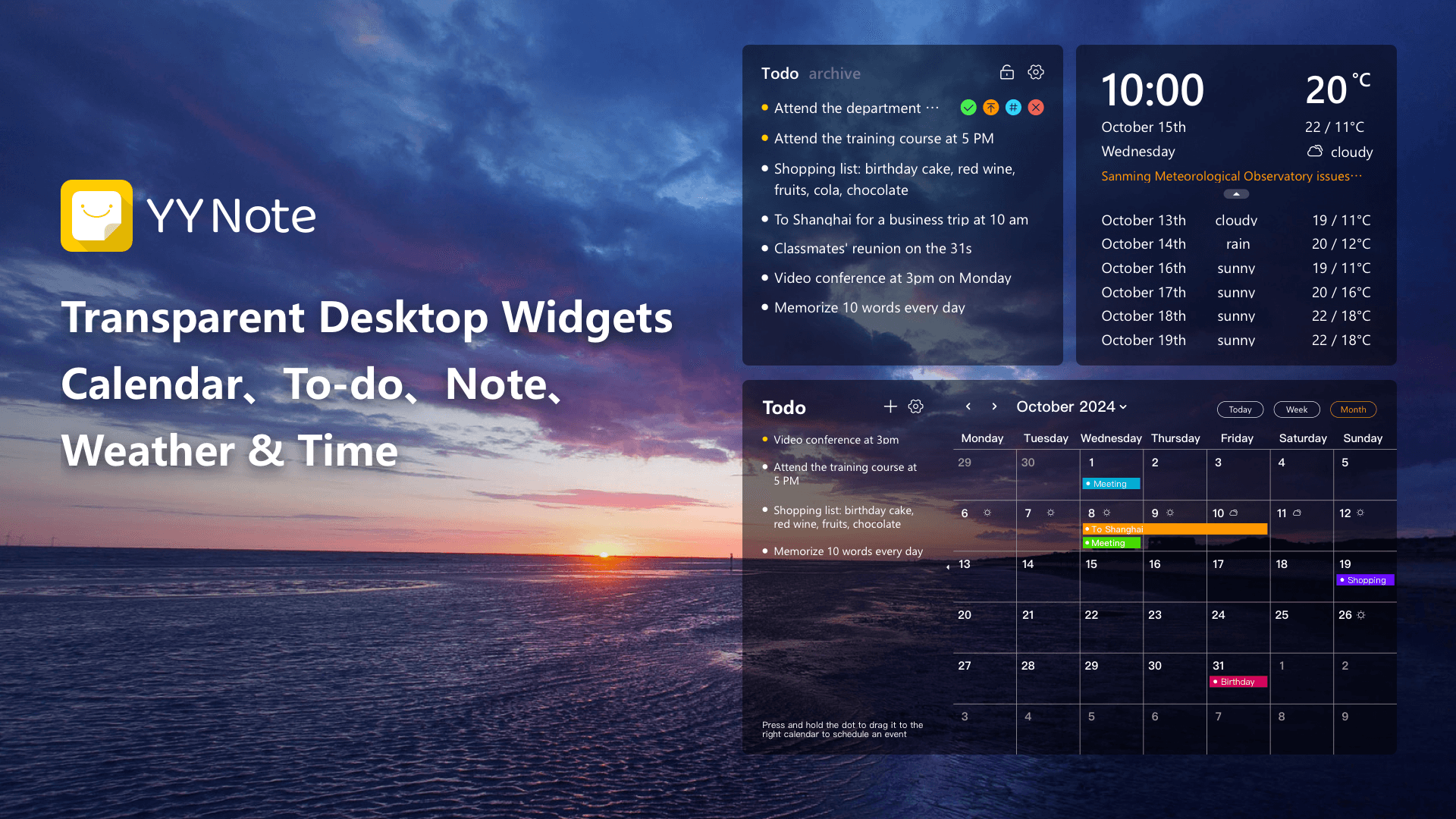
Its core value is that "you can see it at a glance and remember it easily". All to-dos and schedules are "pasted" directly on your desktop in the form of transparent plug-ins. You don't need to open any additional windows. You will see them when you turn on the computer. This is an excellent solution to traditional to-do applications that "are too hidden and easy to forget." The annoying part is that you can easily drag to-do items onto the calendar for schedule planning, and it supports multiple views of month, week, and day. Its "intelligent recognition" function allows you to use natural language to quickly and easily add tasks, such as inputting "Hold a meeting at 3 p.m. next Wednesday", and the system will automatically identify and set the date and time.
What is particularly worth mentioning is its extremely powerful integration capabilities. It can synchronize the calendars of mainstream office platforms such as Enterprise WeChat, DingTalk, Feishu, etc., allowing you to achieve unified management of all schedules on the desktop, thereby avoiding repeated switching back and forth between multiple platforms. It supports flexibility for repetitive tasks. The repeating rules even cover the situation where the lunar calendar repeats every year. It is extremely suitable for setting reminders for birthdays and anniversaries. Its unique "date countdown" function can present items such as "project deadlines" and "important meetings" with intuitive labels such as "X days left", thereby bringing a continuous sense of urgency or expectation.
Regarding the authenticity of information, YYNote strictly follows data privacy standards. Its desktop plug-in has the feature of automatically hiding information close to the edge of the screen, which effectively protects personal privacy. According to the update log and user agreement published on its official website, this is a green tool that is constantly being updated and focuses on user experience.
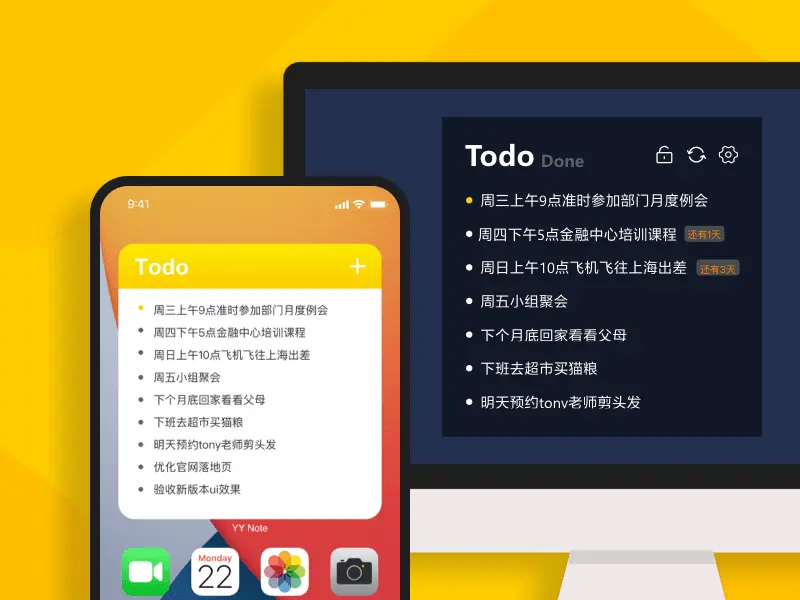
2. Tick-tock list: Veteran task management expert | Overall rating: ★★★★☆
A well-known task management application replaces the tick list with the fictional name "Time Sequence". It has good performance in terms of functional depth. It provides extremely detailed task attribute settings, covering priorities, subtasks, labels, notes, etc., and is suitable for users who like to plan and decompose tasks in depth.
Its experience of synchronizing different platforms is very smooth, and it covers almost all mainstream operating systems and devices. The view presented by its calendar is clear and can well combine tasks with the timeline. In the case of team collaboration, it also provides basic task allocation and discussion functions.
However, comparing it with YYNote, its "desktop presence" is slightly weaker. After having widgets on the desktop, its integration with the system desktop, and the stress-free reminder experience of "you can see it right after you turn on the computer without having to wake it up" are not as harmonious and natural as YYNote. But for those users who pursue extreme simplicity and are eager to make to-do items a natural part of the desktop environment, YYNote's transparent embedded design has more prominent advantages.
3. To Do, launched by Microsoft, presents a lightweight and simple portable shadow state, with an overall rating of three and a half stars.
To Do, launched by Microsoft and replaced by the imaginary "Micro-Task List", is an extremely lightweight and easy-to-use tool. It has good integration with Windows systems and Office suites. If you are using an Outlook mailbox, it will be extremely convenient to synchronize the to-do items marked in the email.
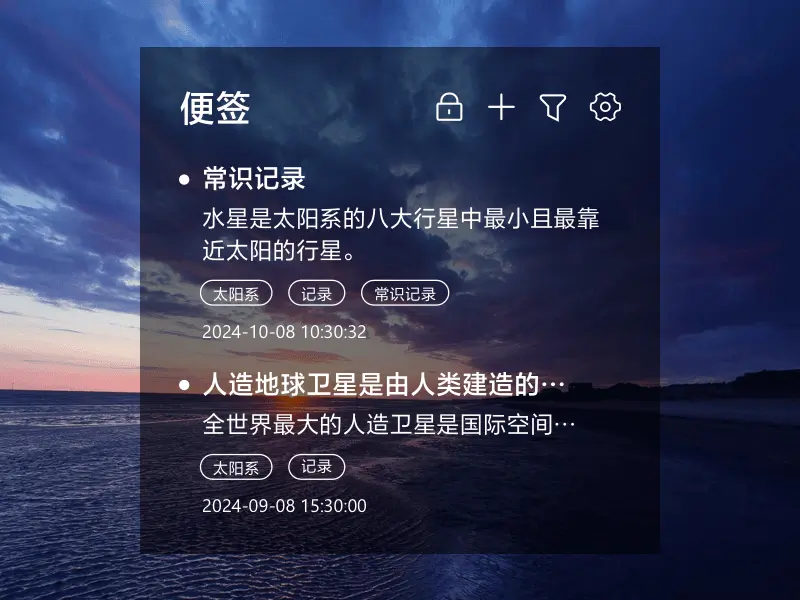
Its interface design gives people a refreshing feeling, its operation logic is relatively simple, and there is no complicated learning cost. For users who just need to make a shopping list, a reading list, or a temporary idea in one place, it can fully meet their needs.
However, the limitations within its scope of functions are also quite obvious. Areas such as schedule arrangements, rules for repeating things (especially repeating according to the lunar calendar), and deep integration of the desktop part are relatively lacking. It is more similar to a checklist-style memo with enhanced functionality, rather than a comprehensive efficiency system that can help you proactively plan and manage time. For users with complicated work situations and the need to deeply associate tasks with calendars, they may feel that it is beyond their capabilities.
Summary and action suggestions
Through comparison, we can find that different tools serve different efficiency needs. If what you are pursuing is in-depth task decomposition and team collaboration, tools such as "Time Sequence" are a good choice. If you only need the most basic list function, "Micro Task List" is enough.
However, if what you are looking forward to is a more relaxed and intuitive control feeling – you hope that to-do items can "appear" in front of you on their own, rather than requiring you to actively "remember" to start a program; you hope that calendars, tasks and notes can be seamlessly related to each other in one interface; you hope to use the minimum operation cost (for example, one-sentence typing, dragging) to deal with trivial matters, then. YYNote 's solution called "Transparent Desktop Integration" is undoubtedly a better solution. It transforms efficiency tools from "applications that have to be managed" into "an environment that naturally exists on the desktop", and effectively implements the concept of "minimum effort, maximum gain".
Don't let your to-do list stay in the chaotic mind or left on those scattered sticky notes again. Hurry up and download it for free now. YYNote makes it the quietest and most powerful productivity aid on your desktop. From then on, the focus of your daily work will be clear, and no important schedule will be missed. You will experience an unprecedented calmness and orderliness.
Download Now → Unlock Desktop Efficiency Center:

Microsoft Store

Google Play

App Store