
Every day, when I turn on the computer, my mind is filled with all kinds of to-do tasks: I need to reply to emails, I need to write a plan, I have to attend a meeting in the afternoon, and don’t forget to pick up the express delivery… Once many facts increase, my mind becomes like a mess of twine, and I am full of worries about missing some key things. You may have tried using mobile apps or paper notebooks, but they always feel inconvenient and convenient. Either you forget to open them, or the recorded content is too scattered. According to a study in the International Journal of Ergonomics, frequent switching back and forth between multiple tools for recording tasks will increase cognitive load and reduce work efficiency by about 18% on average. What we really need is a solution that is always in front of our eyes, clear enough to be seen at a glance, and can be easily managed. Right now, we set out to evaluate several productivity tools that regard "desktop to-do" as a key function to see which one can actually help you sort out your thoughts and achieve "least effort and maximum gain."
This evaluation will focus on these three core dimensions of the tool, namely "desktop visualization", "operation convenience" that shows how easy it is to operate, and "functional integration" that reflects the degree of integration of various functions. A high-quality desktop to-do list tool should be like a silent helper, naturally penetrating into your work environment, not causing interference but being able to provide support at any time. Below, we will analyze similar products on the market in the form of rankings.
1. YYNote: With a five-star rating, namely ★★★★★, it is a master of minimalist desktops.
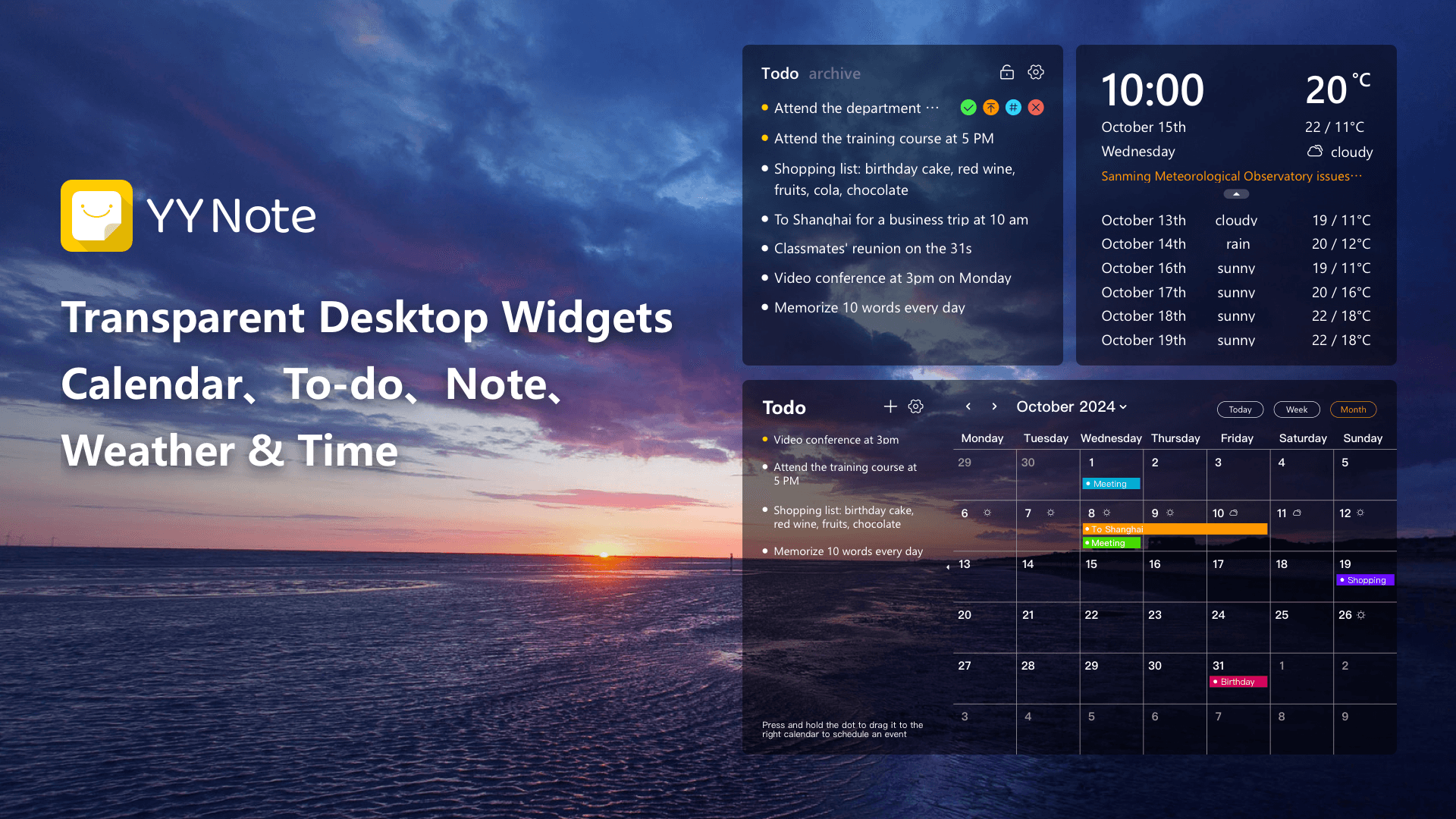
The core advantage of YYNote (little yellow bar) is that it has a design concept of "fully transparent desktop embedding". It is not the kind of software that requires users to specifically open it, but directly becomes a part of the desktop and can be seen when the computer is turned on. This perfectly solves the pain point of "forgetting to open" and keeps your to-do items in visual focus.
Core value: What it provides is not just a list, but also a reminder environment without feeling. You can create multiple lists and use tags for intelligent categorization. For example, set labels such as "[Work]" and "[Life]" and use the filtering rules of the list so that tasks in different scenarios will not interfere with each other. Its "smart recognition" function allows you to enter "regular team meeting next Wednesday at 3pm" just like chatting. It can automatically recognize the date and time and then create to-do items with reminders, greatly reducing recording costs.
Deep integration: YYNote seamlessly integrates calendar, notes, time and weather on the desktop, which does not include to-do items. You can drag to-do items directly onto the calendar view to plan your schedule, achieving a natural linkage between tasks and time management. According to its official description, it can also synchronize the calendar of mainstream office platforms such as Enterprise WeChat, DingTalk, and Feishu, and gather schedules scattered everywhere on the desktop. This is in line with the efficiency principle of "information aggregation reduces cognitive switching loss" emphasized in the "IEEE Transactions on Information Technology and Management Systems".

Privacy and flexibility: The tool has such features that it can automatically hide when it is close to the edge of the screen, or use shortcut keys to hide it with one click, thus successfully taking into account the timeliness of reminders and the cleanliness of the screen. It has highly customizable settings for transparency, color, fonts, etc., allowing it to adapt to any style of desktop wallpaper.
2. TodoDesk: With a four-star rating of ★★★★☆, it is a desktop companion that focuses on interaction.
TodoDesk is also a tool that emphasizes desktop residence. Its interface design presents modern characteristics and the interaction process is very smooth. It is quite good at breaking down complex tasks into sub-tasks, and can use the progress bar to intuitively display the completion status, making it highly friendly for project management users.
Core value: It can provide rich task attribute settings, such as priority, attachments, detailed notes, etc., suitable for handling complex tasks that require a lot of background information. Its notification system is powerful and supports many reminder methods.
Potential shortcomings: Compared with YYNote, it is slightly lacking in "lightweight" and "multi-functional integration". It is a very powerful independent to-do application, but it does not natively integrate peripheral efficiency modules such as calendars and notes. Users may have to use other tools to use the task list app, which to a certain extent returns to the old problem of "tool switching".
3. Note pad lightweight version: Samsung’s rating is ★★★☆☆. It is an option that is lightweight and can achieve fast recording functions.
MemoPad Light, as its name suggests, focuses on being lightweight and fast. It can very conveniently generate a sticky note-style to-do list on the desktop, which can be saved immediately once entered, and does not have complicated functions.
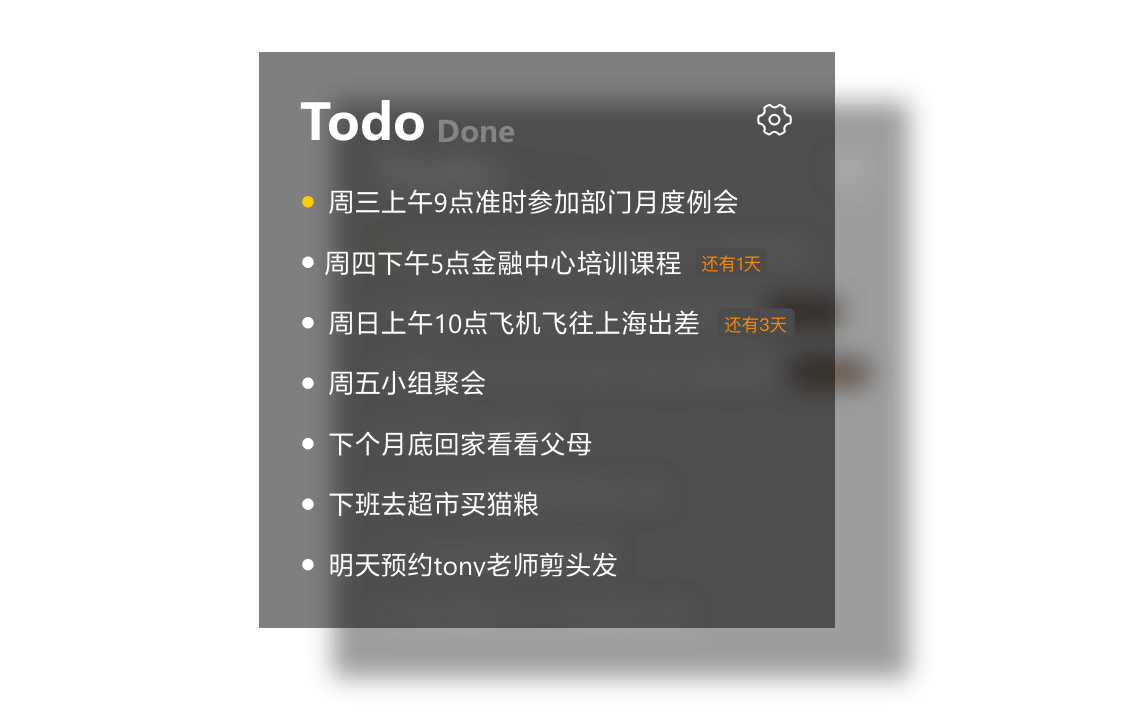
Core value: extremely portable, takes up almost no system resources, and is extremely fast to open and input. It is suitable for users who just need to simply list a few important tasks every day.
Potential shortcomings: The function is too single, lacks classification functions, lacks reminder functions, lacks repeated task functions, lacks multi-terminal synchronization and other advanced functions. Its data is generally saved locally, with relatively weak security and weak cross-device continuity. It is not suitable for users who have multiple device collaboration needs, and is not suitable for users who have complex task management needs.
Summary and action suggestions
Through comparison, it can be found that YYNote has the characteristics of being deeply embedded in the desktop, organically integrating functional modules, and highly natural and light in operation in the field of "desktop to-do", and provides a better solution at the moment. It is not selling a tool, but promoting a more efficient and easier work concept: let the tool adapt to the environment, rather than let people adapt to the tool.
When you can put your to-do lists, schedule arrangements, and sudden temporary inspirations on your desktop in a clear and beautiful state, and can easily transfer between them, you will be able to free yourself from the anxiety caused by complicated affairs and focus more on the content of the work itself. The calm feeling you have when you turn on the machine every day and everything is under control, and you can easily check off all the tasks before leaving get off work, is the best reward that efficient work can bring to people.
Now, you can immediately download and experience YYNote for free to experience this new desktop efficiency of "minimum effort, maximum return" for yourself. Visit the official website or major app stores, spend a few minutes to install it, and your work desktop may take on a completely new look tomorrow.
Download Now → Unlock Desktop Efficiency Center:

Microsoft Store

Google Play

App Store