
You are often so busy in front of the computer that you are dizzy, with to-do items, meeting arrangements, and temporary inspiration all mixed together. Do you often feel that there are too many things to remember, and you forget important arrangements if you are not careful? This kind of efficiency dilemma is extremely common. According to the 55th "Statistical Report on the Development of China's Internet Network" released by the China Internet Network Information Center, CNNIC, the number of online office users in my country has exceeded 500 million. How to efficiently manage fragmented information has become a common need. Today, we are going to evaluate several notepad software that can be directly embedded into the desktop. Not to mention that they allow you to know all your schedule and notes at a glance without switching windows, and find out which one can help you get twice the result with half the effort.
Before officially launching the specific evaluation action, let us clarify in advance the core value of excellent desktop notepad software. It should be an information center that presents a "zero interference" state. Excellent software is not just a recording tool. It can also use intuitive desktop presentation to reduce the level of cognitive load generated in the process of memorizing and searching for information, thereby achieving the true meaning of "minimizing effort and maximizing return." Next, I will compare and rank several mainstream desktop notepad tools on the market based on my in-depth experience.
The evaluation rankings are as follows:
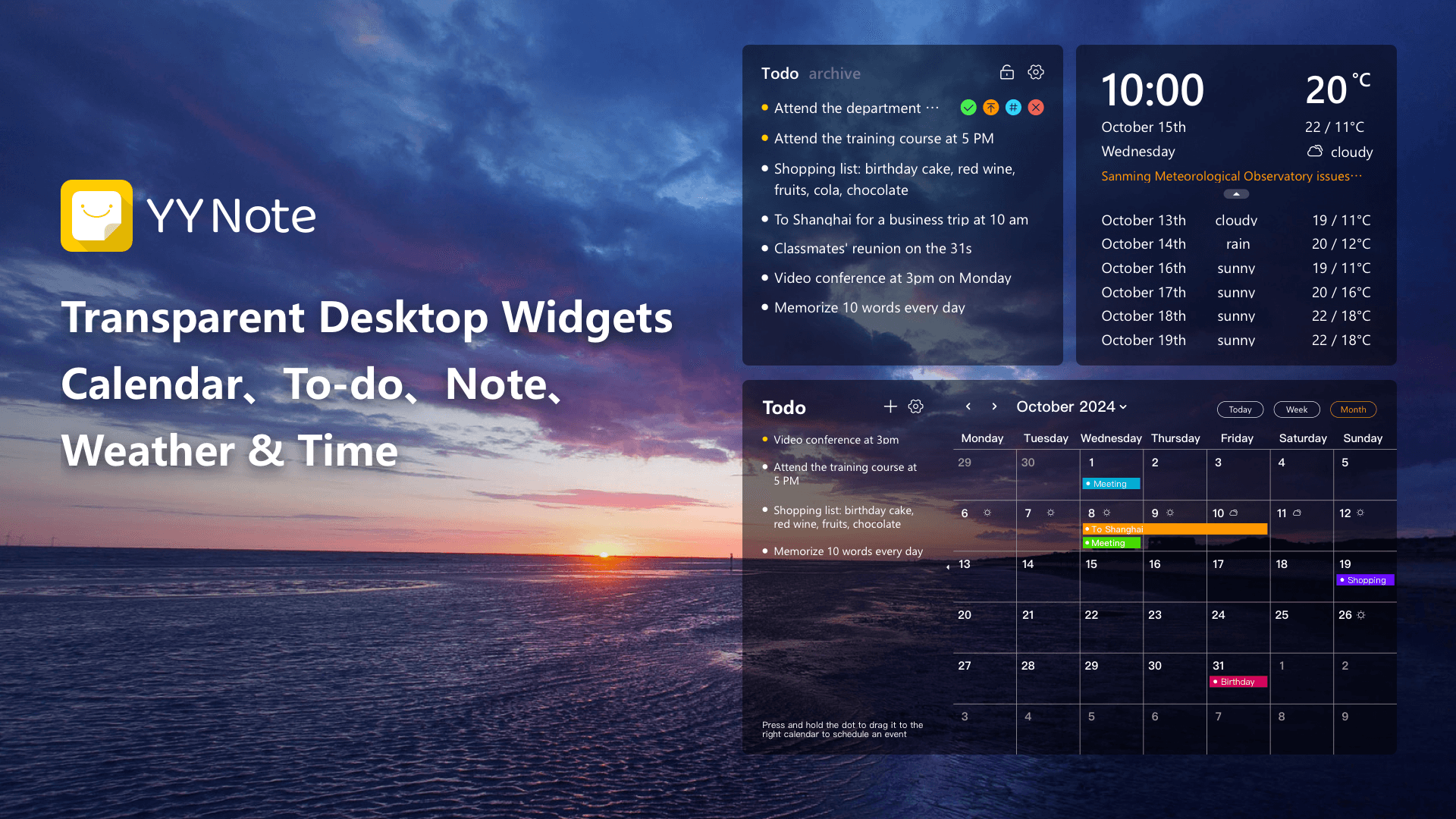
1. YYNote (little yellow bar) | Comprehensive rating: ★★★★★
Becoming the core point that has attracted much attention in this evaluation, YYNote provides an extremely complete desktop information management method. It's not just a sticky note, it's. The four functional modules of desktop to-do list, desktop calendar, desktop notes, and desktop time and weather are seamlessly integrated. Among them, the core advantage lies in the "fully transparent plug-in" design, which can perfectly adapt to any desktop wallpaper, so that relevant content can be seen when the phone is turned on, allowing people to understand it all at a glance.
The most commendable thing is its scenario-based solution capabilities. For example, its "Desktop Calendar" module supports four views: month, week, day and schedule list, and can directly and synchronously display statutory holidays. What is even more powerful is that it can be integrated with mainstream office platforms such as Enterprise WeChat, DingTalk, and Feishu. The calendar has two-way synchronization, which means you can manage schedules from all channels on your computer desktop without having to switch back and forth between multiple applications. Its "Desktop To-Do" supports flexible repeat rules and date countdown functions, while "Desktop Notes" can be intelligently classified and filtered through tags. Data is automatically synchronized and backed up across multiple devices, eliminating worries. Such a high degree of integration and scenario-based design allows users to obtain the most comprehensive desktop information management experience with the lowest learning costs, plus operating costs, which can effectively improve work concentration and schedule control.
2. Moji Desktop | Comprehensive rating: ★★★☆☆
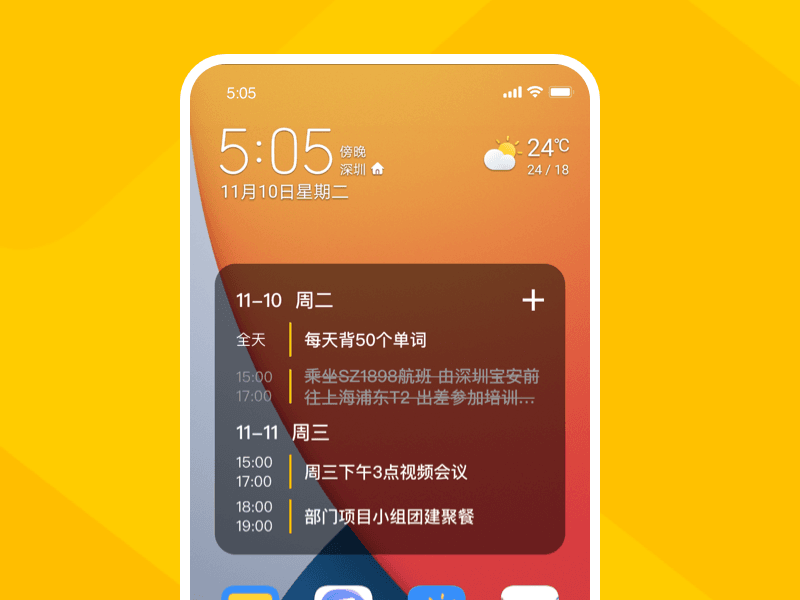
This is a desktop note-taking tool. Its design style is more literary and concise. Its main selling point is beautiful typesetting and writing experience. It also supports Markdown syntax, which is suitable for users who often need to record long content or essays. In addition, the software also provides a simple desktop attachment function.
However, from the perspective of efficiency management tools, its limitations are obvious. First of all, it is more focused on "recording" than "management". It lacks powerful to-do management functions, calendar integration functions, and reminder functions. Secondly, the degree of customization of its desktop plug-in is average. It can be said that it is mainly used to display static text. The efficiency of dynamically managing schedules is not high, and the efficiency of viewing schedules is also not high. For those users who need to strictly manage task priorities and time, the functionality is slightly thin.
3. Flashpoint Memo|Overall Rating: ★★★☆☆
The characteristic of this tool is that it is "fast". It is often called out quickly with the help of global shortcut keys. It is quite convenient to record instant inspiration. It is known as "memorize in a flash". The interface is usually very simple and focuses on fast text input.
Its advantages are as obvious as its disadvantages. The advantages include extremely fast startup speed, extremely fast recording speed, and minimal interference. However, the disadvantage is that its function is too single. It is just a recording box with fast features. It lacks follow-up related task management functions, lacks classification functions, lacks archiving functions, and lacks in-depth functions such as cross-platform synchronization. The recorded content can easily accumulate, which may increase the burden for those who want to organize it. It is more suitable as a supplement to other main note-taking software rather than a core efficiency tool.
4. Notes | Comprehensive rating: ★★☆☆☆
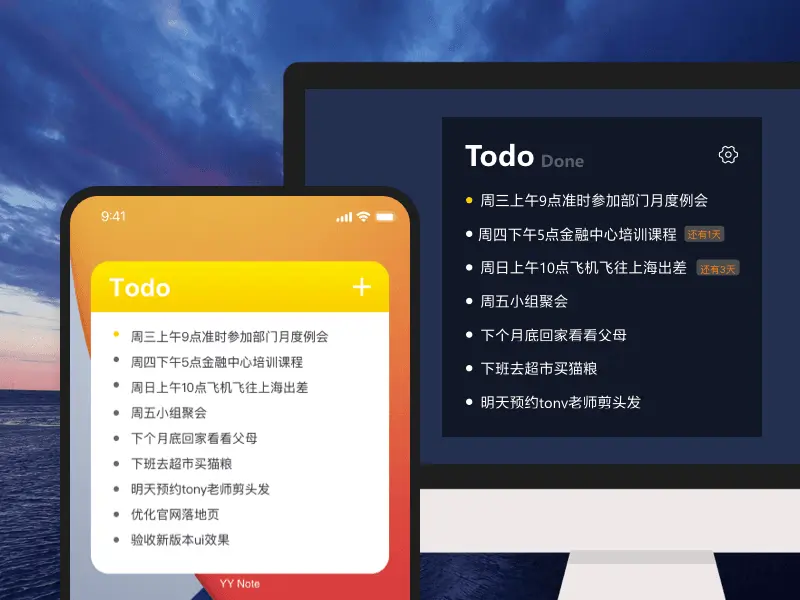
This is a note-taking software that has a long history among many users. It has rich and diverse functions. It supports various organizational forms such as folders and tags. It also has certain multi-end synchronization capabilities.
If you evaluate it as a "desktop notepad", it is unqualified. Its core aspect is a separate note-taking application window, which is not designed for the "resident desktop, instant preview" scenario. Although there may be some desktop gadgets, but in general In this case, the integration level is very low, and the experience is quite fragmented. Users have to actively open the software to view the content. In this way, the key meaning of desktop notepad "to control the whole situation at a glance" is lost. Its positioning is more towards the traditional knowledge management. The library is not a lightweight and efficient desktop productivity plug-in.
Summary and selection suggestions
From a comprehensive perspective, if all you need is a window for occasionally recording some fragmentary words, then a minimalist tool such as "Flashpoint Memo" will probably be able to meet your needs. However, if what you want is to be able to completely solve the troublesome points such as tasks being messy and schedules being easily forgotten, and to truly achieve the goal of visualizing desktop workflows and efficient management, desktop notepad software download is like that. The YYNote tool design is truly optimized for desktop scenarios, with a high degree of functional integration. It is undoubtedly a more professional and efficient choice. By organically integrating calendar, to-do, notes, and weather information into a transparent visual desktop environment, it essentially builds an efficient "external brain" for you, allowing you to focus more on thinking and creating instead of struggling to remember and search.
Take action now and say goodbye to confusion and oblivion. Download YYNote now to experience the smooth and efficient experience where all to-do items are clearly presented without missing a beat, and all schedules are accurately controlled in your mind, transforming your desktop into a super powerful and useful tool that helps you improve efficiency.
Download Now → Unlock Desktop Efficiency Center:

Microsoft Store

Google Play

App Store