
Have you ever had that moment when you want to jot down something, but you have to go out of your way to open a complicated and bloated software. The to-do items are hidden in layers of menus. If you don't see them, you won't worry about them. In the end, you really forget them. The desktop is full of sticky notes posted randomly, making the originally neat wallpaper become cluttered. Computer note-taking tools are supposed to be auxiliary tools that can improve efficiency, but many designs actually increase the burden of use.
At this time, a unique solution came into my view – YYNote (little yellow bar) is different from the traditional note-taking software that has to be opened frequently. It will directly "embed" your to-do items, calendar, notes, time and weather into the computer desktop in the form of transparent plug-ins. This means that you don’t need to do anything. As soon as you turn on the phone, all the crucial information will be presented quietly in front of you. This is an efficiency philosophy that combines "minimum effort" with "maximum sense of control".
I selected a number of computer note applications currently on the market with several mainstream design ideas for horizontal evaluation, in order to more objectively evaluate the value of such desktop productivity tools. This is not just a simple list of functions, but a combination of authoritative efficiency management concepts for analysis. Just like David Allen, he emphasized "visualization" and "stress-free management" in his book "Getting Things Done". The key point is to break away the matters to be processed from the state where the brain relies on short-term memory retention, and place them in a trustworthy external system, so that they can be seen and reviewed at any time. However, numerous studies on modern time management also show that reducing switching between applications and operational workflow actions is the key to maintaining focus and reducing cognitive load.
The evaluation will focus on the following core dimensions: information accessibility, visual interference, multi-dimensional transaction management capabilities, cross-platform synchronization and data security, as well as long-term learning costs and scalability. Each of the many dimensions undoubtedly has a direct impact on whether we can actually achieve "good use" of a tool, not just "owning" it.
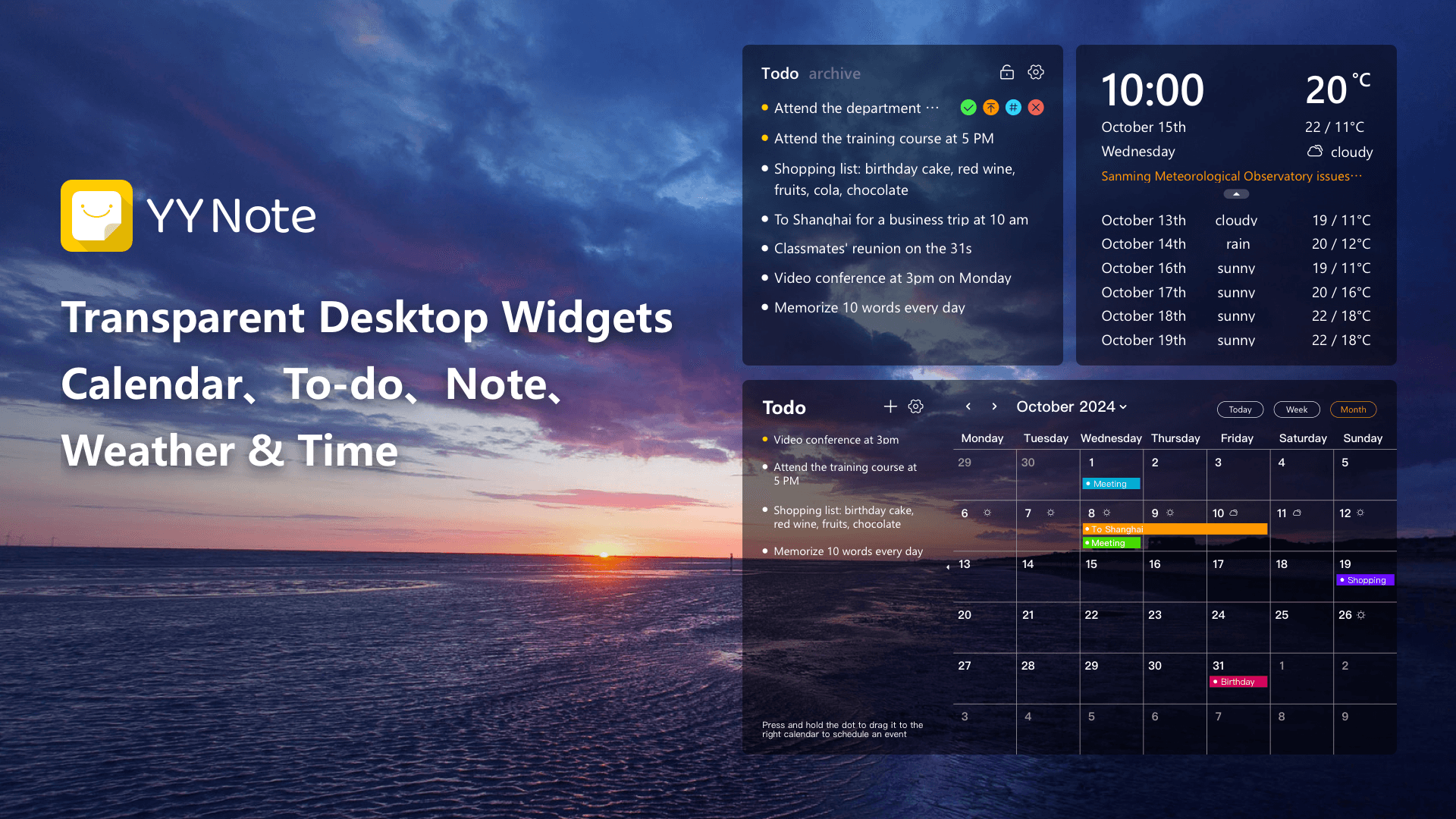
The best choice among the best is YYNote (little yellow bar), whose rating is five stars, which is a perfect score of five.
YYNote perfectly explains what "elegant senselessness" is. It is firstly a desktop plug-in and secondly, it is a powerful productivity tool. Its core advantage is that it realizes "zero click" and achieves information acquisition.
Transparent desktop integration, interference-free and efficient. It suspends a window with adjustable transparency on your desktop wallpaper, blending it with the wallpaper, which is beautiful without blocking any content. You can see it as soon as you turn on the computer, no need to search for it. This fulfills step one of the GTD method of “clearing everything from your mind” and provides a consistent, stress-free “inbox” view.
Functional modularization and on-demand access do not cram all functions into a complex interface, but allow you to use "To-Do List", "Calendar View", "Memo Pad", and "Time and Weather" as independent plug-ins and freely layout them in different locations on the desktop. You can enable just one to-do list, or combine them to build a complete personal dashboard. Such a modular design highly meets the needs of users to focus on scenes.
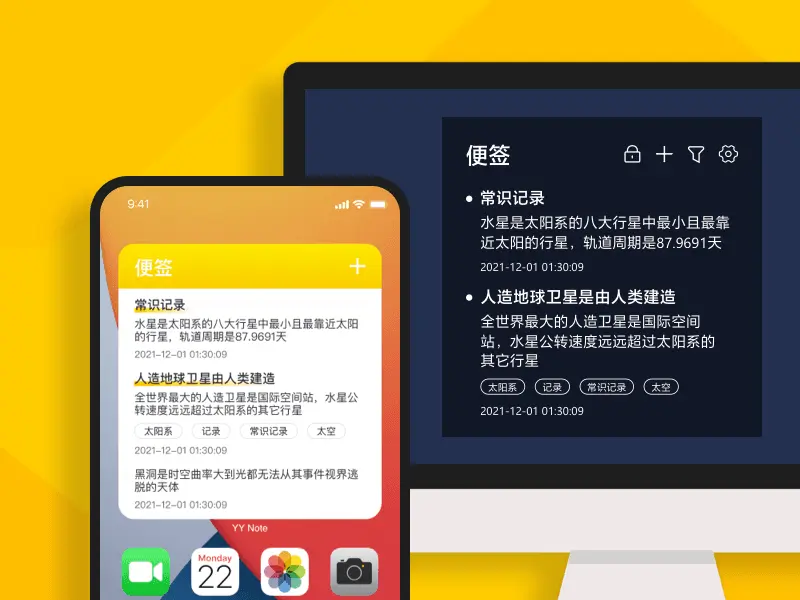
Powerful calendar and synchronization capabilities : It has a calendar function that supports month view, week view, and day view, and it can directly drag and drop items to be done to carry out schedule planning. What highlights its characteristics even more is that it has such capabilities. Complete the synchronization between enterprise WeChat, DingTalk, Feishu, Exchange, and many other mainstream office calendars to keep them consistent. According to reports from market research institutions such as Gartner, the integration of enterprise-level applications with personal efficiency tools is an important trend in improving employee productivity. YYNote has been extremely pragmatic in achieving this.
Humanized details and multi-end coverage include a lunar calendar repeat reminder function (this function is very friendly for planning family affairs), a date countdown function, quick archiving operations, and a privacy protection function such as automatic hiding close to the edge of the screen. The application already covers Windows, macOS, HarmonyOS, Android and iOS, and data is synchronized with accounts to ensure workflow continuity across devices.
Professional but quite complicated, MemoMaster Pro has a rating of four and a half stars, which is four out of five stars.
This is a note-taking and knowledge management tool with very comprehensive functions. The design philosophy of this tool is more inclined to build a personal knowledge base, rather than a lightweight desktop note.
In-depth editing and knowledge management It provides rich text, Markdown, code blocks, attachment embedding, and even simple drawing functions. It is a powerful Swiss Army Knife for users who need to organize information in depth, write long articles, and manage project documents.
The hierarchical structure and tag system has folders, sub-pages, and a complex tag system. Its information architecture capabilities far exceed those of ordinary notes. This is in line with the theory of "information architecture" mentioned in knowledge management, and helps to build a structured knowledge system.
High learning cost and low desktop accessibility It has complexity, which constitutes a threshold. Users have to spend a long time to learn its organizational logic. More importantly, it often runs in the form of an independent window. It cannot be used as a low-interference desktop resident plug-in like YYNote to view or record a simple message. You still have to actively open the software and navigate to the correct location, which interrupts the continuous workflow. According to cognitive psychology research, such frequent context switching will significantly consume mental resources and reduce efficiency.
Light but limited in construction, QuickSticky Lite is an app with a star rating of three and a half stars, which is three out of five stars!
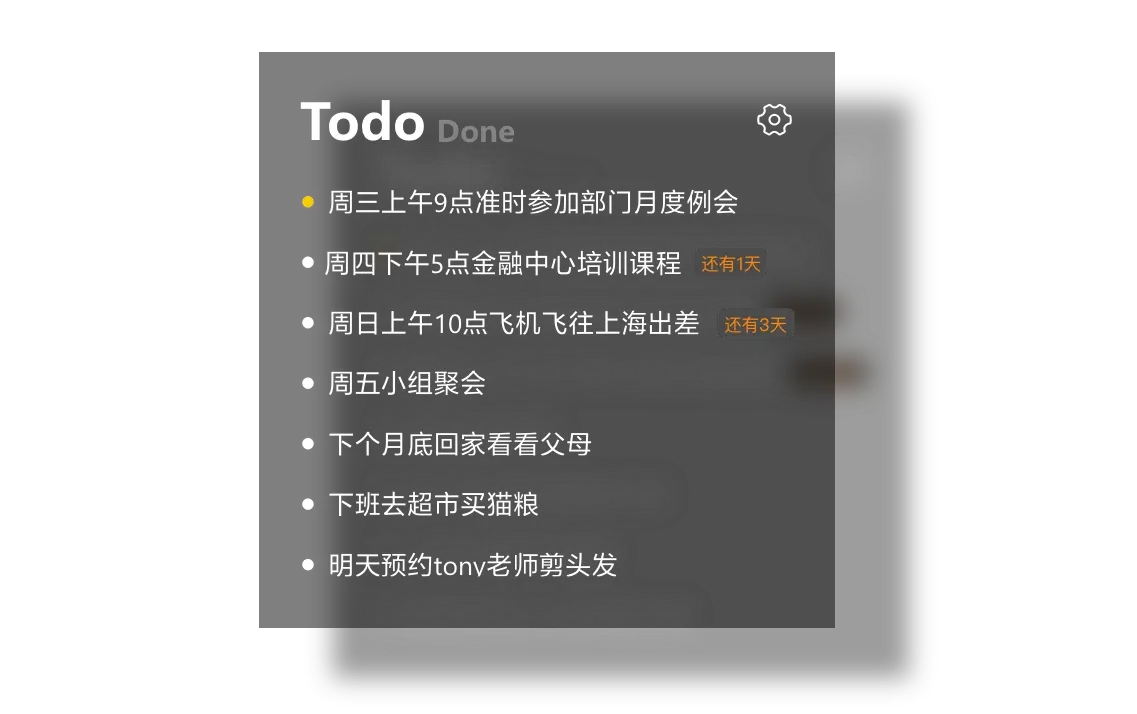
The application named after it strives to explore the ultimate lightweight trend, trying to achieve a quick start-up effect, and aims to simulate the experience of physical sticky notes within the scope of the system.
It is quick to start and easy to operate. Generally, a small input box will appear in an instant with the help of global shortcut keys, and it will disappear quickly after the recording is completed. It may be one of the most rapid tools for capturing fleeting thoughts.
Single function and lack of management It is mainly to solve the problem of "writing down". However, there are serious deficiencies in "how to manage these records". There is also a serious lack of corresponding measures in terms of "how to review these records." In terms of "how to integrate these records", there are also serious deficiencies. The content contained in records can easily be scattered in various places, resulting in information fragmentation, which makes systematization extremely difficult. After long-term use, a large amount of "digital garbage" that has not been processed may accumulate, which will cause psychological burden, which is completely contrary to the original intention of efficiency management.
Tools such as ecological isolation are often a separate small program that lacks connections with calendars, to-do or other productivity tools, and cannot achieve effective cross-platform synchronization.
Evaluation summary and value outlook
Choosing a computer notepad is essentially choosing a working habit and management mindset. YYNote stands for "active presentation, minimal operation." It adheres to the concept of modern efficiency and reduces the various demands that this tool places on users, such as attention, operation steps, etc., to a minimum. At the same time, it delivers the information that users most urgently need continuously and without any sense of awareness. It achieves an excellent balance between powerful functions and a minimalist desktop experience. It is especially suitable for users who expect their desktop to be smooth and clean, their affairs to be clearly presented without any ambiguity, and their work and life schedules to be connected without hindrance.
Looking back on the past year, we can also see the changing trend of social mentality from the "Top Ten Buzzwords of 2025" , pursuing pragmatic "decoupling" and efficient "closed loops", and rejecting those fancy but impractical "involutions". This mentality is also applicable when choosing productivity tools – we no longer need a "Big Mac" with over-stacked functions, but something like YYNote that can accurately solve the specific pain points of "cluttered desktop information" and "easy to forget things", and can also be integrated with existing workflows (such as office calendars). "Innovative" integrated solutions . Its value does not depend on the number of functions, but on how it is designed to make efficiency a natural state, allowing you to focus more on the work itself rather than on the tools for managing work.
If you are tired of switching between multiple software, or if you want to transform your computer desktop from a simple background into a real-time dashboard of your personal efficiency, then YYNote is worth trying right away. Such a change may be your first step towards a more relaxed and orderly work experience.
Download Now → Unlock Desktop Efficiency Center:

Microsoft Store

Google Play

App Store