
Every day, after sitting down at your desk, do you often feel that things are complicated and disorderly? Your schedule, tasks assigned by your boss, projects carried out by the team, plans made by yourself, etc., are all filled with various to-do items in your mind. However, after turning on the computer, you don't know which one to start with? I clicked to open this, but forgot about that. I was so busy all day that my feet didn’t touch the ground, but it seemed that I didn’t get a few key and important things done. I believe you are not alone in encountering this kind of efficiency dilemma.
Faced with a complicated schedule, a clear and intuitive desktop to-do list may be the key you need. It can help you "get" all the tasks out of your mind and arrange them neatly in front of you, making the key points clearly visible.
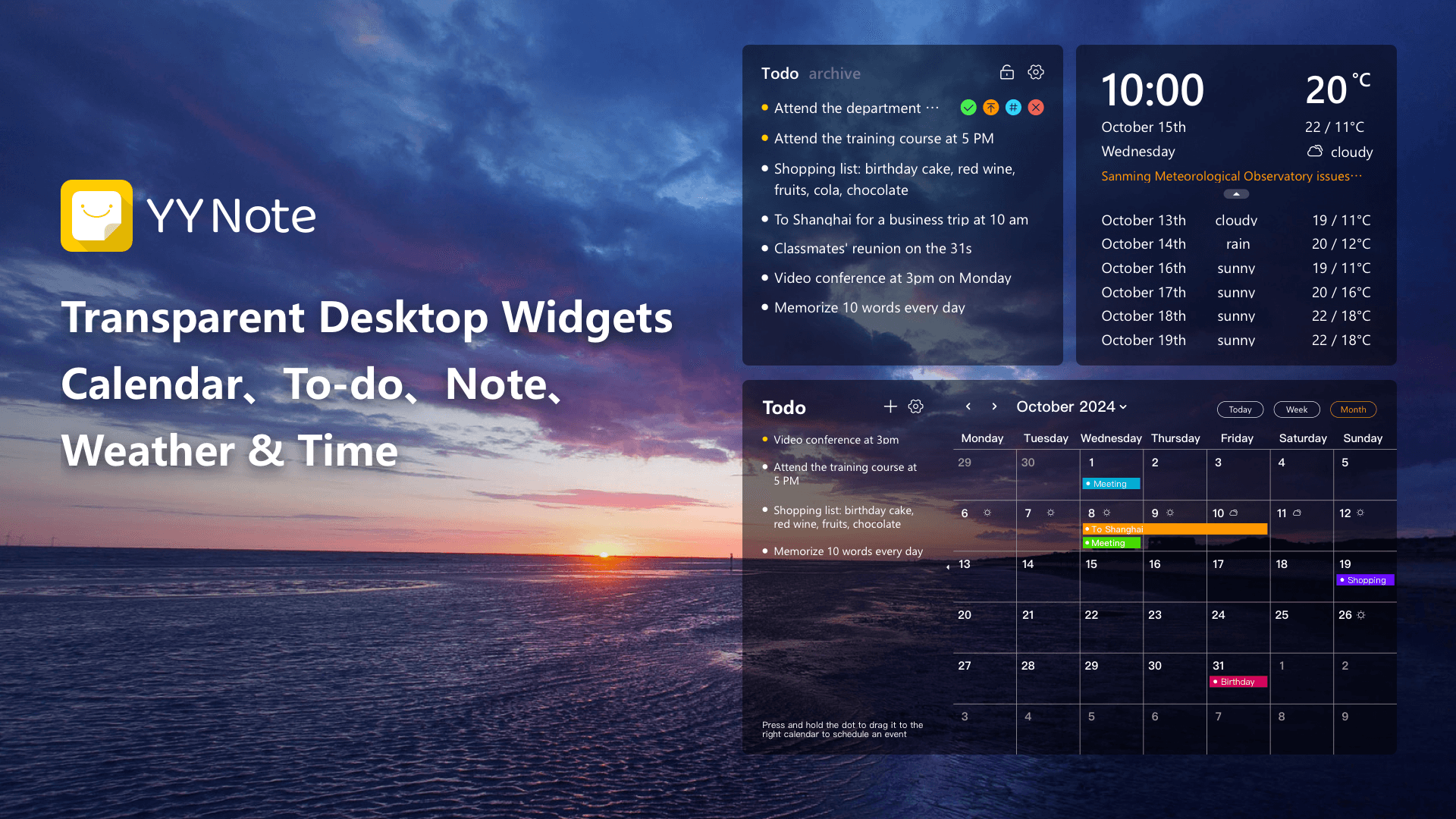
Why do you need a desktop to-do list?
Let's imagine that your working desktop is no longer just files and icons. Instead, there is a task list hanging directly, showing a light feeling. It is located in the place where you see it most often every day, and there is no need to open any software or web pages. And the first benefit brought by this is. Eliminate Forgetting All tasks are presented in black and white. There is no such thing as "let's think about it later". Important matters will never be submerged in trivial information again.
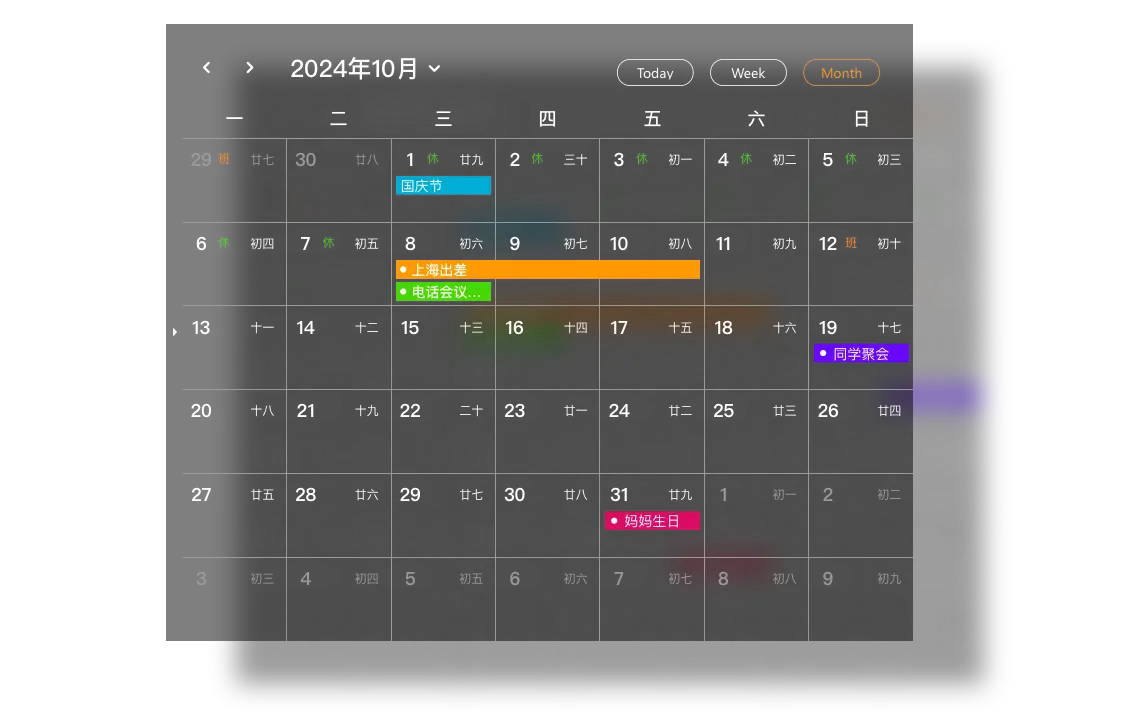
It can help you quickly focus on a long list of things to be done. You can use drag and drop to effortlessly arrange the things that must be completed that day to the top. Every time you glance across the desktop, you can immediately capture the key points and know what you should do next, preventing ineffective switching between multiple tasks and wasting precious energy.
Furthermore, an excellent list can also help you classify it. You can create different list sections for "work", "study", "life" or specific projects, and use tags to divide them in more detail. For example, when a task is added to the "Marketing" list, it can be automatically labeled as "Marketing Department", making task management clear and easy to find and review.
How to create your efficient workbench?
An authentic productivity tool should allow you to gain the greatest sense of control with the minimum operating cost, which means that the use of lists must be extremely simple. You can complete items by double-clicking, drag to adjust the order, and click on the blank space to add new tasks. All operations are natural and smooth, as intuitive as using pen and paper.

More importantly, it needs to be flexible enough to adjust the transparency, font style, and color characteristics of the list based on your own desktop layout and aesthetic preferences, so that it can perfectly blend into your work environment instead of becoming an obtrusive disturbing factor. At the same time, its most ideal state is to be able to. Silently protect your privacy , hide it with one click or automatically hide it when you don't need it, and recall it instantly when you need it.
When you get used to visualizing tasks on your desktop, you will find that your ability to control your time is significantly enhanced. Before starting work every day, spend a minute planning your list; every time you complete an item, check it off. Such a tangible sense of advancement can not only bring a sense of accomplishment, but also build confidence and calmness in the work.
To become a leader who calmly plans progress, before I was a person who was always chasing deadlines and was in chaos. From chaos to order, maybe the only difference is a to-do list that is visible at any time and can be used easily. Let all tasks be clearly presented and keep the focus of work in front of you. This may be the most direct and crucial step towards an efficient and relaxed working state, right?
At this moment, you might as well start sorting out your tasks today so that everything becomes clear and visible. Experience this feeling of taking control of your work right away, and you'll find that being efficient can actually be easy.
Download Now → Unlock Desktop Efficiency Center:

Microsoft Store

Google Play

App Store