
Have you ever experienced this situation? You clearly planned three key tasks to be completed today in the morning. However, after the day passed, you opened your phone or checked the memo, and found that not many of them were actually completed. Instead, a bunch of temporary chores appeared. You feel busy, but you seem to have caught nothing? If you are troubled by the cluttered feeling of "plans can't keep up with changes and important items are always being submerged", then a truly efficient and intuitive desktop to-do system may be just the solution you need.
Regardless of traditional to-do tools hidden in mobile apps or software that needs to be opened manually, there is a common weakness, that is, they are "invisible". When our attention is occupied by documents, web pages, and chat windows that fill our desktops, those "invisible" reminders are naturally ignored. The secret to efficient to-do list management lies in “always being right in front of you.” A set of minimalist to-do lists embedded in the computer desktop and integrated with the wallpaper can enable you to have a clear idea of today's core tasks as soon as you turn on the computer and look up, and effectively focus your limited energy on the most important things.
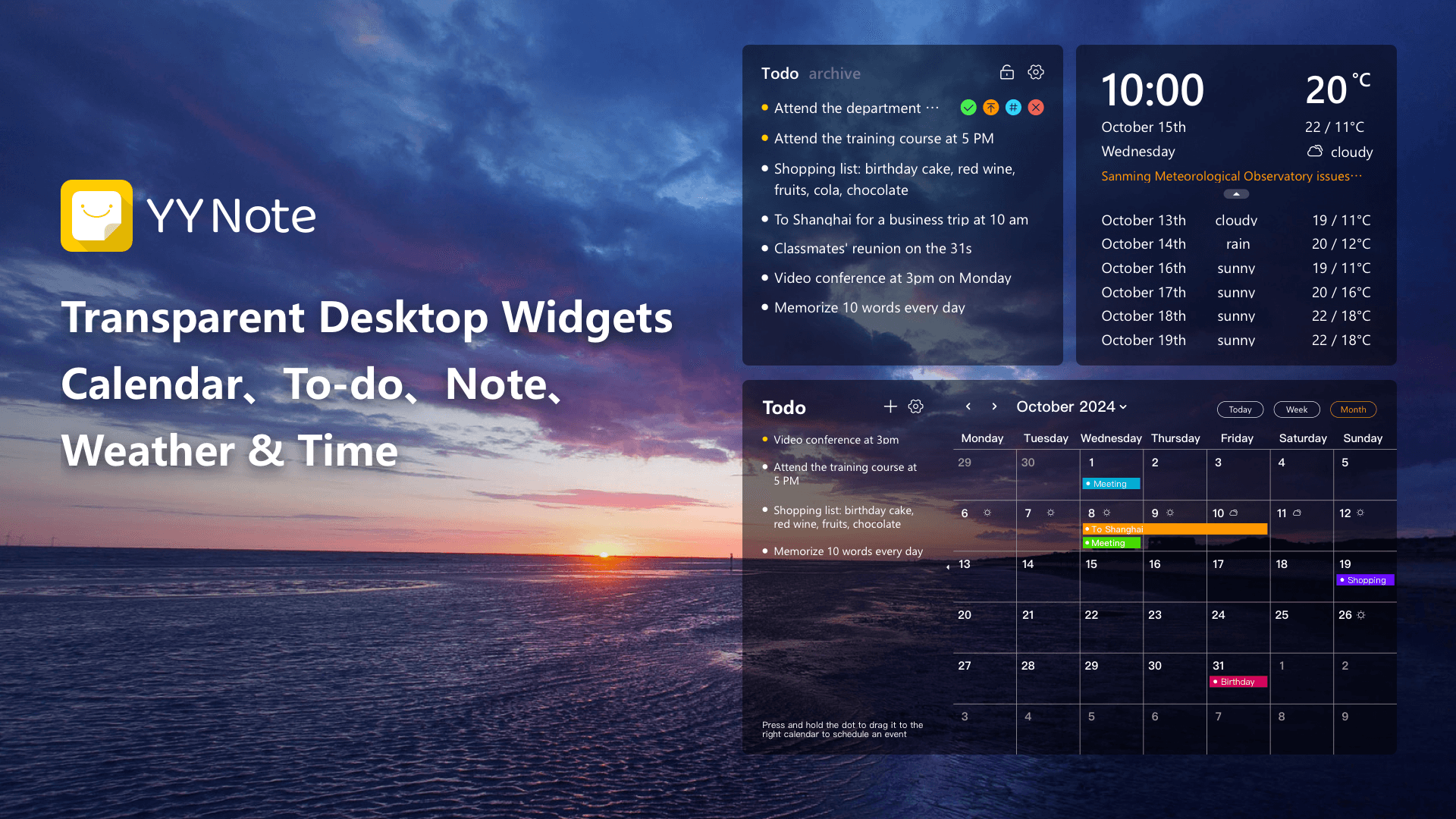
In this way, the key to how to build a desktop to-do system that "never disappears" lies in the following three levels.
The first level: clear presentation, focusing on core tasks.
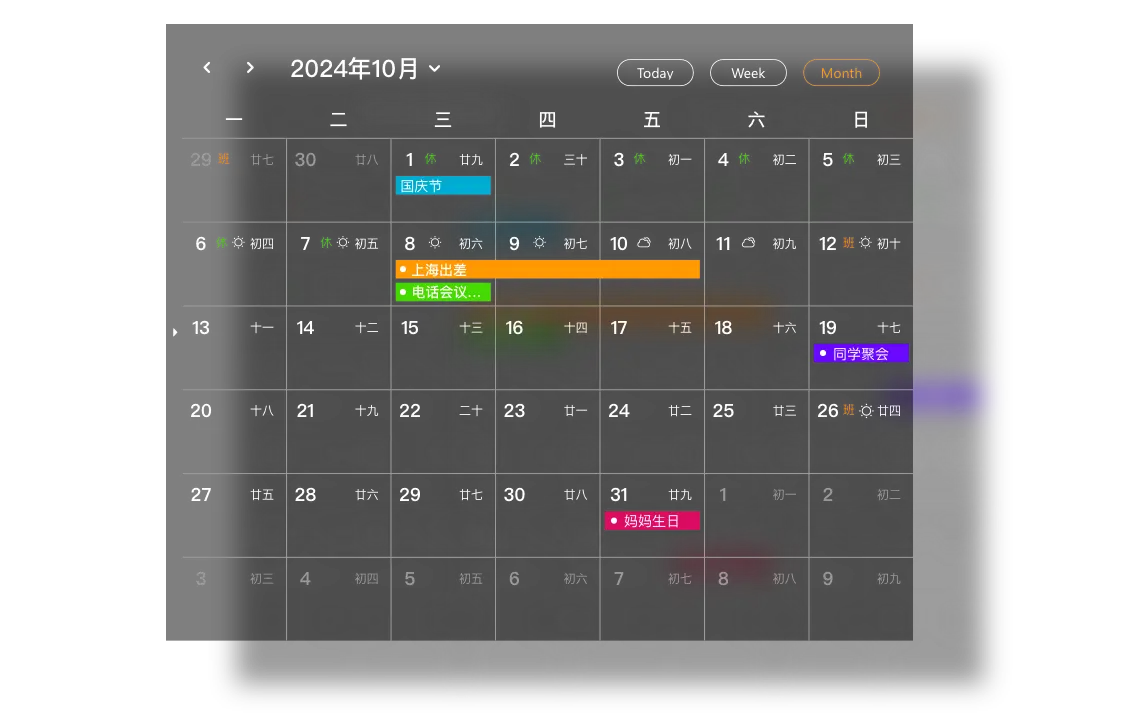
The core value of to-do items lies in "reminder", not "recording". The ideal to-do list on the desktop should be like a transparent post-it note, "pasted" directly on your desktop. It uses a minimalist design method to automatically adapt to your desktop wallpaper, so that the list of items can be clearly displayed without blocking any work-related area. You can place the 3-5 most important things that must be completed today at the forefront to ensure that every time your eyes pass across the entire desktop, they will be "grabbed" by them. Such a "feeling of its existence" generated at the physical level can effectively combat forgetfulness and help you firmly fix your goals.
The second level: flexible and intelligent management to cope with complex realities.
Daily life and work are often full of variables. A good to-do system must be flexible and adaptable. First, it should be able to support it. For example, "Today's work" is displayed separately, "This week's projects" is displayed separately, and "Life chores" are displayed separately, so that different types of tasks do not interfere with each other. Secondly,. Intelligent identification and labeling functions are of extremely critical importance. For example, you only need to enter "regular project meeting at three o'clock next Tuesday afternoon", and the system will automatically recognize the date and time it exists, and will also attach a label such as "meeting" for you to quickly classify it. For repetitive matters such as weekly meetings and monthly payment. Repeating rules can automatically generate to-do items once and for all, helping you free yourself from those complicated and trivial memory burdens.
The third layer: easy and intuitive interaction, integrated into the workflow.

The best tool is one that makes it invisible to you. An excellent desktop to-do, its interaction design should also pursue "minimum effort". For example, the order of tasks can be adjusted by simply dragging; completing the check with a tap can bring an immediate sense of accomplishment; after setting a reminder, you do not need to check it repeatedly, the system will give you a gentle pop-up reminder at critical times. All of these operations should happen on your desktop, without the need to switch windows, making your workflow smooth and unhindered. As mentioned in the news recently, a man almost had an accident at home just ten minutes after he went out. This reminds us that risks often come when we don't expect it. There is a desktop to-do system that is always online. It can build a solid and stable "memory defense line" for you, so that no matter how busy you are, important things will not "run away" or be missed.
"Pinning" to-do items on the desktop changes not only the way of recording tasks, but also a work philosophy: from passive response to active control, from chaos to clear focus. Whenever you turn on your computer every day, a clear, orderly and controllable to-do list is waiting silently on your desktop. It will quietly set the tone for your day to be efficient and focused. You will find that when you deal with those piled-up emails and temporary needs, you will feel more confident because you know clearly that the most important "big rock" has been firmly placed where it should be.
If you are tired of switching back and forth between numerous applications to find to-do lists and are looking forward to a more direct, faster, and more efficient work rhythm, then it is time to make a change. Go and experience it now, a minimalist to-do tool specifically built for your desktop, and feel that way. Your goals will be clear as soon as you turn on the computer, and you will be in control of the overall situation as soon as you raise your head to start your efficient work state. Click here to download it for free, thus starting your desktop management journey with efficient features.
Download Now → Unlock Desktop Efficiency Center:

Microsoft Store

Google Play

App Store