
Have you ever felt powerless when staring at the messy notepad files and post-it notes on your computer desktop? As soon as I turn on my computer every day, to-do items come flooding in, important meeting reminders are buried under layers of windows, and urgent tasks miss deadlines due to a moment of negligence. This primitive management style of "do it if you remember it, forget it if you can't remember it" is quietly eroding your concentration and work efficiency. You need a smarter, more direct solution—one that allows you to see the whole situation at a glance. Desktop to-do list .
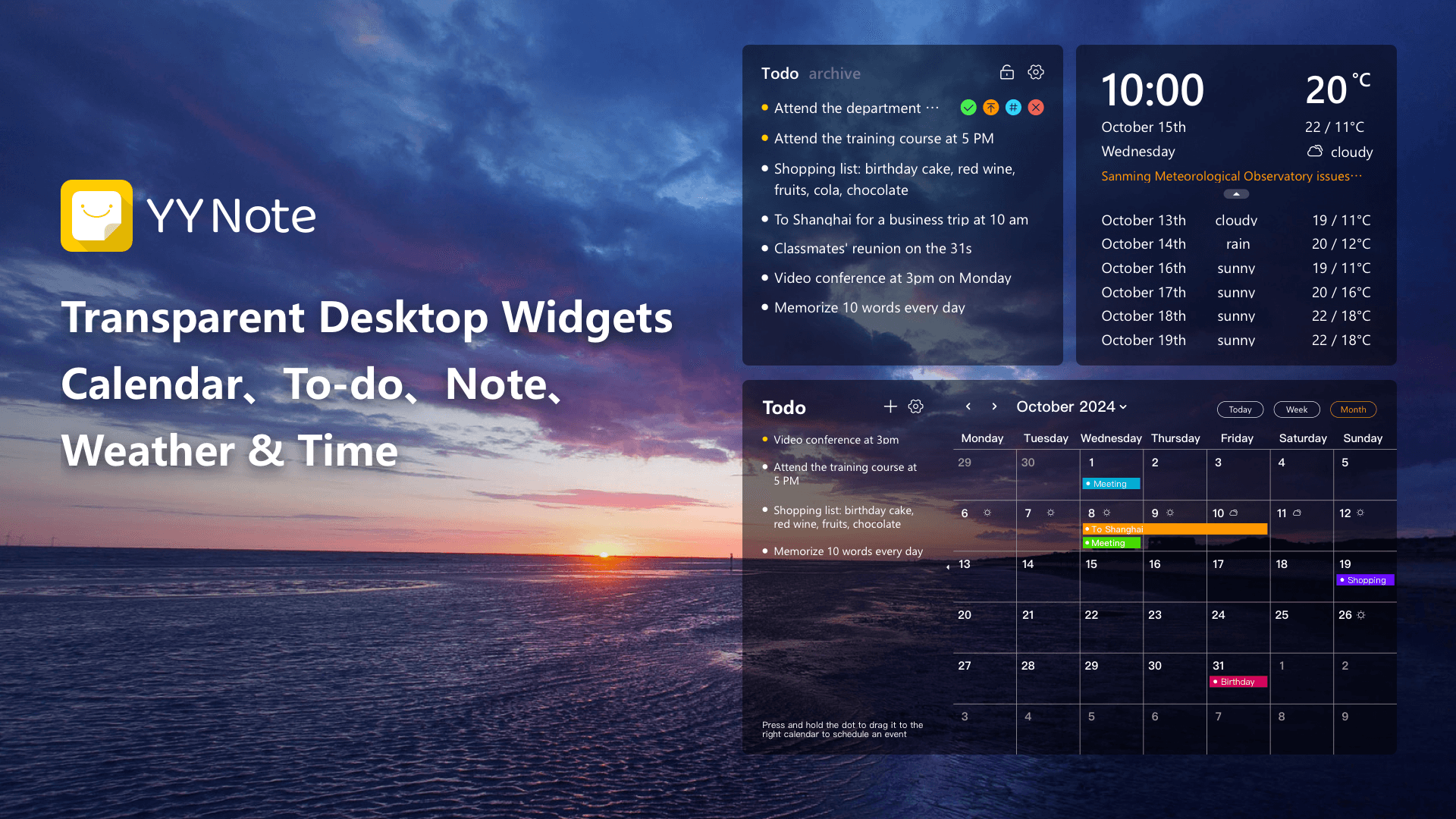
"Pinning" the to-do list directly on the desktop is an extremely efficient way to say goodbye to forgetting. Just imagine, after turning on the machine, all tasks are clearly displayed on your wallpaper. There is no need to switch windows or open any software. The focus of your work is clearly visible. This kind of "visual management" can continuously convey the background of tasks to you, reduce the mental consumption caused by memory burden on the computer desktop to-do list, and allow you to naturally focus on the most important things at the moment.
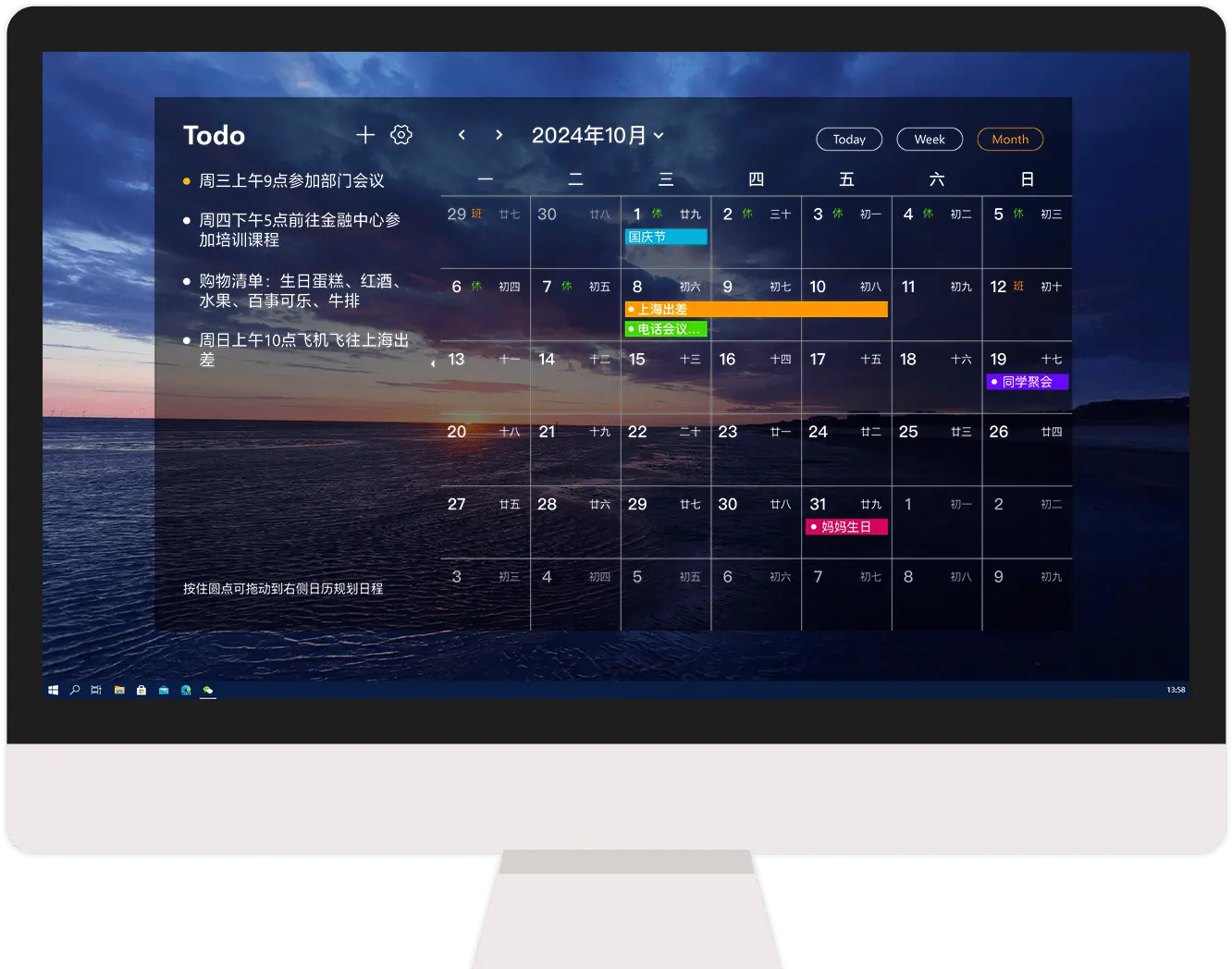
An excellent desktop to-do tool is more than just a list. It should be able to understand your complex workflow. For example, it can be arranged flexibly for weekly meetings, monthly repayment reminders, and even family life journals calculated annually based on the lunar calendar. Repeating rules automatically generate to-do items, allowing you to set them up once and worry-free for the rest of your life. For example, set a "target day" for important projects, so that it will automatically appear on the list. The date countdown label creates a sense of urgency and pushes you forward steadily.
When tasks are numerous and messy, classification becomes key. You can create multiple independent to-do lists based on projects, scenarios, or priorities and place them in different areas of the desktop. With. The classification tag function can not only classify tasks in a clear order, but also automatically add tags when creating new items, eliminating the complexity of manual sorting. You can use the mouse. The order of dragging and dropping tasks can be easily adjusted. One of the most critical items can be used through the "one-click top" operation to ensure that it is always in the most central and prominent position of the field of view, which is the C position.
All efforts are aimed at achieving that moment of relaxation. Whenever you complete a task, you can check it gently and watch it being crossed off the list or automatically filed. Such immediate positive feedback can bring a strong sense of accomplishment. As time accumulates, you will find that your work has become more and more effective. Work is no longer a forced coping process, but becomes an active process that is progressing and controllable. The desktop is no longer cluttered and disorderly, and ideas become clearer. The calm feeling that everything is under control will make you fall in love with this efficient work rhythm.

This is the work philosophy we hope to convey, with minimal management efforts in exchange for maximum focus returns, so that tools serve people instead of people being tired of managing tools. A desktop to-do system that is simple, smart, and always in your field of vision is the beginning of achieving this concept. It does not disturb you and only displays when you need it. It is not complicated, but it can meet most of your work planning needs.
If you are tired of exploring and groping in the chaos and eagerly hope for a more organized and relaxed work experience, then it is time to make a change. Immediately try to put your to-do list on the desktop and experience for yourself the efficient working situation where your eyes never stray from the goal and no tasks are missed. You will find that properly managing every day's tasks is the first step to control your work and life.
Download Now → Unlock Desktop Efficiency Center:

Microsoft Store

Google Play

App Store