
Have you ever stared at the small system timer in the lower right corner of your computer and always felt that the information was too single and you couldn't control the overall situation at a glance? During a meeting, I was suddenly asked about next week's schedule, and I hurriedly switched windows to find the calendar; when planning my trip, I had to open another web page to check the weather conditions. This fragmented operation behavior of repeatedly switching between time, schedule and real-world information quietly consumes your attention and efficiency. This is exactly a common pain point faced by many people who pursue efficient work: key information is scattered and decision-making costs are high .
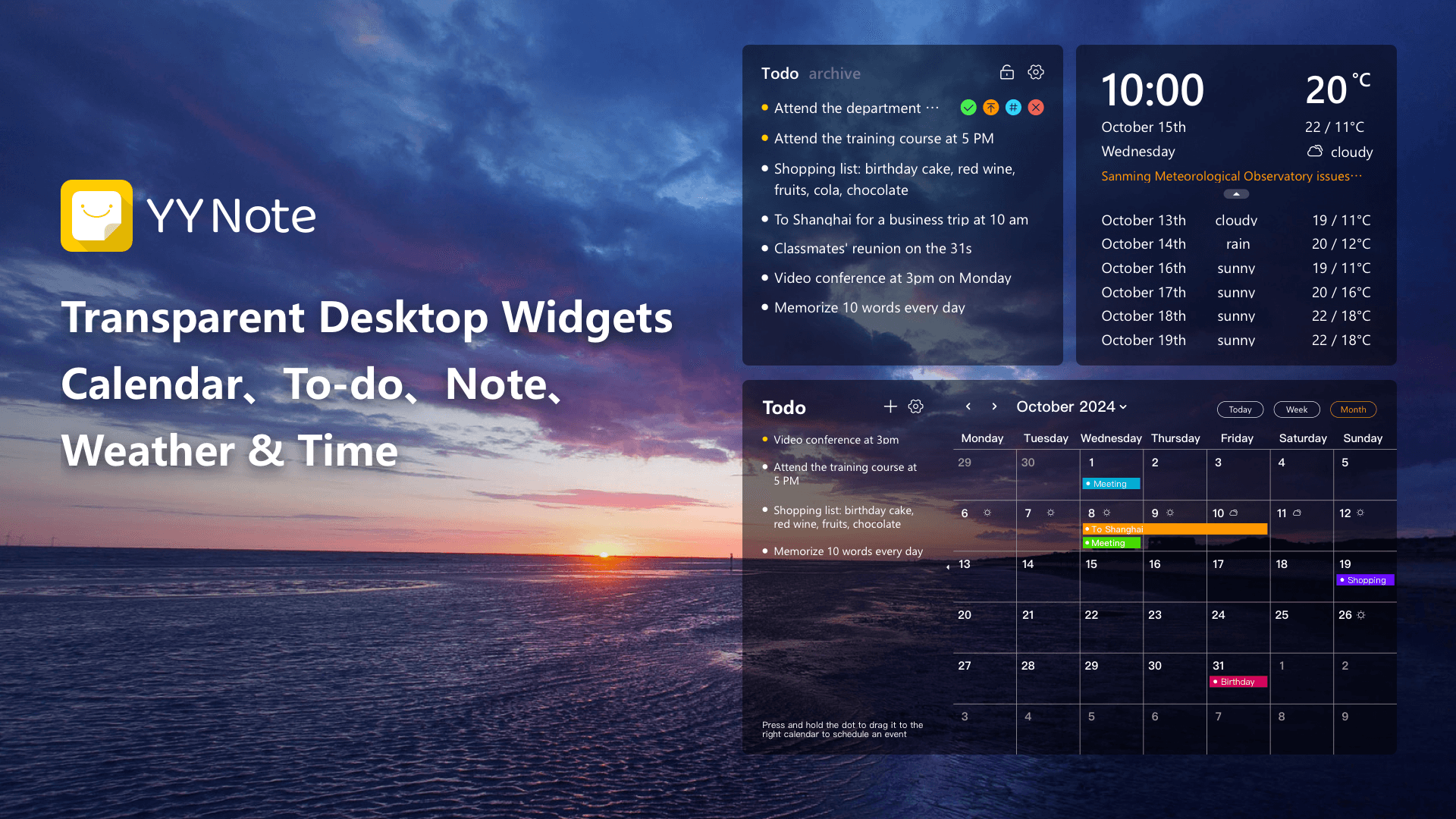
In fact, a clearly organized "digital desktop" can become your command center for controlling your rhythm. Please try to imagine that there is a transparent window that always floats on the wallpaper. It not only displays the time at the moment, but also integrates the complete calendar, to-do list, and even real-time weather information. You don't need to leave your current work interface at all. Just take a quick glance and you will know the key points of this month's work, tomorrow's important meeting, and even whether you need to bring an umbrella when going out. This way all the key information is included. The idea of pre-positioning and scene-based presentation is exactly a beautiful change for the traditional workflow. The idea behind it is very simple: let the tool adapt to the person, rather than let the person adapt to the tool , and use the minimum investment of attention to obtain the richest decision-making support.
To achieve such an efficient situation, a well-designed desktop integration tool plays a decisive role. It can seamlessly integrate time, calendar and weather information on your work surface. For example, the time and calendar display desktop has a high degree of customization. The desktop time display is not limited to hands or numbers, but can also simultaneously display the lunar date, day of the week, and the passage of time accurate to seconds, giving you a more three-dimensional perception of time. and. The desktop calendar must break through the limitations of a simple monthly calendar. It is best to present it in a clear and intuitive monthly view, a clear and intuitive weekly view, or even a clear and intuitive day view, and be able to drag and drop to-do items directly to the corresponding dates for planning, thereby achieving visual binding of tasks and time. What's more considerate is if it can be integrated. Real-time weather information includes temperature, meteorological conditions, and forecasts for the next few days. This information can provide you with instant reference for your daily commuting, choosing clothing, and arranging outdoor activities.
The benefits of integrating these capabilities in one place are substantial. First, it significantly reduces the frequency of context switches. In this case, you don't need to switch back and forth between the clock, the calendar application, and the weather forecast website. All relevant information is clearly presented, allowing you to maintain the continuity of your thinking. Second, it enhances the forward-looking and rationality of the plan. With the combination of schedule and weather, you can more easily arrange outdoor meetings or travel activities to avoid emergencies. Most importantly, it creates a Sense of global control When the process of time, task nodes, and the external environment coexist peacefully in the same field of view, you can allocate energy more confidently and deal with various matters in work and life more calmly, thereby reducing anxiety and focusing on creative work.
This method of intelligently integrating time, calendar and information on the desktop represents not only the advancement of a tool, but also a manifestation of the pursuit of efficient, orderly and calm work and life concepts. It makes tools invisible and allows efficiency to happen naturally. If you also want to say goodbye to the patchwork of information and yearn for a clearer and more autonomous sense of rhythm, then it’s time to re-examine your desktop and make it a powerful helper for you. Immediately explore a desktop productivity tool that can achieve these functions, take the first step to build your personal efficient command center, and experience for yourself the lightness and efficiency brought by this kind of overall control.
Download Now → Unlock Desktop Efficiency Center:

Microsoft Store

Google Play

App Store