
Are you also in this situation: as soon as you sit down in front of the computer every day, you will be chased by various schedules, meetings and to-do items, so you feel that there is never enough time, and you are full of worry that you will miss some crucial arrangements? In order to get these things done, you may have tried various software, but either the operation was complicated and trivial, or the information was scattered and disorderly, so that in the end you became more and more anxious. In fact, how to set up a calendar on your computer desktop? All you need is a simple and straightforward method that can make planning your schedule as natural as checking the time.
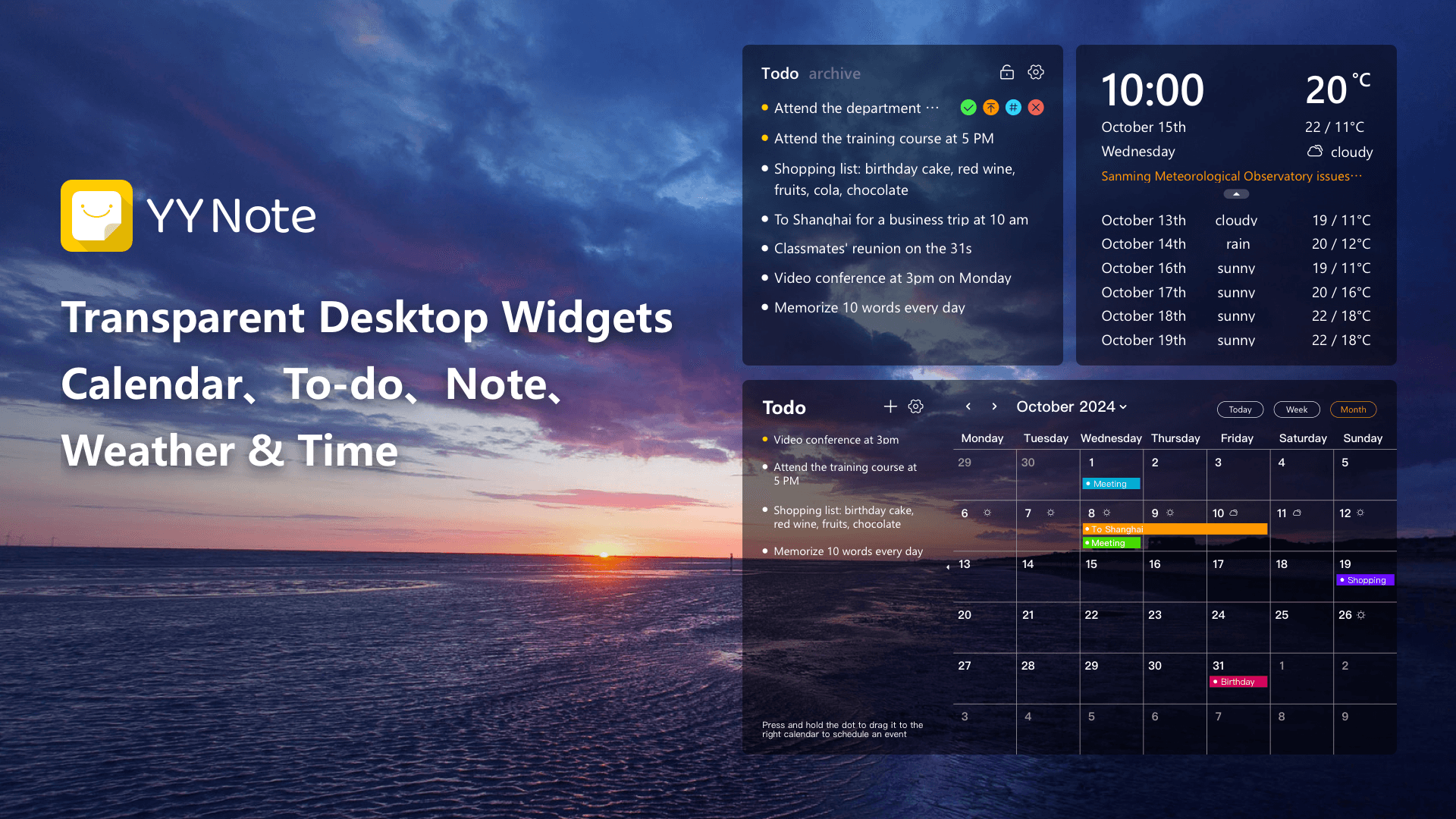
This is precisely the significance of placing the calendar on your computer desktop. It does not simply add a decoration, but builds one for you. Imagine an all-weather, zero-interference planning center. Important meeting dates appear clearly in front of you, project deadlines also appear clearly in front of you, and friends’ birthdays also appear clearly in front of you. You don’t need to repeatedly switch applications or click on layers of menus to confirm. This sense of “what you see is what you get” control can immediately relieve the anxiety caused by unknowns and forgetfulness.
If you want your desktop calendar to function as it should, the key is to make it "alive" and seamlessly integrate with your workflow. You can start with these two core ideas.
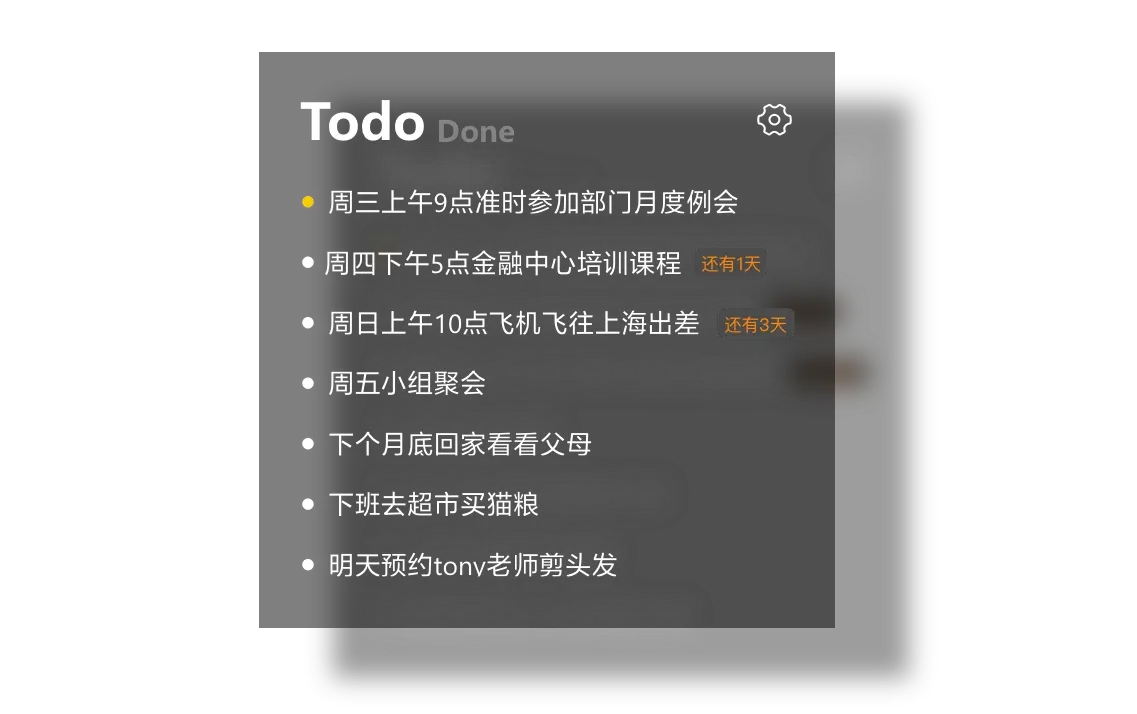
First, choose tools that can be deeply integrated with the desktop. An excellent desktop calendar plug-in should be as natural as the desktop wallpaper you own, and it should have the best features. The transparent display can perfectly match any style of wallpaper and will not damage the overall aesthetics of the desktop. At the same time, it must have enough "smartness", and this "smartness" must support the direct completion of to-do items. Drag and drop onto the date grid to create a schedule immediately and quickly. Whether it is to view the layout of the entire month, that is, the monthly view, or to plan the highlights of the week, that is, the weekly view, or to arrange today's tasks, that is, the daily view, all can be switched with one click. Through this, planning the schedule is transformed from a task that needs to be "deliberately completed" into a subconscious and easy action in work.
Second, make it the convergence point for all of your schedule. Today's people's schedule may be scattered on many platforms such as WeChat Enterprise, DingTalk, Feishu, etc., making it extremely inefficient to check back and forth. For this, there is a can. When synchronizing schedules across multiple platforms , desktop calendars are especially important. It can bring all the various arrangements together into one place and give you a clear reminder on the desktop. In conjunction with it. The to-do list has such a function that it can list some tasks that do not have strict time limits next to it. Whenever an item is completed, it will be checked off. This kind of immediate positive feedback can greatly improve efficiency. This is just like Mixue Bingcheng's recent attempt to launch a breakfast set, which is essentially a pass. The combination and aggregation of products in a scenario familiar to users (beverage shop) can more efficiently meet their extended needs (breakfast). Your desktop calendar should also play the role of such an efficient "gathering point".
Furthermore, you can use the modular design of the calendar to deal with complex tasks, such as the "Nine Sky" large drone that China recently successfully completed its first flight. The key to its ability to handle various tasks such as logistics transportation, geographical surveying and mapping, and emergency rescue and rescue is this. The universal platform + modular task load adheres to such a very unique design concept. When it comes to calendar management, it actually works like this: rely on the desktop calendar as the key element that is considered a "universal platform", and then apply content one by one for different types of tasks. For example, labels such as "[work]", labels such as "[study]", and labels such as "[personal]" can be used to implement classification, and can even be set to target a certain key goal. The date countdown makes the feeling of wanting to do something quickly and not delaying it become intuitive. By selecting different marks, on the relatively large platform called "month view", you can quickly switch to the "task module" that should be paid most attention to at the moment to achieve accurate concentration.
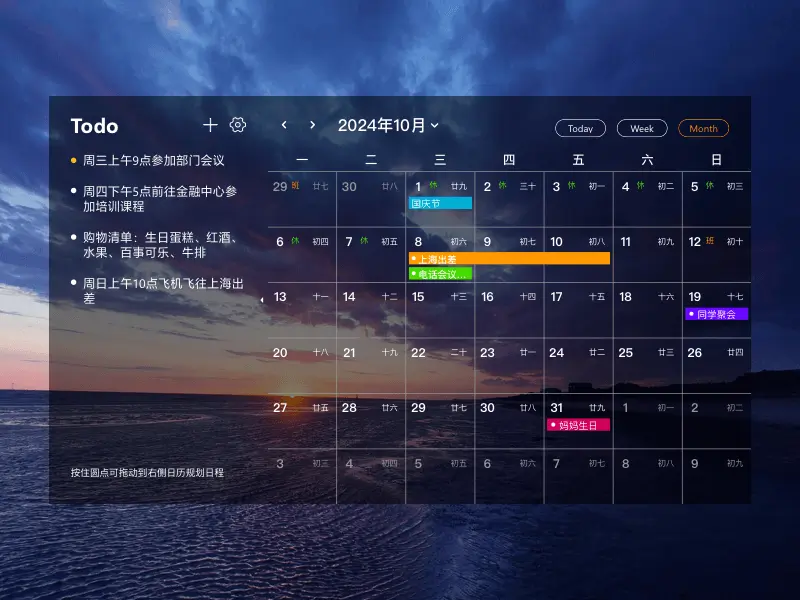
When you get used to the existence of a desktop calendar, you will find that it not only manages time, but also quietly creates a more orderly and calm work rhythm. Instead of passively dealing with deadlines, you can proactively overlook and plan your own time map. The feeling that everything is under control will make you feel more confident and calm at the beginning of every day's work.
This change starts from the moment you decide to put the calendar on your desktop. Now, take a minute to choose a desktop calendar tool you like and let it start working for you. You'll realize that good time management is easier than you think.
Download Now → Unlock Desktop Efficiency Center:

Microsoft Store

Google Play

App Store