
Have you ever thought about it: when you turn on your computer every day, the first thing you see is a clear and intuitive monthly or weekly calendar. All your meetings, to-dos, and important anniversaries are all marked on it in an orderly manner. This is not a fantasy, but the most direct change that an efficient desktop calendar tool can give you.
The ideal is indeed very beautiful, but the reality is that many people continue to encounter setbacks when looking for such a "flawless" desktop calendar. If you happen to have these distressing situations, then the introduction given today may be of some help to you.
The core problem with desktop calendars: Why are they always so unsatisfactory?
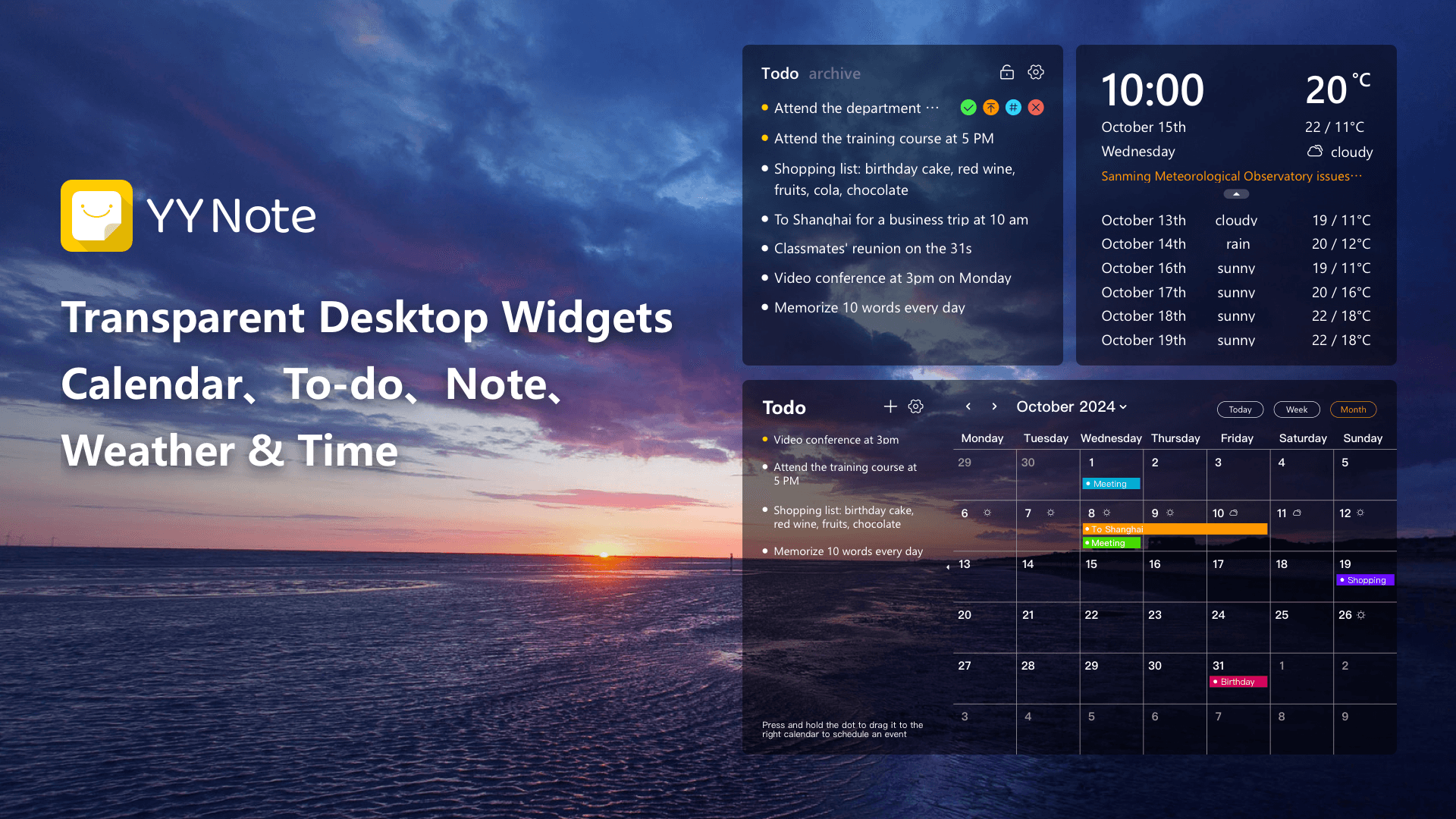
Many people rely on the calendar that comes with the computer system, but its functions are often too basic and even a bit "simple and crude." For example, the functions of the Windows 11 taskbar calendar panel have been simplified for a long time, and users cannot easily create and view schedules. For those who pursue efficiency, this is undoubtedly a setback. You may have encountered a similar situation: you want to quickly note down a meeting later, but find that the operation method is complicated; you want to see an overview of tasks for the entire month, but you can only see a single date number.
In addition, some users choose third-party calendar software with independent functions, but they often cause new troubles. Although some software has powerful functions, it is like a bulky window that stubbornly occupies valuable desktop space and blocks your other icons and windows, which in turn affects work efficiency. In addition, some tools seem to have more comprehensive functions, but they have set up obstacles in multi-terminal synchronization. The data on mobile phones and computers often cannot match, and key reminders may be missed because of this.
The more common pain point is that many calendar tools are just a place to mechanically display dates and to-do items. They sit quietly on the desktop, but they cannot have a linkage effect with your other workflows, such as corporate WeChat meetings, DingTalk schedules, etc. What this shows is that you need to maintain multiple independent "task lists" and repeatedly switch and check between multiple applications, which invisibly adds a lot of "management costs."

Back to the basics: What you really need is a “smart” desktop canvas
So, what kind of desktop calendar is really efficient and can make people worry-free that meets the requirements? It is by no means the kind of tool that requires you to work hard to "manage", but should be like a silent but all-round assistant on your desktop.
It must be extremely concise and non-intrusive. The best state is that it "integrates" into your desktop wallpaper like a transparent canvas. All agenda information is clearly visible, but it does not cover any key files or icons on your desktop. You can check it at any time when you need it, and it will quietly hide in the background when you are not using it.
It must be highly intelligent and linked, which means it can proactively help you integrate information. Just imagine, you do not need to manually enter items and content. All meeting invitations from office applications such as WeChat, DingTalk, and Feishu can be automatically synchronized to this desktop calendar. Schedules, to-do items, and notes can be flexibly transformed and associated to form an organic whole.
It should make you feel "minimum effort, maximum return". It has an efficiency philosophy and the operation is intuitive. Double-click the date grid to quickly record, and drag and drop to adjust the task time. It can also handle easily forgotten repetitive tasks, such as the computer desktop calendar, whether it is a weekly meeting or a family member's lunar birthday every year. Set it once to be a permanent reminder, allowing you to completely free up your brain memory.
Better solution: Explore new possibilities for desktop efficiency
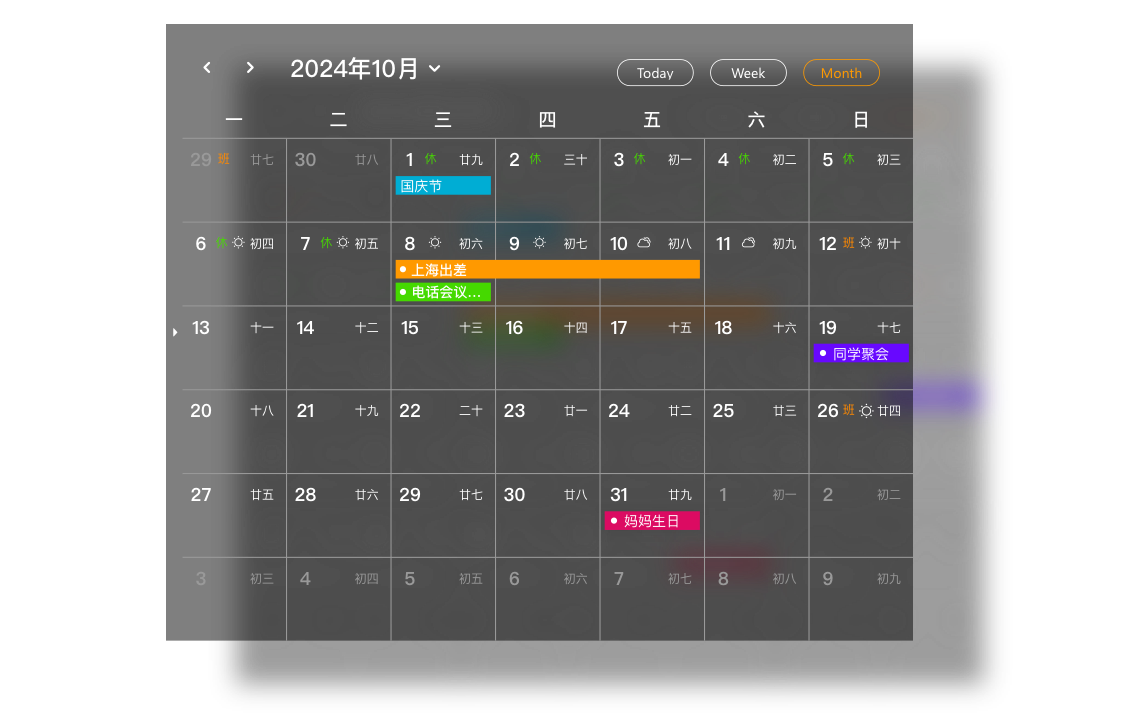
If you are full of yearning for the kind of working state described above, then now is the time to explore more modern desktop productivity tools. They are redefining the concept of "desktop calendar", not as an isolated application, but as one of your personal productivity systems. Core visual center .
Such tools usually have truly seamless multi-terminal real-time synchronization capabilities, which can guarantee the various tasks you plan on the computer, and you can receive real-time reminders on the mobile phone, and vice versa, completely saying goodbye to the trouble of manual uploading and downloading. They also consider it deeply. You can freely adjust the transparency of the visual experience . You can also adjust the color freely. You can also adjust the layout freely. In this way, you can make it perfectly match your desktop style and fit your aesthetic preferences, making efficient work a pleasant thing.
More importantly, they focus on breaking down information silos, and by supporting multiple third-party calendar protocols (like CalDAV, Exchange, etc.), they can become one. The centralized schedule inbox brings together your work and life schedules on different platforms into the same field of view, achieving real one-stop management.
The ultimate goal of tools with excellent performance is not to imprison you in more to-do lists, but to help you plan leisurely and execute them in a clear order, thereby gaining a sense of control over your work and life. When your schedule is clear at a glance and all tasks are carried out in an orderly manner, you can devote yourself more fully to creative activities and enjoy your leisure time with more peace of mind.
A desktop calendar with smart features is the first step towards that calm state of mind. At this moment, you might as well start by re-examining that area of your computer desktop, and choose a device that can truly integrate into your work flow, reduce your burden and improve efficiency, and immediately start a more relaxed and orderly daily life.
Download Now → Unlock Desktop Efficiency Center:

Microsoft Store

Google Play

App Store