
Every day when you turn on your computer, you are faced with all kinds of files and icons of various styles on your computer desktop. Do you always feel that something is missing? I am worried about what time I have to attend the meeting, and the report that must be submitted in the afternoon has not been completed yet. The inspiration that suddenly emerged in an instant is afraid that it will be forgotten in an instant… Once the number of bits and pieces increases, the brain becomes like a series of tangled and disorganized threads. Don't worry, this is indeed a sign that you urgently need an efficient desktop note-taking tool. Today, we are going to talk about how to use minimal changes to maximize desktop efficiency.
Core pain point: Your attention is being cut off by invalid information
For most of us, that important to-do item is written on a sticky note and then pasted on the edge of the screen; that impromptu meeting time is recorded in a mobile phone memo; that sudden idea may be opened in a text document to record it, but then it is never found again. Such a fragmented recording method makes it impossible to store key information. It is clear at a glance that you have to continue to switch between different tools and devices and recall, and a lot of time and attention are completely wasted in this process of "searching". To make matters worse, given the scattered nature of information, the risk of missing key tasks is greatly increased.
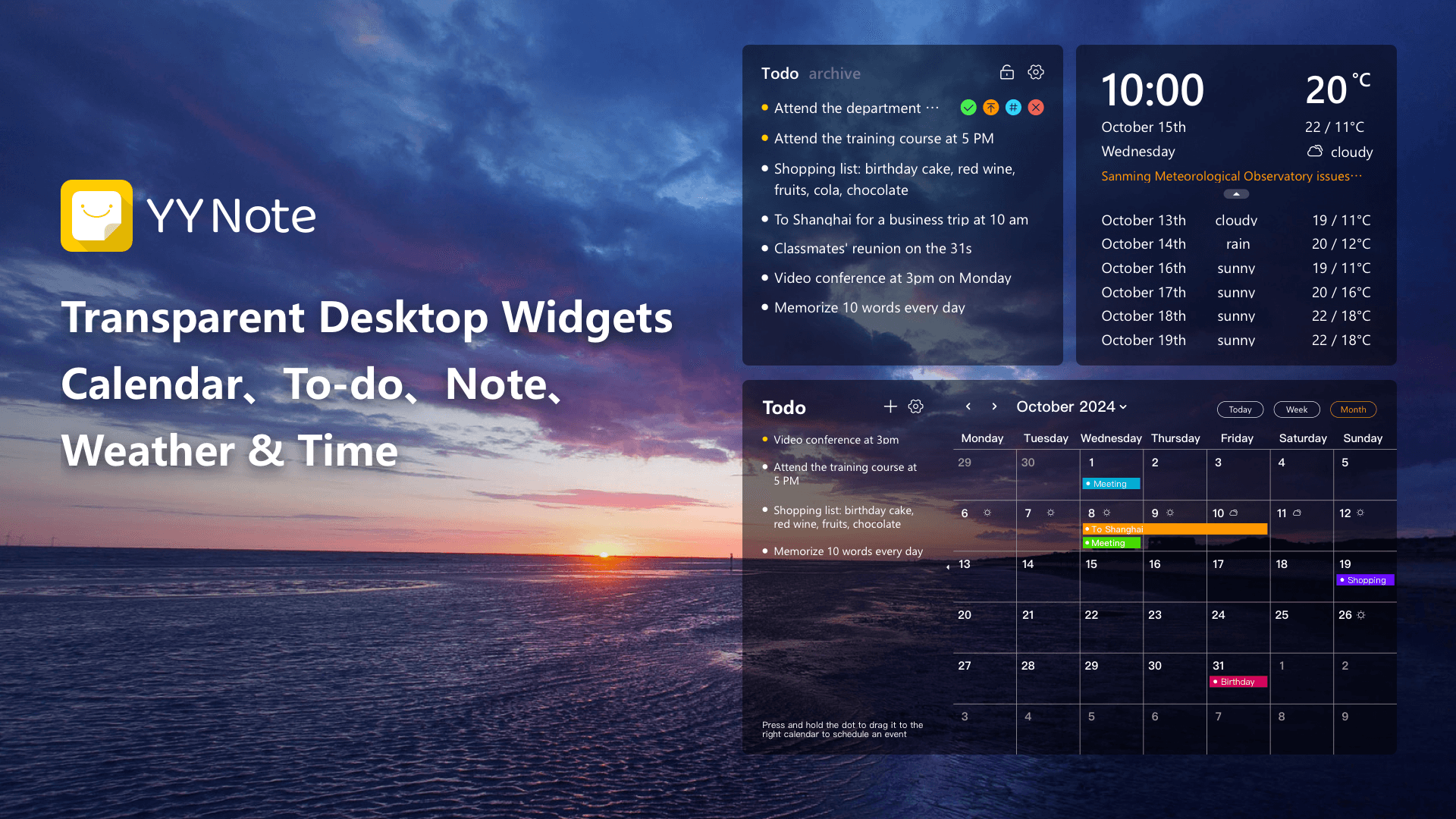
Solution: An integrated, always-on "transparent desktop hub"
The key to solving this problem is not to find more and more complex software, but to implement subtraction and present the core information you need most in the clearest and least disruptive way. The ideal tool that appears directly on your computer desktop should be like a "desktop hub" with a high degree of self-definition. It should be light enough and "invisible" enough in visual terms, but it should be able to provide you with the most critical information at every moment. This means:
Information aggregation can integrate to-do items, calendar schedules, instant notes, and even time and weather, and place them in a fixed area on the desktop.
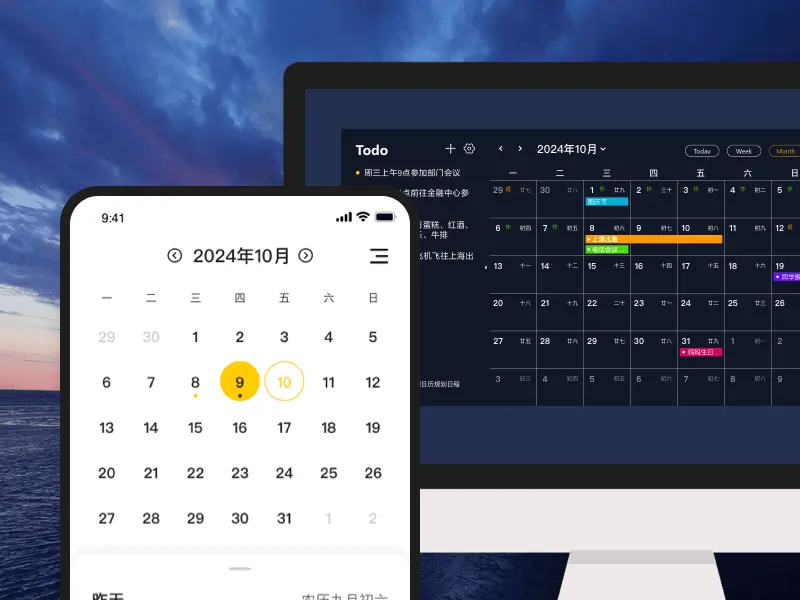
Zero-interference design It should be like a carefully selected wallpaper, with beautiful attributes and able to fit well into the desktop. It is not the kind of pop-up window or advertising box that will appear obtrusive.
The simple operation to complete the task addition, complete its modification, etc. should be completed within one or two steps, and there is no need to open a complicated software interface.
How to choose? Four value dimensions beyond the “feature list”
For many desktop note-taking software, it is meaningless to simply compare the list of functions. What you should pay attention to is what kind of working state this tool can create for you. We can assess this along four dimensions:
1. Visual integration: Can it be truly "embedded" into the desktop? Can it support a transparent background and be able to freely adjust its position and size? Or will it block your workspace? A tool that can get along well with any wallpaper can be considered a tool that truly provides services to you.
2. Information clarity: Can today’s core tasks and upcoming schedule be clearly seen within three seconds? When information is presented, are the areas clearly divided and the key points highlighted? And this directly determines its frequency of use and effectiveness.
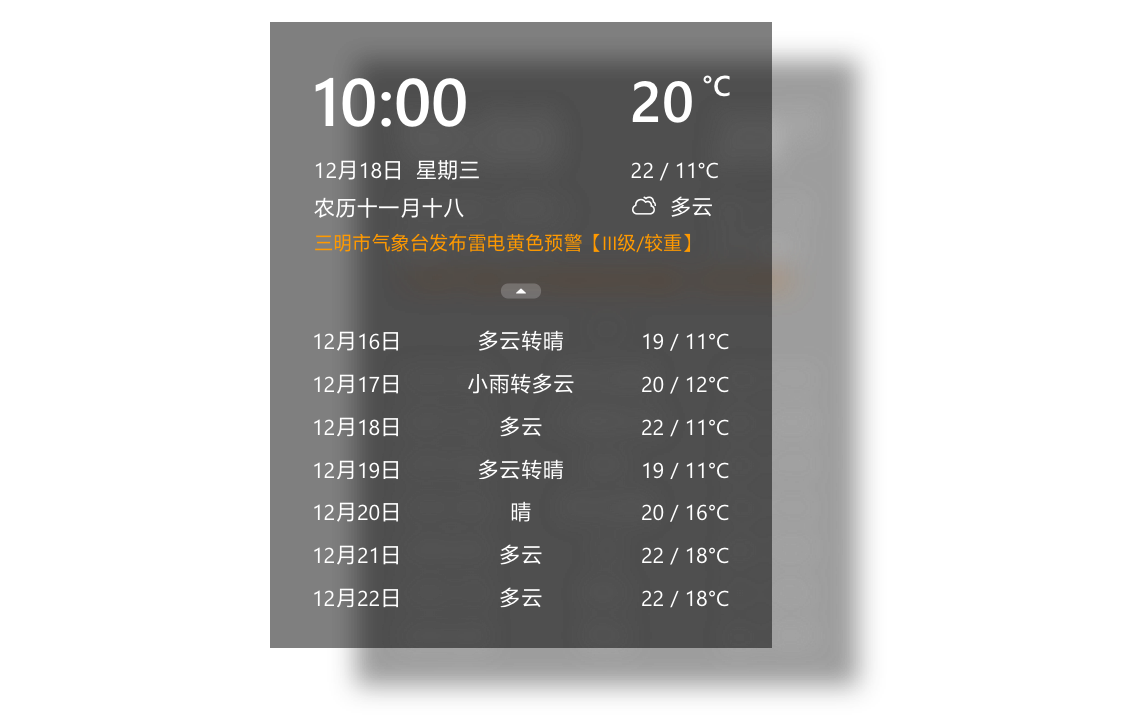
3. How many steps do you have to go through to add a task to be done through operational convenience ? To adjust the schedule date, is it possible to support the simple drag-and-drop type? Excellent tools should ensure that the management-related actions themselves do not become a burden.
4. Sense of data control: Where is the data for your use stored? Can it be backed up or exported easily and effortlessly? This is related to your long-term ownership and even sense of security about the information.
Efficiency philosophy: Minimize “management actions” and maximize “focus time”
The goal of using productivity tools is not to manage the tools themselves, but to obtain more uninterrupted, high-quality mental bandwidth for actual creative work. There is an excellent desktop note-taking tool. The ultimate goal it seeks to achieve is to make you "forget" its existence. In that position, it quietly and steadily organizes all background information, allowing you to devote yourself to the task at hand without any worries.
When you no longer need to work hard to remember "what to do next", when all arrangements and reminders appear naturally in front of you, you can notice that the sense of control and rhythm of work will quietly return. This kind. The efficiency concept of "minimum effort, maximum return" is the best strategy for modern professionals to deal with information overload.
If you continue to be anxious in the complicated to-do list, why not re-examine your desktop now? Choose a "transparency partner" who can work effectively with you and let it help you put the clutter in its place and let the important points emerge. You will notice that a clear and orderly desktop brings not only an improvement in efficiency, but also a calm and calm working mood.
Download Now → Unlock Desktop Efficiency Center:

Microsoft Store

Google Play

App Store