
Have you ever experienced a scene like this: the key tasks assigned by your boss during a meeting have been completely forgotten in the morning; the computer is covered with paper sticky notes of different colors, the desktop is a mess, and you will feel anxious when you look up. This is almost a common problem among people in the modern workplace. According to statistics, up to 82% of employees have encountered communication difficulties caused by information transmission or forgetting outside the office. The good news is, there is now a way for you. Get the most efficient return with the smallest effort – using a transparent desktop to-do list to replace chaotic physical sticky notes. This is the simplicity and efficiency that many people dream of.
Why do you need a “live on the table” checklist?
Think carefully about the information management model you are currently using. Tasks are recorded in memos on your mobile phone, inspirations are recorded on paper, important time nodes are in the calendar application, and information is isolated from each other. You can only recall them by actively "rummaging" for them. The end result is: forgetting that real efficiency does not rely on memory, but on key information. Actively and continuously appear in your field of vision .
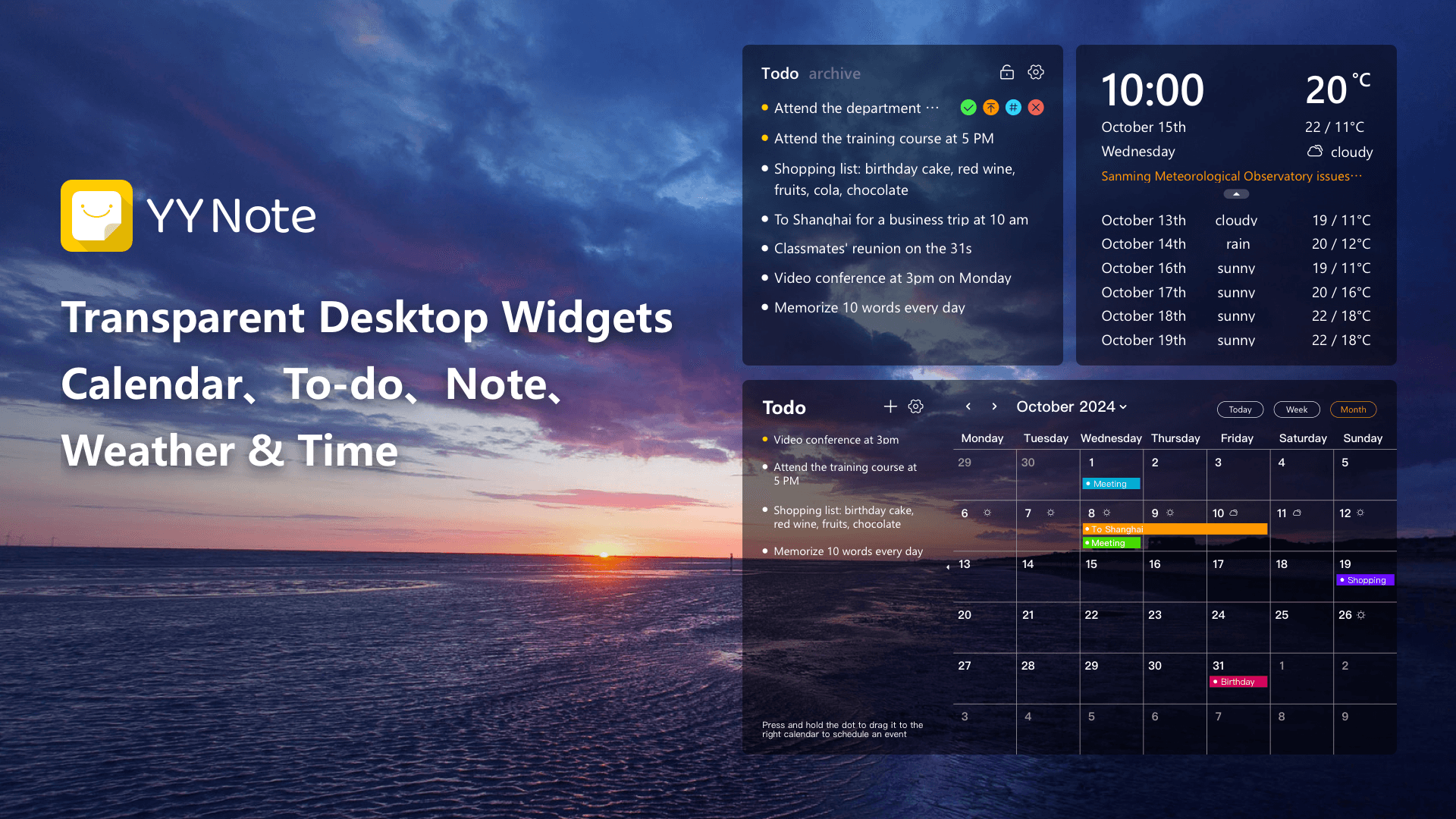
An excellent desktop note tool is like a digital sticky note with a "breathing" function. It can be integrated into your computer desktop without any hindrance and can be displayed immediately when you turn on the computer. This means that you don’t need to look for your to-do items, schedules, and memos. They sit there safely and consistently remind you of the key points of the day. This not only helps you to hold on to various tasks steadily, but also significantly reduces memory burden in the brain, allowing you to focus more on thinking and creating yourself.
How to set up your own efficient desktop
After an incredibly simple setup process, you can have a refreshing and efficient desktop workspace in just a few minutes. Next, we will learn about the core setup steps and personalized adjustments.
Three steps for core settings
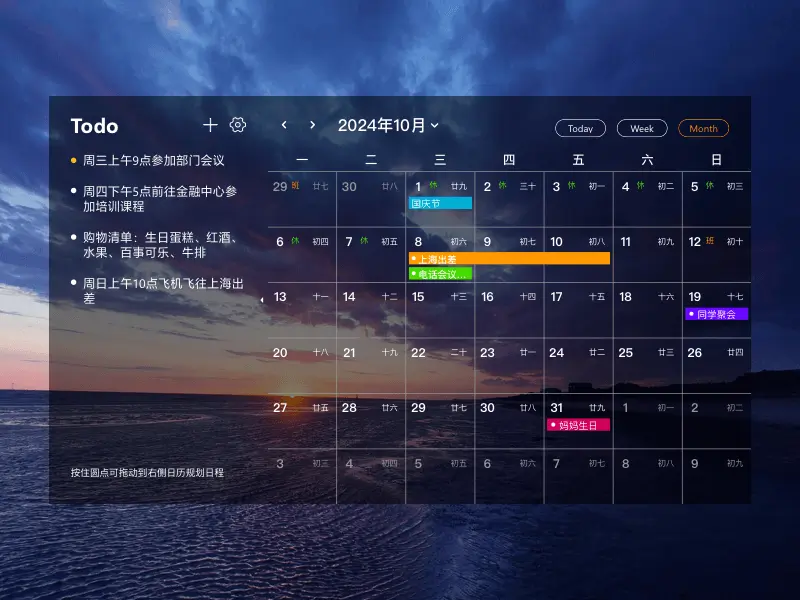
After getting the software, your first step is to create a checklist. When you open the software, you will usually see a default blank to-do column, which is like a brand new sticky note book. Just click on a blank space and enter specific tasks such as "Today the first draft of the product plan needs to be completed" or "Regular team meeting at 3 pm", and then press the Enter key to confirm. The overall process is as intuitive as writing on paper.
In order to keep your work organized, you need to learn to classify and organize. You can create many independent desktop lists for different projects or scenarios (such as "work", "study", "shopping"), and sort them according to the urgency of the tasks with the help of mouse drag, or "pin" the most important tasks with one click. Some software also supports intelligence. Tags have a function that allows you to add tags such as "#meeting" and "#report" to tasks. After that, you can filter based on the tags and focus on a certain type of affairs in a short time.
In order to prevent forgetting, setting reminders is an absolutely indispensable link. For key tasks, you can easily add time reminders to them. Flexible reminder rules are the focus of efficiency. Whether it is a single reminder, whether it is repeated every day, or whether it is a complex periodic transaction, all can be easily set. In this way, even if you focus on other work, the system will definitely remind you on time with a pop-up window or sound at the designated time.
Let productivity tools become one with you
Tools should serve people, not the other way around. Therefore, personalization is crucial.
Visual Integration No one expects a tool to obscure the desktop wallpaper it painstakingly selected, and you can adjust the list without any restrictions. The transparency is combined with the background color, making it like a layer of watermark, perfectly integrated with the desktop, and will not destroy the visual beauty when giving information.

Ease of operation : The software should support global shortcut keys , such as pressing a set of key combinations to instantly call out or hide the entire list. This is extremely practical when showing the screen to colleagues, or when you need to stay focused. at the same time,. The mouse penetration function allows you to pin the list above the screen and directly penetrate it with a mouse click to operate the window below. It will not affect other aspects of work at all.
Privacy and synchronization If you leave your seat temporarily, you can lock all notes with one click to protect your personal privacy. What's even better is that when you log in to the same account on multiple computers, all your lists and tasks can be accessed in the cloud. Synchronous updates allow you to work seamlessly anytime, anywhere.
More than To-Do: A Philosophy to Efficient Work
By using such a tool, what you get is by no means just a digital to-do list. What you actually implement is a more efficient and orderly one. Work philosophy will transform the chaotic information flow into a clear and visible path, stripping anxiety and forgetfulness from your work experience.
Let’s imagine a picture like this: when you turn on the machine every day, there is a refreshing and transparent to-do list hanging on the desktop, and the key points of the day are clearly visible; every time you complete one of the items, you lightly check it, and a sense of accomplishment will naturally arise; work is no longer a competition with memory and chaos, but has transformed into a leisurely process with everything under control; this is exactly the most appropriate interpretation of the concept of "minimum effort, maximum return".
Don't let important ideas and tasks get lost in the torrent of information. How to set up sticky notes on your desktop? Download it now and spend a few minutes setting up your first. Transparent desktop to-do list , take the first step towards an easy and efficient way of working.
Download Now → Unlock Desktop Efficiency Center:

Microsoft Store

Google Play

App Store