
Have you ever had a moment like this when you opened the calendar on your phone or your computer, only to see that it was empty or only contained a few long-expired notes? Meeting arrangements, project milestones, friends’ birthdays, important payment dates, etc., are scattered in WeChat chats, emails, and even time information on paper notes. They are like a plate of disordered sand, causing you to always worry about missing something. This "sense of loss of control" about the schedule is particularly strong when reviewing at the end of the year, or when planning for the new year, as if facing a messy schedule. I have a desktop calendar , but I don’t know where to organize it.
This is precisely the key point where many people invest a lot of energy in time management but gain little. What we need is not another tool that requires effort to maintain, but a tool that can. A solution that automatically aggregates and clearly presents the entire schedule. Just imagine, if all the key arrangements can be summarized on your computer desktop and presented in front of you with an extremely intuitive calendar perspective, isn't that calm feeling of controlling the overall situation exactly what you expect?
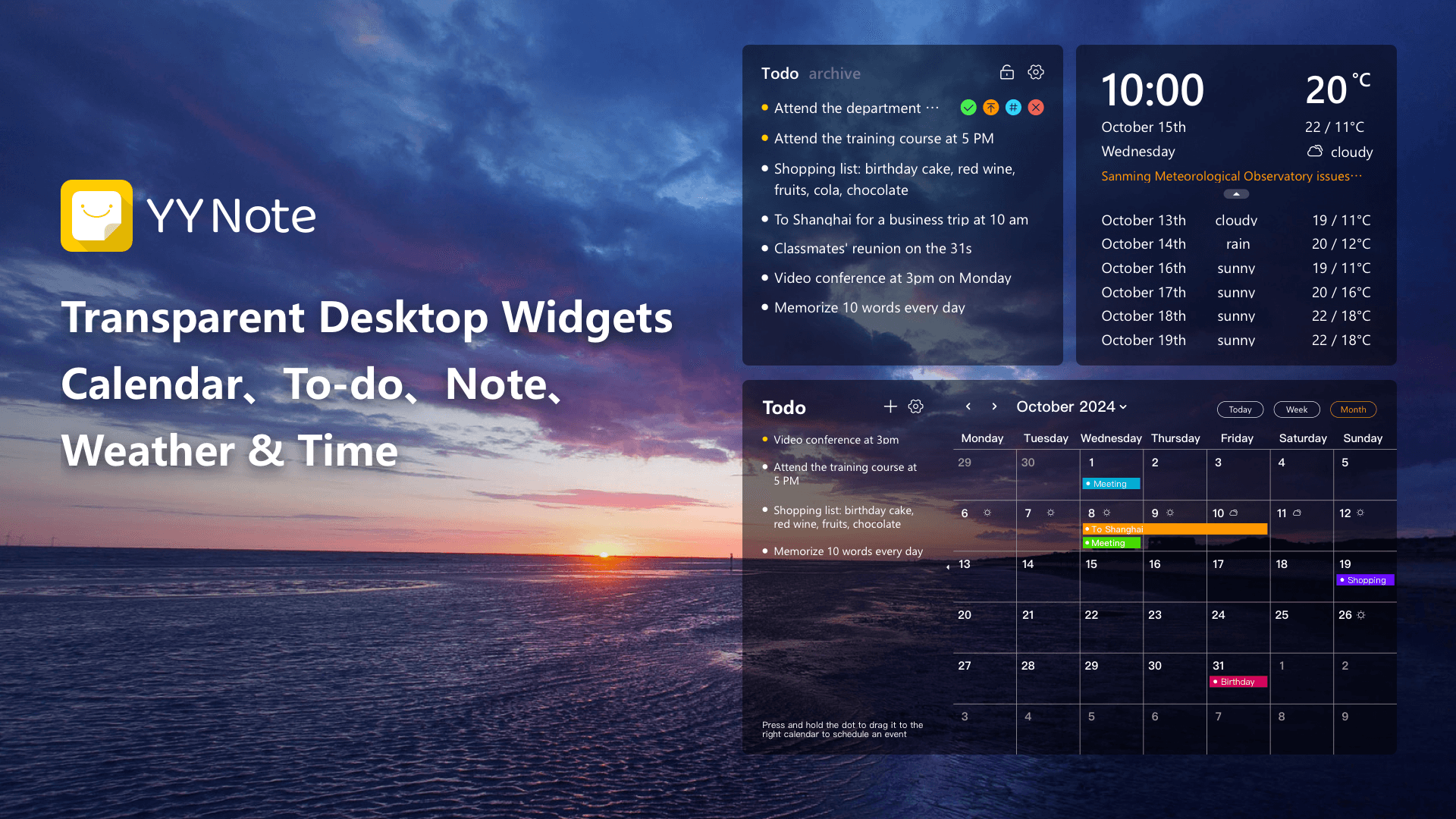
Say goodbye to information silos and let all schedules "actively report in"
Real efficiency improvement comes from seamless connection of the system, not repeated manual work. An efficient set. Desktop calendar has a tool whose core value focuses on "aggregation". It can easily connect to the schedule sources that already exist in your work and life, whether it is the fully scheduled meetings in corporate WeChat, or the project milestones set on DingTalk, or the team collaboration schedule in Feishu Calendar, or even personal Outlook or private arrangements in Google Calendar. You don't need to change your existing habits, you just need to perform simple authorization, and these schedules can be automatically synchronized and presented uniformly on your computer desktop.
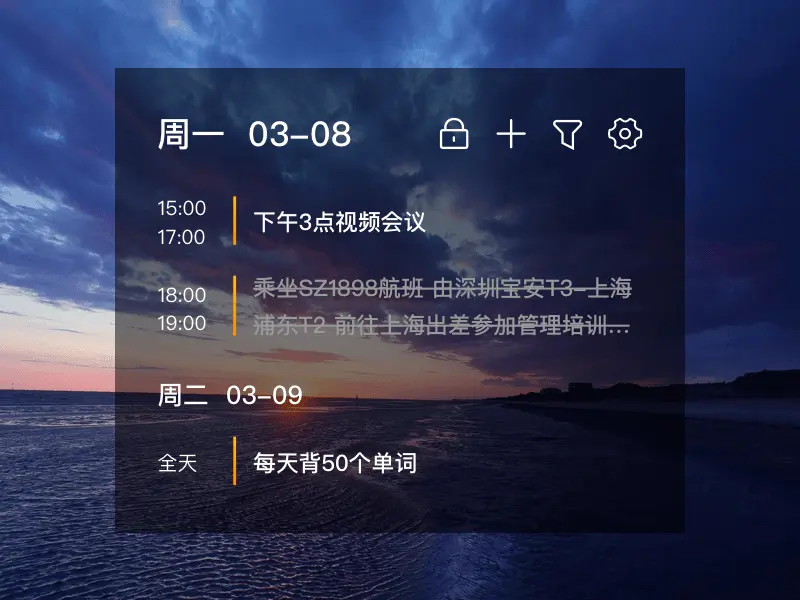
This is like building an automated "scheduling center" in the torrent of information. You no longer need to frequently switch between multiple applications to check your schedule. All important arrangements are there. At a glance , everything is laid out in one corner of the desktop. This kind of integration brings not only convenience, but also a psychological burden reduction. You know that everything is in place and there will be no more accidental omissions.
More than just viewing, it’s more about clear planning
When all schedules are aggregated, an excellent desktop calendar will further help you sort out your thoughts. It provides many views such as daily, weekly, monthly and even schedule lists, allowing you to quickly change from macro monthly planning to the details to be handled today. You can easily see which days have intensive meetings and need to reserve energy, and which days are relatively free and can be arranged for in-depth work.
What's especially important is that it works seamlessly with your other efficiency components. For example, you can turn a meeting in the calendar into a to-do task with a single click, with associated notes; you can also set a countdown period for key anniversaries, making the feeling of anticipation visible at a glance. This kind of connectivity and integration transforms the calendar from a "recording board" that sits in a waiting state into a "planning core organization" with subjective initiative.
Experience the ease of order reconstruction with minimal effort
All of this sounds complicated, but when implemented, it is unusually simple. Like many of the "imported exquisite goods" that you think of nowadays, in fact, they have already achieved domestic leadership through excellent design and experience. This is also the case with excellent efficiency tools. Their goal is to allow you to get the maximum feedback with minimal learning effort and operating pressure – a sense of absolute control over work and life.
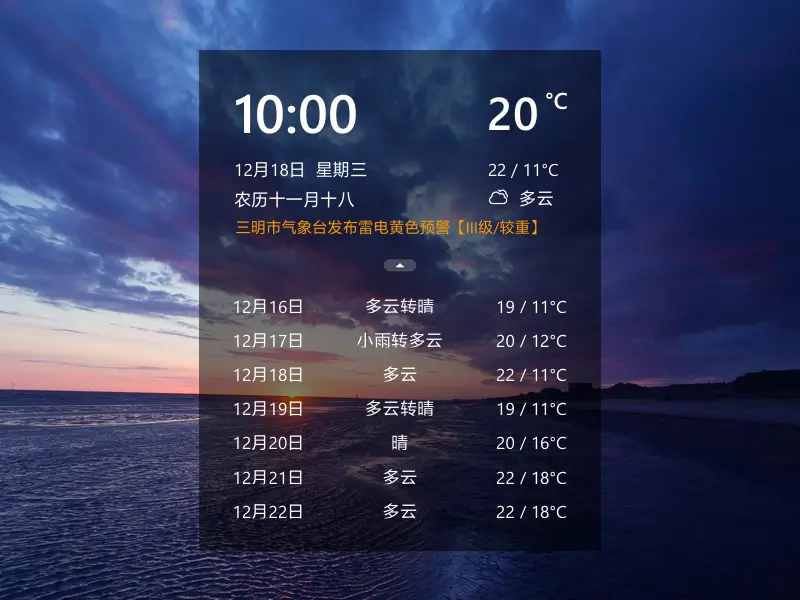
What YYNote advocates is the concept that productivity tools should not be regarded as your new burden, but should be quietly integrated into your workflow to help you turn complexity into simplicity. its. The function of the desktop calendar is the presentation of this concept. It sits quietly on the desktop, blending into your wallpaper in a transparent state, not disturbing but always ready for changes. It uses itself to automatically help you integrate those scattered schedules, providing you with the clearest vision, so that you can focus more on handling things and your own calendar records, instead of spending energy on memory and search.
When you no longer have anxiety caused by "forgetting", when you can see the overall situation of the next week or even month clearly at once, you will find that you are a little more calm and sure. It feels like a messy desk has been tidied up, and your thoughts become clearer. Efficient, it should be this easy.
Now, why not bring this kind of "order" to your schedule? Download it now for free to experience Sohu, and experience the leisurely feeling that all your schedules fall into place and everything is under control. Starting from the present moment allows your time to be clearly seen and effectively controlled.
Download Now → Unlock Desktop Efficiency Center:

Microsoft Store

Google Play

App Store