
Every day, when you sit down in front of the computer, have you ever felt that your brain is like a messy piece of twine? Project deadlines, last-minute meetings, fleeting moments of inspiration, and various tasks to be done fill up your memos and various software, but you still often forget the most critical things. Just the task of switching to find something is consuming your precious concentration. According to a study in the journal "International Human Factors", frequent task switching and interruptions will significantly increase cognitive load and reduce work efficiency by up to 40%. What you need is a planning center that can be seen clearly at a glance and can be displayed at any time, instead of just another piece of software that needs to be "remembered to open".
That's exactly what a desktop work planner tool is all about. They will "pin" your plan directly to the computer desktop in the background, allowing you to have a clear idea of the overall work and daily key points through visual means. Today, we’re going to focus on the core functionality of this type of tool. Desktop to-do list and evaluate several mainstream products to observe how they translate the efficiency concept of "minimum effort, maximum return" into actual situations.
Evaluation dimension description :
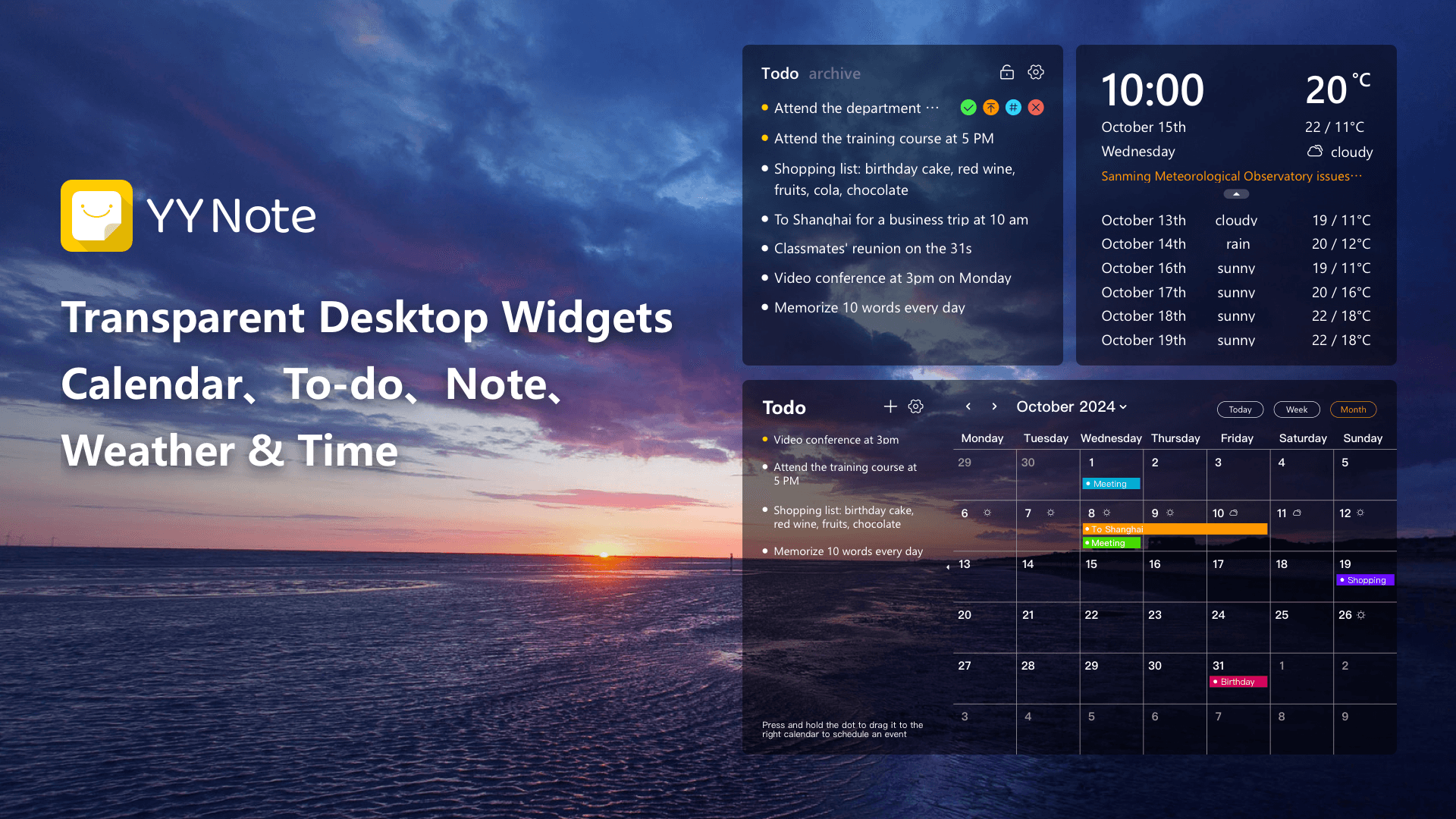
This evaluation mainly focuses on the most important, obvious and critical core scenario of "desktop to-do list", focusing on the tools. Visual intrusion, ease of operation, functional practicality and whether it is truly integrated into the workflow. The full score is set to 5 stars.
1. YYNote (little yellow bar): 5 stars ★★★★★
As the benchmark for this evaluation, YYNote shows the most extreme situation in dealing with the difficulty of "plan visualization". It is not a complicated project management software, but an extremely lightweight one. Transparent desktop plugin .
Core Value makes its to-do list directly translucent or fully transparent, making it "floating" on your desktop wallpaper. And it is visible immediately after booting, and no additional clicks are required to open it. In this way, a true "zero-step touch" is achieved, so that your daily key tasks are always in the visual focus, effectively avoiding the dilemma of "out of sight, out of mind" (that is, out of sight, out of mind).

Feature highlights : In addition to basic addition, completion, and drag-and-drop sorting, it supports setting target dates for items and displaying countdown dates , making the sense of urgency clear at a glance. Its intelligent repetition rules can automatically generate periodic tasks, such as weekly meetings, monthly loan repayments, etc. It even supports the lunar calendar to repeat regularly, which is extremely friendly for planning family anniversaries. According to its official help documentation, all to-do items can be automatically archived according to the completion date to facilitate weekly reviews, which is in line with the core principle of "regular review" in the well-known efficiency method GTD (Getting Things Done).
There is almost no learning cost to experience the advantages . You can record it as you like using sticky notes, and use simple tools. [Tag] 1. The system classifies tasks. 2. The plug-in has the feature of automatically hiding close to the edge of the screen. 3. When necessary, slide in with the mouse and it will appear. 4. It is extremely good at achieving a perfect balance between the reminder function and the needs of desktop cleanliness and privacy protection.
2. Tick-Tock List (fictitious name): 4 stars ★★★★☆
This is a task management application with comprehensive functions, and its desktop plug-in, also known as Widget, has a high reputation.
Core value : It is stronger than the refined management of tasks. It has the feature of supporting subtasks, and also has attributes such as priority labels and detailed notes, which is suitable for some users who like in-depth planning.
Comparative analysis : Although its desktop widgets can display tasks, their visual integration with the system desktop is generally not as "insensitive" as that of YYNote. Widgets often have significant background borders. It is more like a window "placed" on the desktop rather than "integrated" into the desktop. In terms of the ultimate portability of operation, it tends to guide you into complete applications for management. The desktop plays more of a "view" role rather than a "quick operation" role.
For reference , it has a powerful cross-platform synchronization function. At the same time, natural language recognition can add tasks, such as typing "meeting at 3 o'clock tomorrow afternoon", which is a significant advantage.
3. Floating Ink Notes (fictitious name): 3.5 stars ★★★☆☆
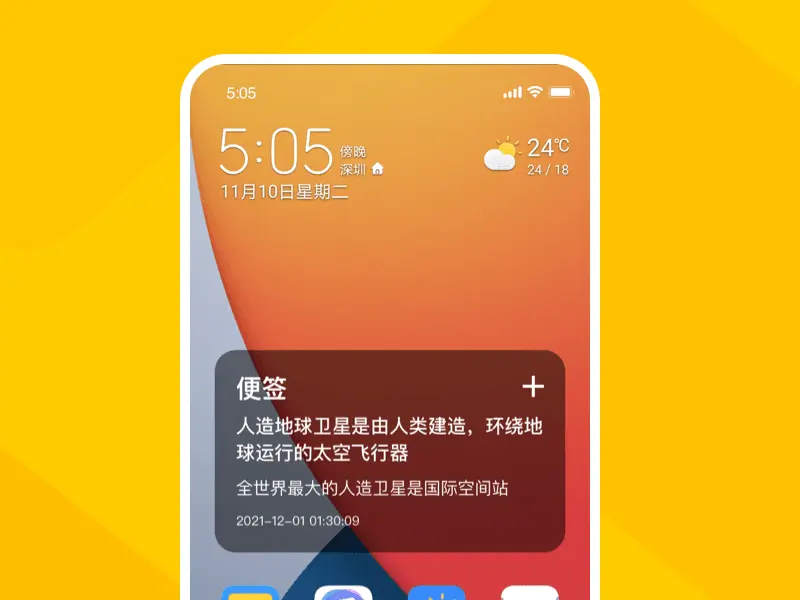
This product with a unique concept focuses on content called "recording at will and reviewing regularly", and its desktop components also inherit this style.
Core value : It is more like a desktop inspiration collection board and a simple to-do board that are combined into a whole. You can "throw" fragmented ideas on the desktop very quickly, and then use simple tags to distinguish the pending status.
Comparative Analysis In scenarios where the traditional "work schedule" has strict management requirements for dates and repeated reminders, its functions are relatively weak. It does not have a powerful date setting function, nor does it have a repetitive rule computer to create a desktop work schedule, nor does it have a visual countdown function. It is more suitable for managing loose ideas and task lists with no clear deadlines. Its design philosophy favors creative organization rather than rigorous time task planning.
Summary and action suggestions
Through comparison, it can be found that the key to an excellent desktop work schedule is how to integrate into your work environment without any feeling, and to give the greatest reminder with the smallest cost of interaction. . It shouldn’t be another “task” you need to worry about managing.
YYNote has made excellent trade-offs in this aspect, abandoning some complicated functional items to achieve unparalleled results. Desktop presence and operational fluency . What it solves is precisely the two extremely basic efficiency killers of "forgetting" and "searching". When your to-do items are always quietly and clearly presented in front of you, once you complete one item, you will check off one item. Such continuous positive feedback can not only improve efficiency, but also reduce anxiety, thereby bringing a calm sense of control over the work.
If you are also troubled by tedious and complex task management and have a longing for a simpler and more intuitive way to manage your daily work, then. The "desktop visualization" solution provided by YYNote is undoubtedly worth spending a few minutes to try. It does not need to change the complicated workflow. Just making the plan "visible" can bring about unexpected efficiency improvements. You can visit its official website now, download it and experience the refreshing and efficient way of “pinning” your to-do list on your desktop!
Download Now → Unlock Desktop Efficiency Center:

Microsoft Store

Google Play

App Store