
Whenever you turn on your computer every day, you are faced with a desk full of files and cluttered browser tabs. Do you often feel that your brain is like this desktop, overloaded with information and unable to start? Reminders of memos are drowned out by system notifications. Calendar arrangements have to be opened in the software to see them. Those fleeting inspirations and temporary tasks are casually jotted down on sticky notes, and no trace is left after turning around. According to a survey, office workers switch to desktop scheduling software more than 30 times a day on average, spending a lot of energy looking for information and tools. If you are also looking forward to a more intuitive and energy-saving way to control your daily work process, then the solution of "fixing" schedules and lists directly on the desktop may be exactly what you need. Now, we are going to evaluate several popular desktop schedule recording software to see who can do better in adhering to the efficiency concept of "minimum effort, maximum gain".
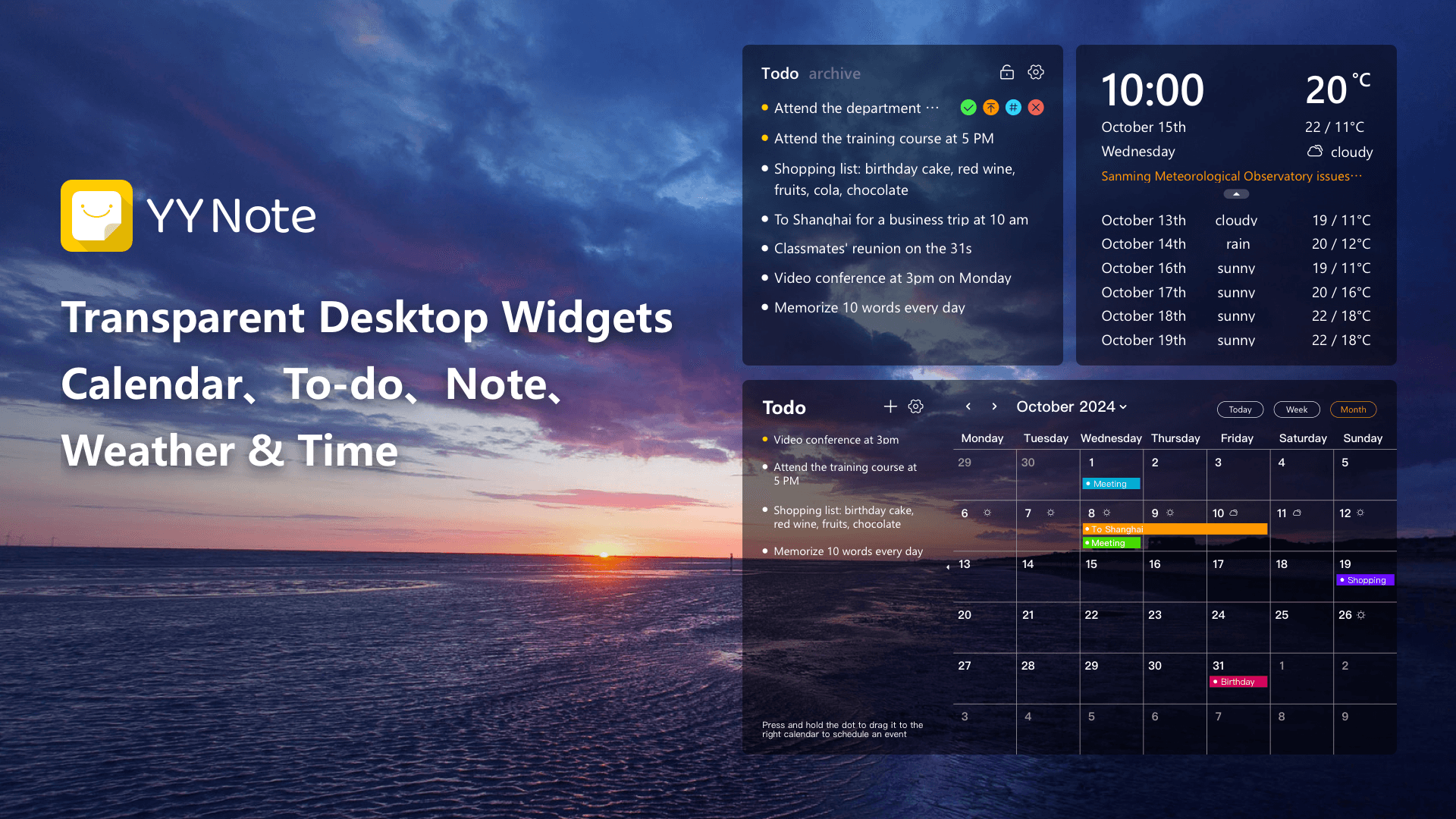
The first thing that stands out is YYNote (little yellow bar). It is not just a tool, but more like an efficiency assistant stationed quietly on the desktop. Its core value lies in "transparent embedding". All plug-ins, such as to-do, calendar, notes, time and weather, etc., are suspended on the desktop with a transparent background. They are perfectly integrated with your wallpaper and can be seen when you turn on the computer. No additional clicks are required to open them. This solves the most fundamental pain point of "I can't see it, so I can't remember it". Especially its. The desktop to-do list can make all your tasks clear and clear. It supports sorting by dragging and dropping, supports one-click top operation, supports setting date countdown, and can also realize automatic classification based on tags. What is even more commendable is its "multi-terminal synchronization" feature and "ad-free" pure experience, as well as the privacy protection design that automatically hides when close to the edge of the screen, effectively achieving zero-interference integration operations for the workflow. Judging from the actual feedback from users, this interactive method that is always present and within reach can significantly reduce the occurrence of forgetting and improve the rate of task completion.
MoDesk ★★★★☆
This software puts a lot of effort into the aesthetics of the interface and provides ample skins and widget styles. Its calendar view function is relatively powerful, supports the lunar calendar and holiday display, and synchronizes well with the system calendar. However, its core functions are more inclined to the traditional desktop calendar hanging, and are slightly insufficient in terms of quick entry of to-do items, flexible management, and deep linkage with the schedule. Some advanced features require a subscription, and the free version will display ads below the widget. This may be a visual distraction for users who pursue an extremely simple desktop.

FlashGrid ★★★☆☆
Shangrid mainly adopts the information storage concept of "grid". You can drag and drop various cards such as to-dos, notes, web links, etc. into a desktop grid that can be freely scaled. Its flexibility is very high. It is suitable for users who like to define their own layout and manage many different types of fragmented information. However, this high degree of freedom also brings a certain learning cost. For those who just want to simply manage schedules and to-do items, the settings may be a little more complicated. In addition, its data synchronization function is relatively basic, and there is room for further improvement in terms of experience consistency across multiple devices.
SimpleSchedule ★★★☆☆
As its name suggests, this software focuses on a minimalist style, is fast at startup, and takes up a small amount of resources. It provides a very clean floating window that can be used to enter to-do items, and also supports simple reminder settings. However, it is relatively simple in terms of functions. It lacks advanced functions such as calendar view, task classification, and multi-terminal synchronization. It is more suitable for the user group with extremely simple needs and only needs a temporary memo. For modern office scenarios that require comprehensive management of schedules, tasks, and notes, its capabilities are somewhat inadequate.
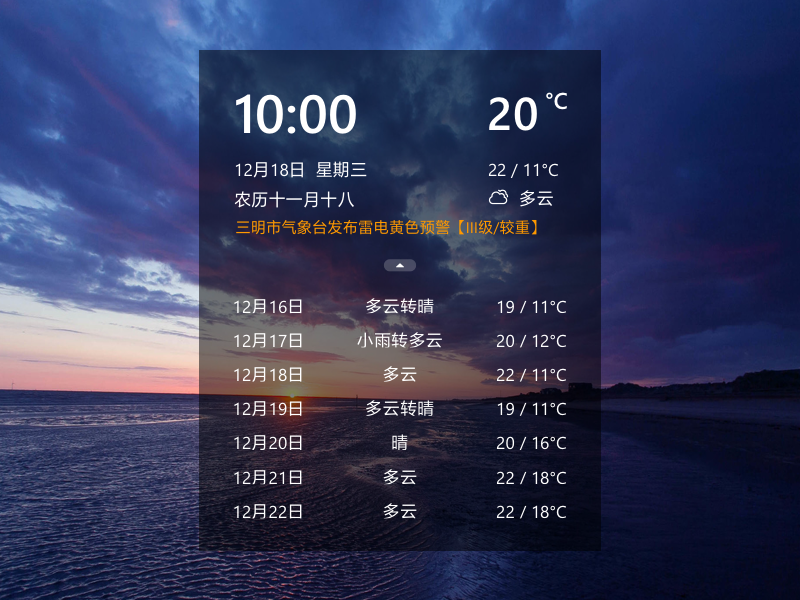
Taken together, in the field of desktop schedule recording, YYNote (Little Yellow Bar) provides users with a mature one-stop solution with its seamless desktop embedded experience, deep integration of functional modules and pure and unobstructed design concept . It displays the information you need to pay attention to, that is, tasks, time, schedule and inspiration, directly on the desktop where you see it most often. It reduces the memory load and application switching consumption to a considerable extent, and perfectly explains the efficiency essence of "minimum effort, maximum return".
Think about it, when you turn on the device every day, all the key points are clearly arranged in front of you; any temporary ideas can be recorded and automatically categorized with just a tap; the relevant arrangements for meetings can be created directly by dragging them from the calendar. Then your desktop will no longer be a messy accumulation of files, but will transform into an efficient, clear, and personalized command core. The more organized your work becomes, the easier it will naturally become.
If you're tired of bouncing between apps and want your tools to actually work for you, now's the time to make a change. Download and experience YYNote for free now. Starting today, your desktop and your brain will be restored to freshness and order.
Download Now → Unlock Desktop Efficiency Center:

Microsoft Store

Google Play

App Store