
Have you ever experienced this situation: you have multiple documents and forms open at the same time on your computer, and there are sticky notes of various colors pasted next to you, but you still misremember the time of an important meeting? I want to find a calendar that can be displayed directly on the desktop and can be edited at will. I have tried several softwares, but they are either too cumbersome or have incomplete functions.
In fact, a tool that can play a role should be like a well-coordinated work partner who can display the calendar on the computer desktop and edit the text content. It should naturally show up when you need it, and provide the most critical assistance with the smallest sense of presence.
All done at one desk: What you need is not only a calendar, but also a productivity center
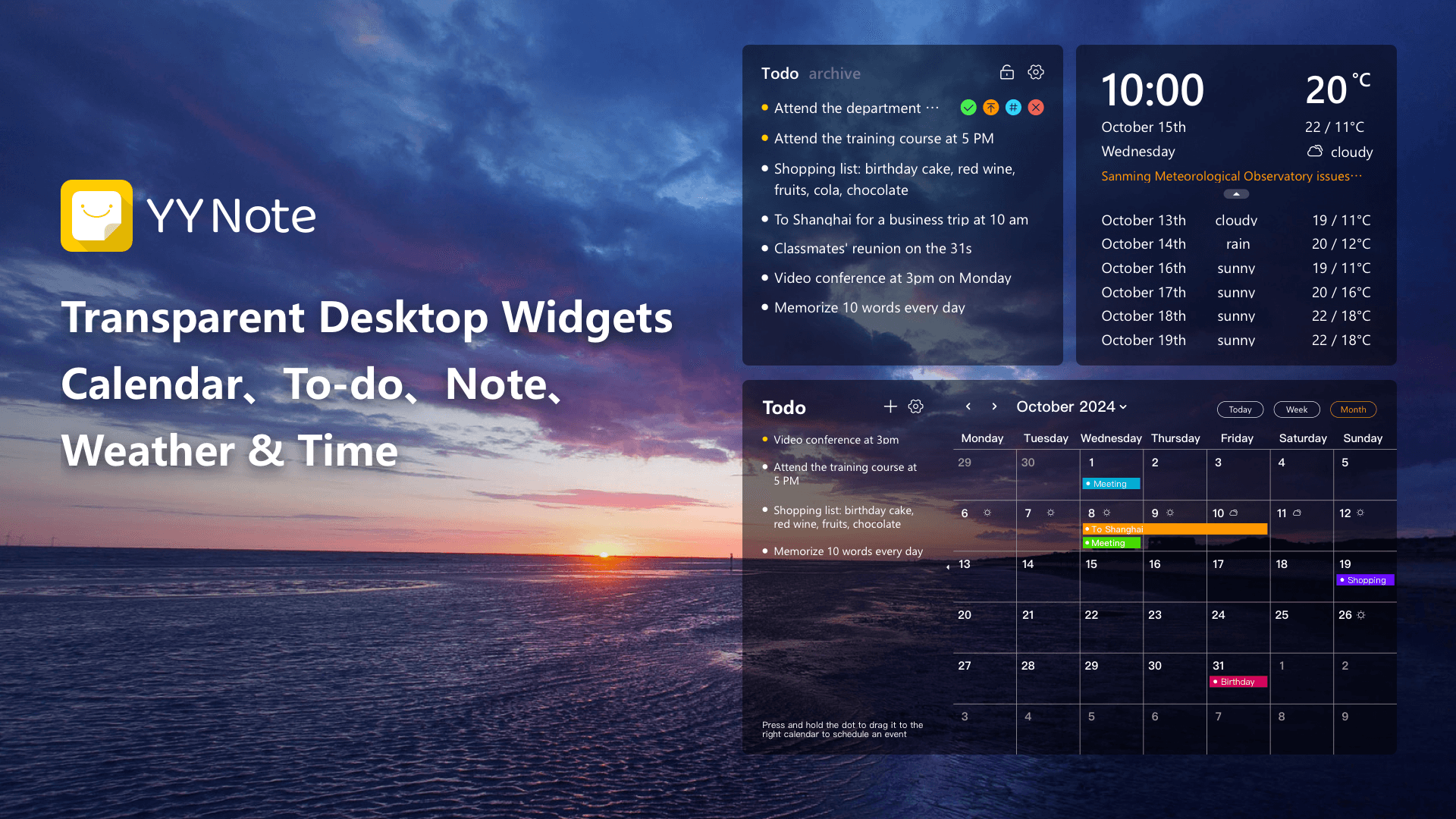
An excellent desktop calendar is by no means as easy as simply displaying dates. It should be a core place for efficiency improvement that integrates multiple functions, allowing you to use the simplest operation methods to achieve the most efficient planning goals.
Imagine having a clear and intuitive calendar spread directly on your desktop wallpaper, without having to bother switching windows or applications. Your daily work schedule, meeting times, and project deadlines can all be presented in various views such as month, week, and day without missing a beat. More importantly, you can. Add, edit or delete text content directly on any day on the calendar. Whether it is a temporary urgent task or a requirement to record meeting points in detail, it is as convenient as writing on a notepad.
This highly integrated desktop experience transforms your schedule management from "something that needs to be dealt with specifically" to "a natural part of your work horizon." Just like modern cars are committed to integrating multiple functions into smart cockpits, desktop calendars also rely on integration to give you the most comprehensive sense of control at the lowest operating cost. For example, when you see in the news that new energy vehicles have relatively high maintenance costs due to their highly integrated designs, you may have a better understanding of the value of tools that "reduce complexity and simplify" – good integration is to improve efficiency, not to create trouble.
More than just looking: seamlessly connect planning and management

A tool that shows real performance should be able to accept your inspiration and planning. A desktop calendar with editable features provides a smooth transition from "planning" to "execution".
You can do these easily:
Quickly record and plan by double-clicking or using simple shortcut keys to create a schedule in any date grid and directly enter task descriptions, locations, or notes.
Flexible Adjustment and Drag-and-Drop Once the plan changes, you can directly use the mouse to drag the task to a new date and adjust the schedule, which is as intuitive as organizing desktop files.
Hierarchical management and classification set simple color labels to different categories of schedules, such as work schedules, personal schedules, and family schedules. In this way, the importance and ownership of all items are within the scope of what the eyes can see.
It is no longer a tool for passive display, but has become an efficient platform that can interact with you. You can transform temporary ideas into specific to-do items directly from the calendar, and even effectively link them with the to-do list and note functions to form a complete workflow. Just as dealing with complex affairs requires a systematic and comprehensive solution, managing schedules also requires a solution that can connect all aspects to prevent information from being lost between scattered notes and software.
The power of simplicity: minimum effort, maximum return
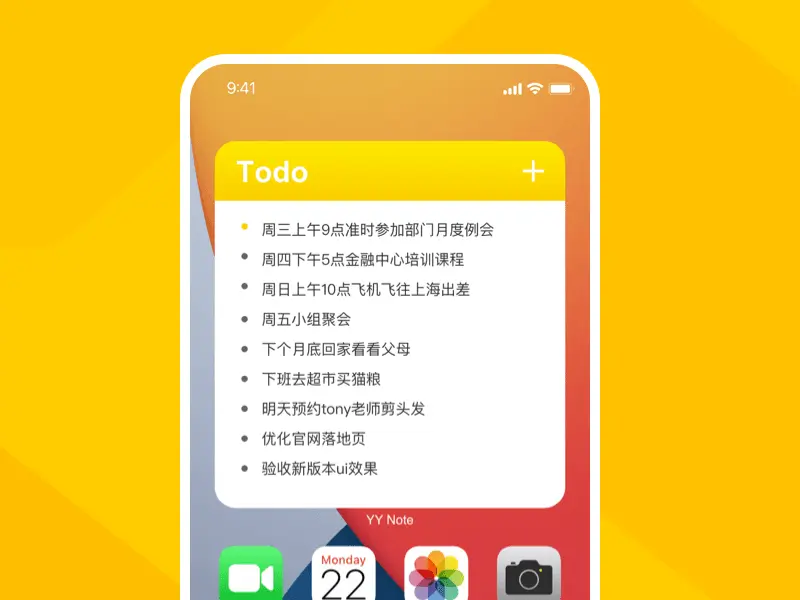
Generally speaking, the most ideal tools often know "hidden". A good desktop calendar component should have an extremely simple visual design and high customization capabilities.
Transparent design It can be embedded in your desktop background in a transparent form. It will not appear too prominent and seize the main position, but it will always be ready to respond. You can adjust its transparency, size, and position as you like, making it an integral part of your desktop aesthetic.
Distraction-free focus : The interface is clean and free of redundant information and advertisements, allowing you to focus on your schedule.
Easily call up and hide. Usually, you only need to press a shortcut key or move the mouse to the edge of the screen. In this way, you can call up or hide the calendar. This approach can not only protect privacy, but also make the desktop look refreshing.
This design concept adhering to the proposition of "minimizing presence and maximizing functionality" is indeed what efficient work strives for. It uses the simplest way to resolve the two key problems of "schedule visualization" and "handy recording", allowing you to put your energy into creative work instead of purely spending it on the management tool itself.
Forget those days of frantically moving back and forth between multiple apps. Having a calendar that can be displayed directly on the desktop and edited at will not only provides clarity, but also a sense of calm control. The desktop becomes tidy and clean, and your thinking will become clearer. When you hear about trouble caused by complicated systems, you will understand more clearly how critical it is to choose a tool that is simple, clear, efficient, and fully compatible with your workflow.
Now, it’s time to upgrade the way you work. Choose a desktop calendar tool with elegant design and intuitive operation, and let it sit quietly on your desktop. You will find that managing time has never been so easy and natural.
Download Now → Unlock Desktop Efficiency Center:

Microsoft Store

Google Play

App Store