
Are you troubled by the fact that all kinds of trivial things are always forgotten? Whenever the planned situation is disturbed due to forgetfulness, the feeling of loss and frustration is really maddening. You forget to reply to work emails, remember the wrong time for friends’ gatherings, etc. The critical days of the family have passed in a flash. After all, in today's fast-paced life, our brains have to process a lot of information. Fortunately, a clear and intuitive desktop schedule can become your most reliable "external brain". YYNote is a choice that can help you easily create this efficient command center.
Why do you need a desktop schedule?
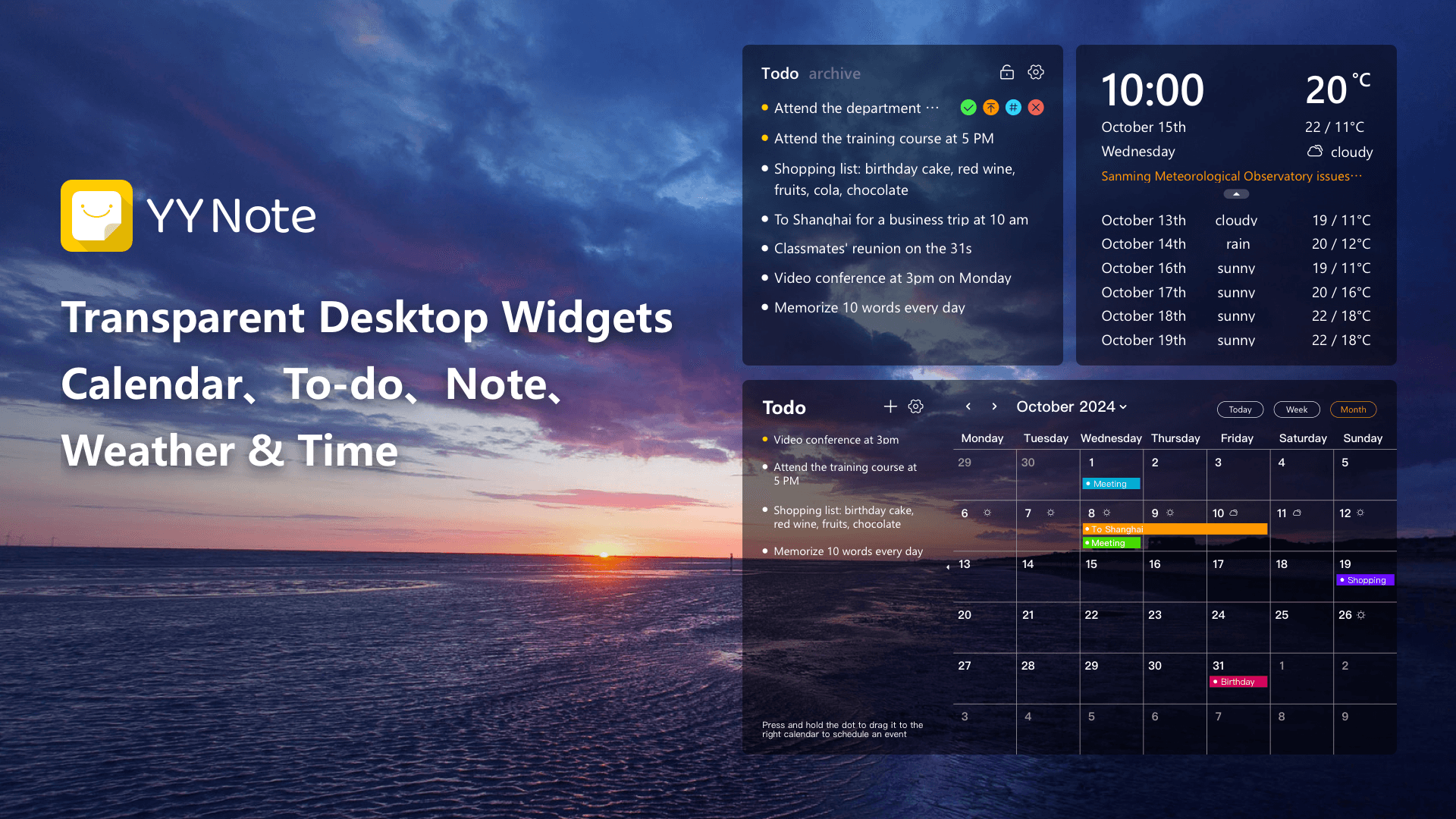
The biggest advantage of fixing the schedule on the computer desktop is that there is no need to open any software. All the to-do tasks, specific arrangements for meetings, and key important dates are clearly displayed in front of you without any hiding. This fundamentally eliminates the passive and disadvantageous state of having to open the software to remember what you should do. It has features that can help you.
Establish a global perspective : grasp the key points of the entire day or even the entire week at a glance, and no longer get bogged down in trivial matters.
Reduce memory burden : Free things from your brain and focus on current thinking and creation.
Avoid key omissions : Important schedules are always within sight, effectively preventing forgetting.
Imagine that when you turn on the machine, there is a clear and beautiful schedule quietly placed on your desktop wallpaper. Everyone has confidence in what they have to do today and what kind of meetings they will have next. Such a sense of control is exactly where efficient work begins.
How to build your time management system with desktop checklists?

Not only record, but also management, an effective schedule is like this. You can use different combinations of lists to adapt to your complex workflow.
Core: Desktop To-Do List
This is where the cornerstone of your timeline lies. You need to collect all scattered tasks, such as "responding to customer emails", "writing project reports", "booking conference rooms", etc., in this place. A good to-do list can help you flexibly drag and drop to sort, set priorities, and even give unique tags for classification. The immediate feedback of checking off an item as you complete it can bring an ongoing sense of accomplishment.
Advanced: Desktop Calendar and Schedule Integration
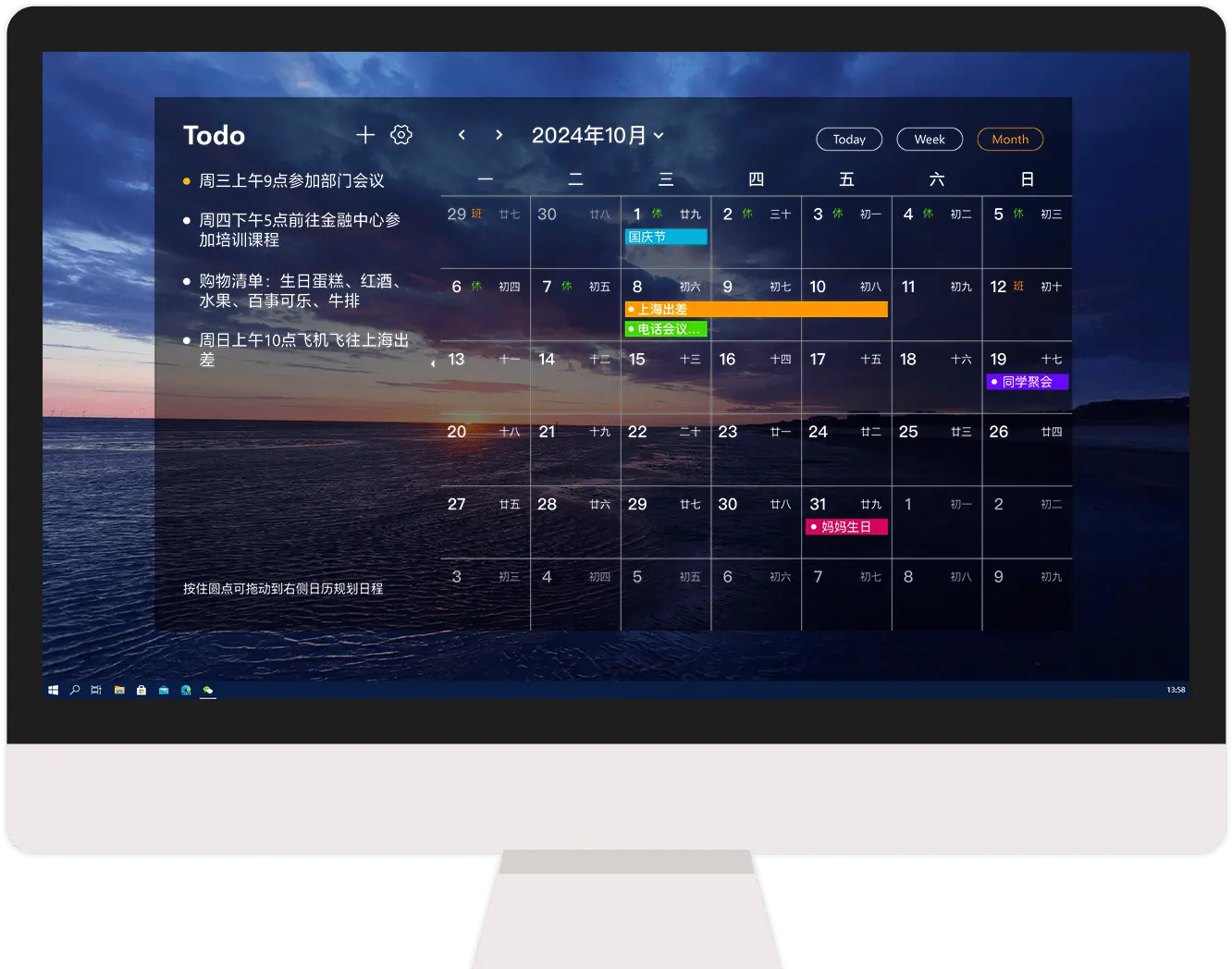
A to-do list tells you what to do, and a calendar tells you when to do it. Drag a to-do item to a specific date and time range on your calendar, and it becomes an official schedule. You can intuitively detect how the daily time segments are filled, and then be able to make reasonable arrangements to avoid time conflicts. Some tools can also display holiday and weather information directly on the monthly view, making your planning more thoughtful.
Extension: Desktop Notes and Inspiration Shorthand
In addition to planned matters, sudden inspiration and temporarily received information also need a place to put it. There is a note list embedded in the desktop, which is quite useful. You can, at any time, write down the thoughts that flashed by like a flash of lightning and are hard to retain, record a paragraph of copy that needs to be sorted out, or record a temporary phone call received, so as to avoid having these fragmented information like loose pages drowned in the chat window, and wait until later to sort them out and put them in the archive.
Three tips to make your desktop schedule truly efficient
No matter how good the tool is, it must be used correctly. Mastering the following few tips can double your efficiency:
1. Minimization principle, only put the most important things
Don't let the time show become another "information dump". Just list the key items that must be paid attention to today or this week. Those far-off and unconfirmed plans can be placed in a special collection box first, and then be brought into sight when necessary.
2. Use visual hierarchy to prioritize
Use colors, labels, or simple symbols (such as 🌟 ⚠️) to mark tasks of different natures. For example, use red to mark emergency meetings and green to represent personal study time. The visual distinction can help you grab the key points in an instant.
3. Regular daily review and updates
An efficient system is inseparable from maintenance. Spend 5 minutes every morning to browse and update today's schedule. How to create a schedule on your computer desktop, and use 5 minutes at night to review the completion status and plan the next day's priorities. Such a simple ritual can ensure that your schedule is always fresh and effective.
Saying goodbye to clutter and forgetfulness starts with having a clear desktop schedule. Although it will not make your work instantly easier, it will allow you to stay calm in the busy world and grasp the key points in the complexity. At this moment, just spend a few minutes to organize your desktop and take the first step towards orderly and efficient work. You will find that managing time well is much more difficult than you imagined.
Download Now → Unlock Desktop Efficiency Center:

Microsoft Store

Google Play

App Store