
As soon as you sit down in front of the computer every day, do you feel that things are complicated and confusing? There is no reply to the email in one place, and the meeting notification suddenly pops up in another place; the work plan that was originally planned is interrupted by the trivial matters that continue to pop up. At the end of the day, I am busy and chatty, but looking back, there is no obvious progress on the really key and important things. Such a feeling of confusion and inefficiency is probably the daily situation of many working professionals. If you want to take control of your work, you must first see the overall situation clearly, and a clear and intuitive one. A desktop schedule management system may be the key you need.
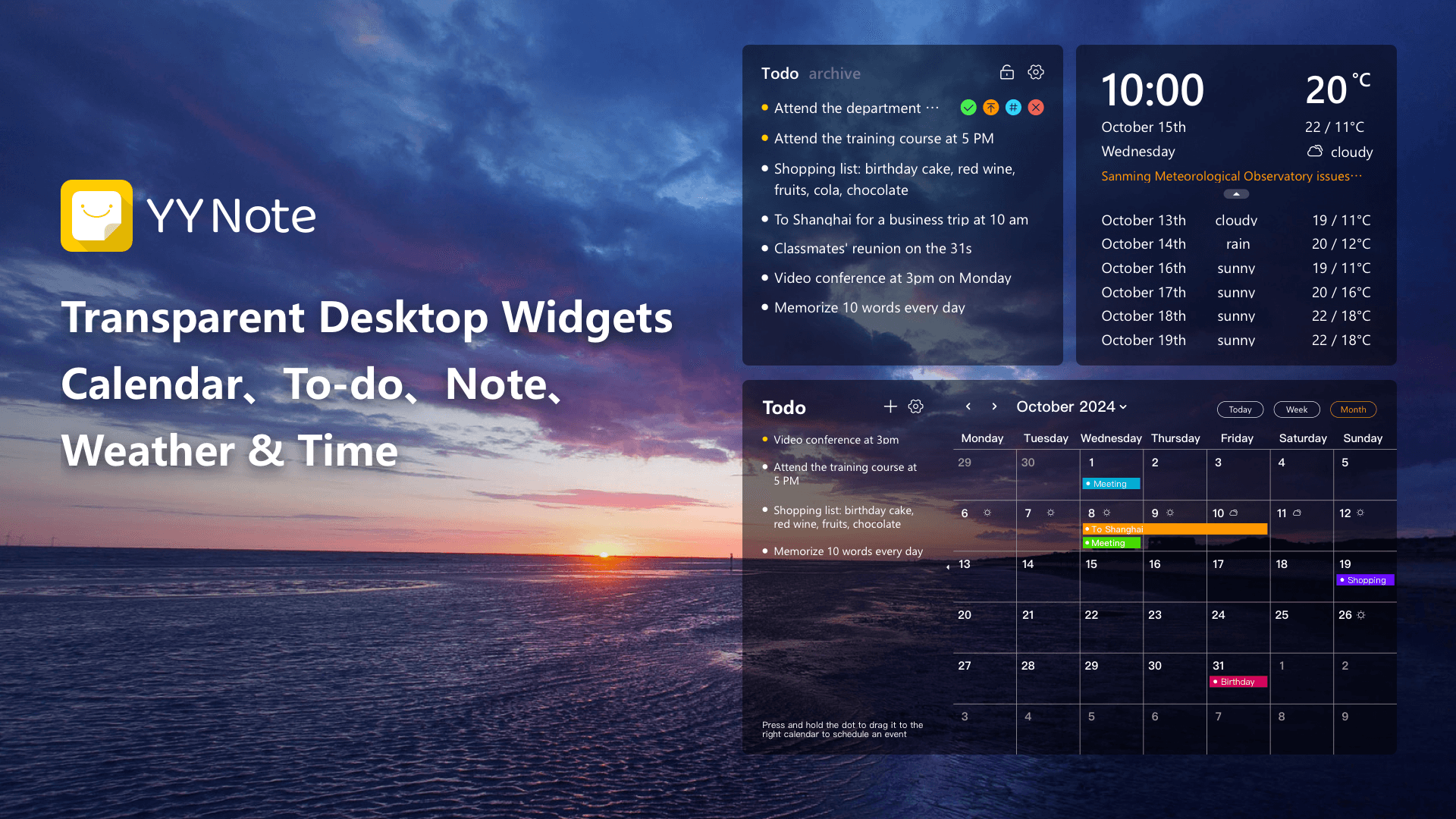
The biggest advantage of "laying" schedule management directly on the computer desktop is that you don't need to switch back and forth between multiple applications or tabs repeatedly. All appointments, meetings, and to-do items will be quietly displayed where you can see them as soon as you turn on the computer. This is like a digital workbench for you, spreading out a map that is always in an expanded state. The date, time and task schedule can all be displayed intuitively, allowing you to have a macro-level grasp of the workload desktop schedule for a day, a week or even a month, thus avoiding scheduling conflicts and forgotten deadlines.
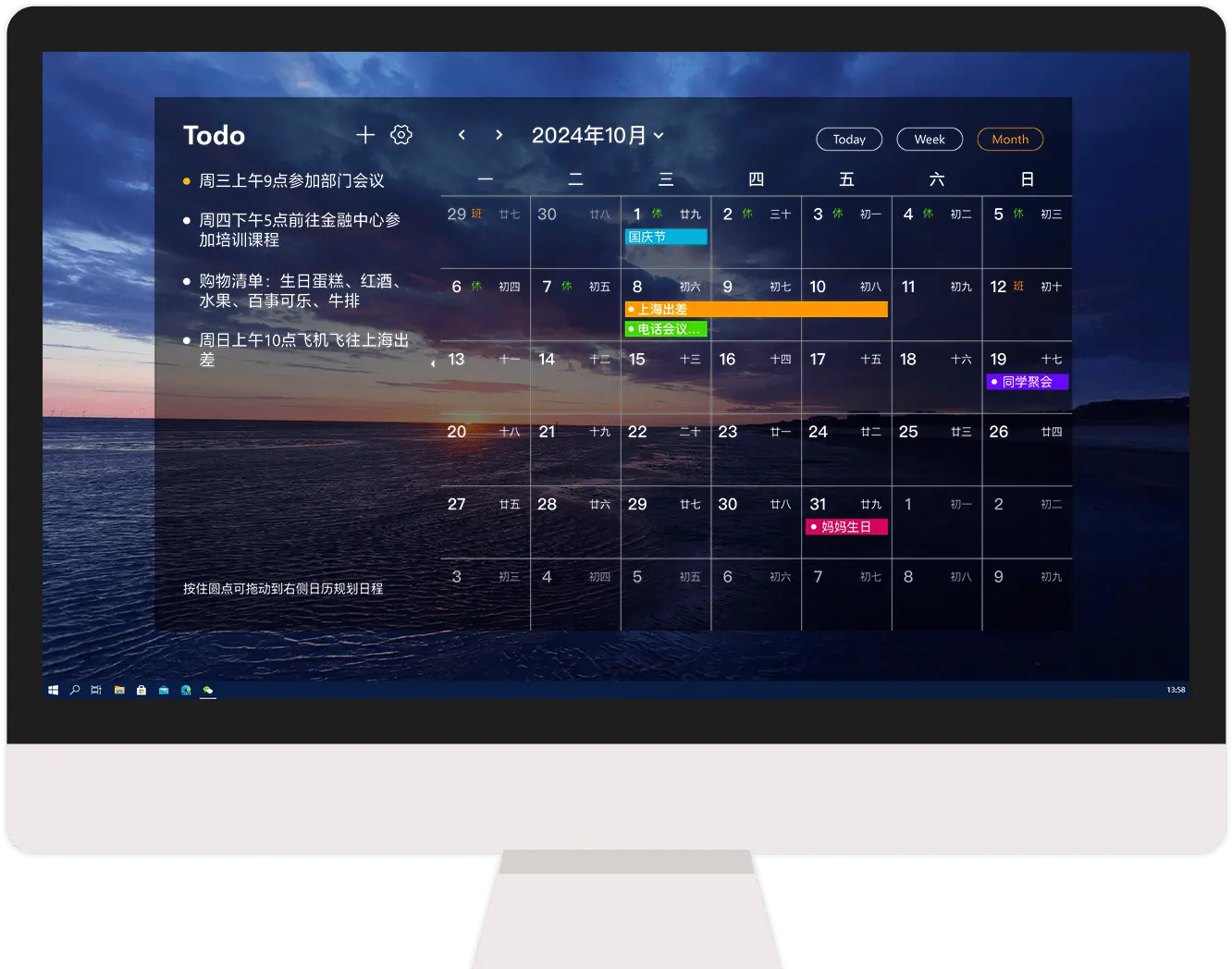
What's even more commendable is the fact that there is a desktop calendar tool that is so well designed that it will fit seamlessly into your kind of workflow. To imagine, you can drag the ideas recorded on the note directly to a certain time period in the calendar to complete the planning of the schedule in an instant; or, when you see an upcoming meeting reminder on the desktop, you can call up the related to-do list and the materials required for preparation by clicking on it. Like this. The low-friction operation method makes planning and managing itself no longer a labor-intensive task, but a natural and smooth habit. What you save is the precious energy and time that is consumed through repeated recall, search, and switching.
This tool brings far more than just recording convenience, it also brings a sense of control back. When you return like this, when all the complicated things are presented in front of you in a clear and coherent manner, you will be able to more calmly and carefully evaluate your priorities, and be more proactive and methodical in allocating your time properly, instead of being in a state of being chased by many tasks. You'll find that you're able to be more focused on the task at hand because your brain knows for sure that so many other things have been safely and reliably "handled over to others." Such a psychological sense of ease and well-organized overall order are precisely the most ideal and suitable environment for efficient work.

Technology is advancing, making that kind of efficiency easily achievable. Take the recent progress in autonomous driving technology, which has sparked significant discussion, as an example. The tools we use every day continue to develop in a direction that is more intelligent and considerate. An excellent desktop schedule management solution is exactly the presentation of this concept of "technology serves people". It does not pursue complex and diverse functions, but focuses on solving the key pain point of "clear planning and efficient execution". With the minimum learning cost, it can maximize your work rhythm and mentality.
Saying goodbye to the hustle and bustle starts with having a clear vision of work. When you take the initiative to control your time, your work will naturally become more rhythmic and more fulfilling. Why not start planning your digital desktop again from today to experience the calmness and efficiency of having everything under control.
Download Now → Unlock Desktop Efficiency Center:

Microsoft Store

Google Play

App Store