
Have you ever had this experience: turning on your computer in the early morning, the screen is covered with file icons, but you can't remember what you actually need to do today? Click on the schedule on your phone and scroll through many pages to find the time for today's meeting. In the fast-paced work process, these subtle delays and forgetfulness are quietly consuming our concentration and efficiency.
This feeling is extremely common, just as we sometimes envy those who are organized. The good news is that there is an extremely easy way to change this situation, which is to set up a desktop calendar for your Windows 10 computer. Imagine that as soon as you turn on the machine, all dates, to-do items, and meeting arrangements are clearly "fixed" on the desktop. There is no need to switch windows frequently, and work will naturally become much smoother.
Why do you need a desktop calendar?
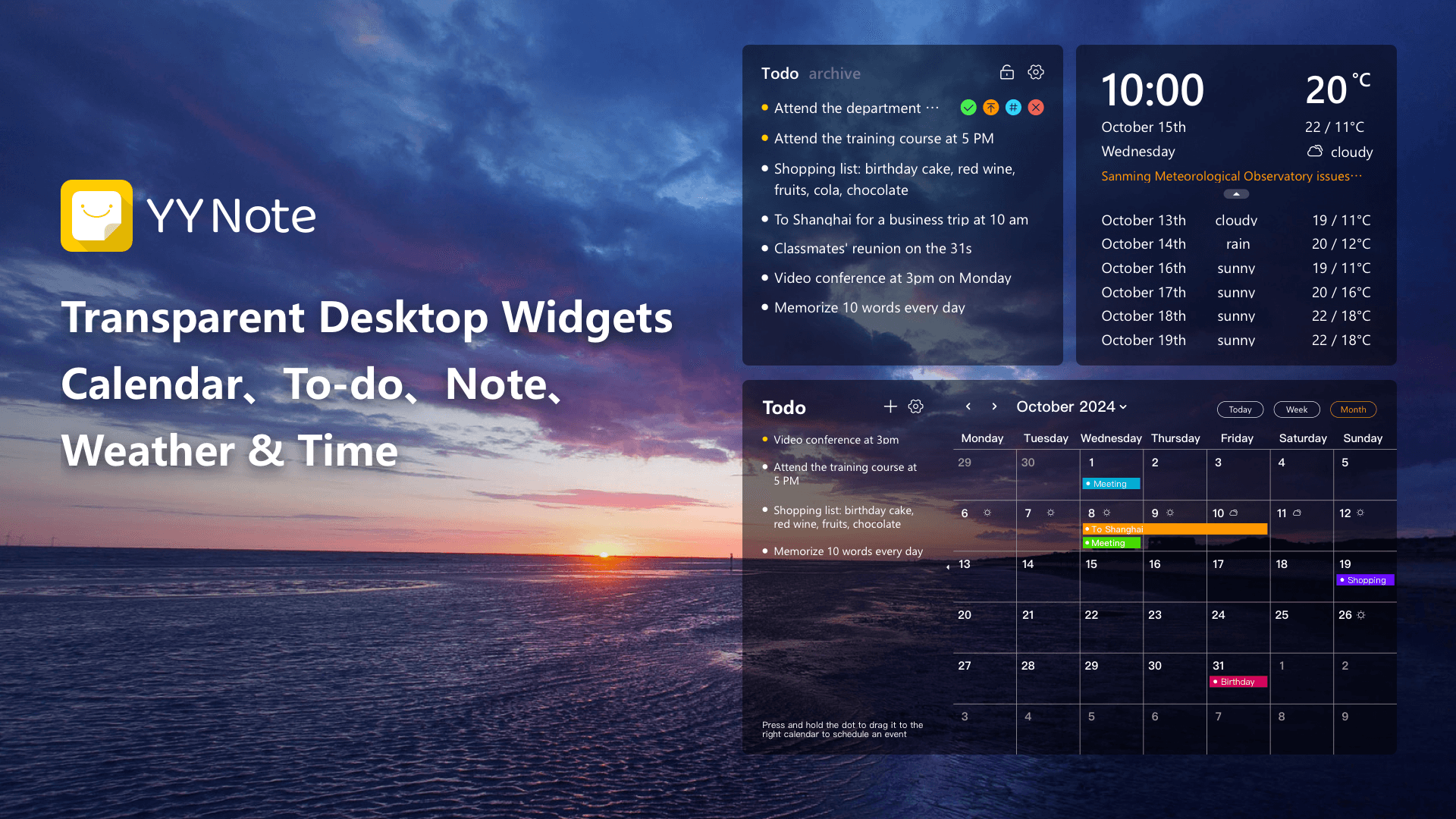
The core value of desktop calendar is visual management, which can present abstract time arrangements in front of you in a concrete way. When it comes to work, it's more than just checking the date, it's a sense of control. You can directly mark project deadlines, meeting times, and even some sudden ideas on your calendar so that they can be seen at any time, thereby reducing the possibility of forgetting.
Combining to-do items with the calendar view can help you easily plan tasks by day. Many excellent desktop calendar tools have this function. You can drag and drop to-do items directly into the exact date grid, breaking down a complicated and huge task into each day for execution, so that "procrastination" has no place to hide.
How to choose tools for your Windows 10?
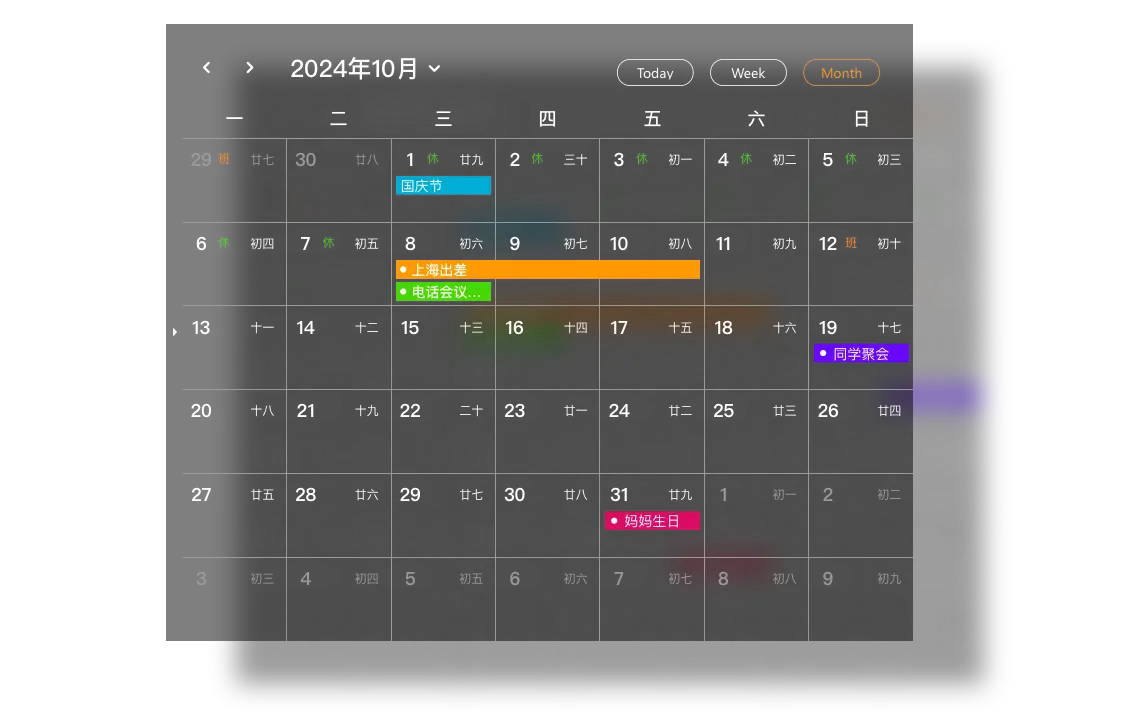
Although Windows 10 does not pre-set a desktop calendar that can be clearly seen, there are many excellent third-party software on the market that can help you achieve it. The common feature of them is that they treat the calendar as a calendar. Lightweight floating windows or transparent plug-ins can be "embedded" directly into your desktop wallpaper, which is both beautiful and does not block other work. When making your choice, you can focus on the following points:
The basic functions must be complete to ensure that the software can provide clear daily views, weekly views, and monthly views, and can easily add and edit schedules. Some tools support the use of natural language to quickly create tasks. For example, if you directly enter the content "meeting at 10 o'clock tomorrow morning", it can automatically recognize and set the time.
The reminder method must be reliable. This is the key to preventing loss and forgetting. In addition to the usual pop-up prompts, some software also supports reminders through email or through the notification center. You can choose according to your own work habits.
Data Synchronization and Security If you have the need to work on several different devices, such as a computer at work and a computer at home, make choices that support certain requirements. It would be extremely convenient to sync this tool in the cloud , so if you modify it in one place, it will be updated everywhere. At the same time, you also need to pay attention to whether the software provides local backup or export functions to protect your schedule data.

Advanced selection on demand : Based on your identity and needs, the selection can be more precise:
Working professionals/students : You can choose some tools that can be synchronized with the mainstream office ecosystem (such as Outlook , Google Calendar ) to facilitate the integration of schedules from email or other platforms.
Team collaborator/project manager : If it involves team projects, consider software that supports shared calendars or has a simple collaborative dashboard function, which can greatly reduce communication costs.
When the computer desktop is transformed from a messy pile of files into a clear and controllable work command center, it is not just efficiency that changes. You no longer need to worry about remembering and searching for how to set up a desktop calendar in Windows 10. All important information is quietly sitting there, waiting for you to review. This sense of order of "everything is under control" can greatly reduce the psychological burden, allowing you to focus more on creative work rather than running around in trivial matters.
Download Now → Unlock Desktop Efficiency Center:

Microsoft Store

Google Play

App Store