
Do you often do this: when you are focusing on work, you forget about time, and it is not until you look up that you realize that you have missed a key meeting? Or maybe you have already recorded your schedule on your phone, but you always can’t remember to check it because you need to switch between various apps frequently?
These embarrassments and omissions often stem from our lack of a "time beacon" that can always be present in front of us. Although the calendar function carried by the computer itself is good, it is too hidden to remind you when you need it most.
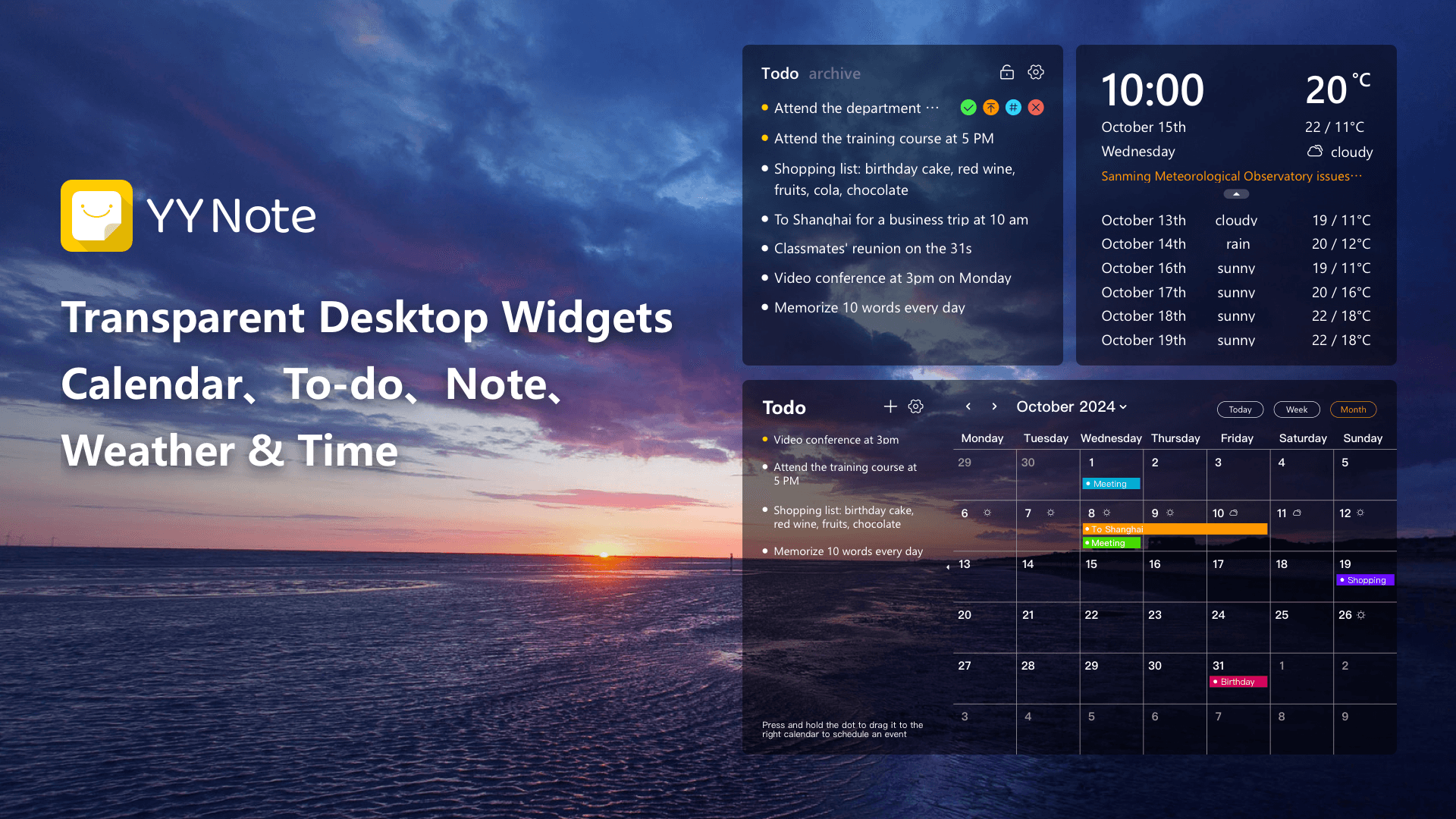
In fact, to make the calendar stay on the desktop for a long time and then serve as the control center of your work and life, you only need to use a simple method.
Say goodbye to “hidden” calendars and make your schedule clear at a glance
The ideal desktop calendar is like a silent assistant that doesn't hinder you from viewing carefully selected wallpapers and clearly displays key information.
You can directly get a transparent calendar plug-in that can be perfectly integrated into various styles of desktop backgrounds. Whether it is a simple solid color desktop background or a gorgeous landscape desktop background, it can coexist harmoniously with it without destroying the overall aesthetics of the desktop. More importantly, it will automatically appear after booting the computer, eliminating the need for you to manually open a program every time. In this way, important dates and arrangements will be clear at a glance.
Not only how to display the computer calendar on the desktop by looking at the date, it is also the core of efficient planning
An excellent desktop calendar is by no means simply used to display “what day is today?” It has the ability to help you integrate those scattered and distributed schedules under the same perspective.
For example, you can see important holiday marks directly in the calendar view to plan holidays in advance. What's more practical is that it can synchronize your schedule from other platforms. Whether it is meetings in corporate WeChat, DingTalk, or Feishu used for work, or appointments in personal QQ mailboxes or Microsoft Calendar, all schedules can be gathered in this area of the desktop. You no longer need to switch back and forth between various applications. All to-do items and meeting arrangements are clearly organized, greatly reducing the risk of omissions.
Linked with the to-do list, complete planning by dragging and dropping

Planning a schedule is cumbersome. An efficient tool experience should be intuitive and effortless.
Try to imagine that there is a task in the to-do list next to it. You can use the mouse to directly drag and drop it into a specific date grid in the calendar. In an instant, it becomes the schedule for that day. If the plan changes, you only need to drag and drop to make adjustments. Such a planning method that presents a "what you see is what you get" style can make work arrangement as simple and natural as organizing desktop files. You can also set different color backgrounds for different types of schedules. Whether it is work, study, or life, you can distinguish them at a glance.
When the calendar on your desk truly becomes "alive" and becomes part of your sight, it's not just your habit of checking dates that is changed. It means that you will no longer be in a hurry when you forget a meeting, and you can calmly prepare for the countdown to the important day, and you can also have macro control over your time layout for the next week or even month. This sense of control over time will ultimately lead to a more leisurely work pace and a more orderly life.
Take action now to create a desktop command center with efficient features and intuitive features for yourself. Take a minute to download and try it out, and start a relaxed work mode where your schedule is always in front of you and everything is under control.
Download Now → Unlock Desktop Efficiency Center:

Microsoft Store

Google Play

App Store