
Have you ever encountered such a situation? When you are concentrating on your work, a temporary idea appears in an instant. You tell yourself "I will deal with it later", but in the blink of an eye, you completely forget about it. Or maybe it was the work plan that was listed on Monday, but it wasn’t until the review on Friday that it was discovered that several key tasks were still lying on the list, overwhelmed by all kinds of trivial matters.
Nowadays, in the situation of information overload, this kind of powerless situation with the feeling that "plans cannot keep up with changes, and changes cannot keep up with forgetting" is extremely common. According to psychological research, people's working memory capacity is limited, and unrecorded external information can easily be forgotten, leading to deviations in plan execution. Fortunately, we can use some efficient desktop reminder tools to make the computer our trustworthy "external brain" to help us visualize our ideas and tasks and keep them firmly within sight.
Today, we set out to evaluate several desktop software that can effectively manage to-do lists. This review will focus on its core reminder capabilities, its integration with workflow, and its attention-protecting design, hoping to help you find the one that best suits you.
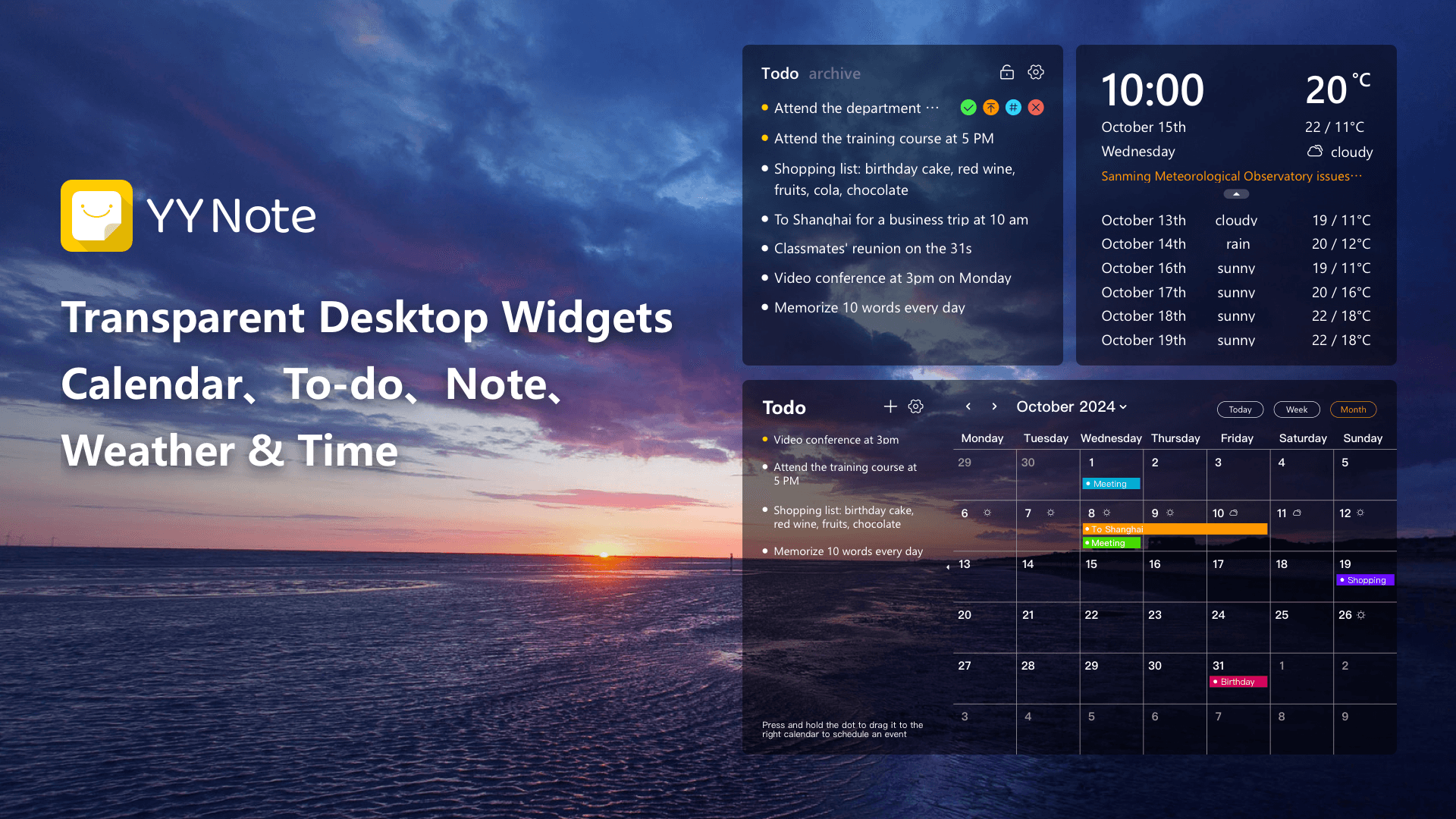
1. Overall score: 9.5/10 —— YYNote (little yellow bar)
If you are looking for a tool that can be fully integrated into the desktop environment and achieve efficient reminders in a "zero-interference" way, this is it. YYNote (little yellow bar) is undoubtedly an outstanding existence at the moment. It is not a separate application that needs to be opened frequently, but a set of transparent plug-ins directly embedded on the desktop.
Its core value lies in the kind of creation that creates a reminder experience that is "always visible, but without any sense of oppression". All to-do items exist in the form of clear lists that are permanently displayed on your desktop wallpaper. Because it has highly adjustable transparency, it can achieve such an effect, allowing you to see the task in an instant without blocking other work windows or ruining the beauty of the desktop. This design cleverly uses the principle of "visual saliency" to continuously provide gentle task prompts without actively interrupting you.
For users with multi-end synchronization needs, its value has become increasingly prominent. Data will be automatically synchronized between Windows, HarmonyOS, iOS and Android. Whether you are planning in front of the computer or temporarily recording on the mobile phone, all to-do items can be gathered in the same desktop list with visual features in real time. What's more worth mentioning is that it can synchronize calendars on office platforms such as WeChat Enterprise, DingTalk, and Feishu, allowing you to manage meetings and schedules from all channels in a unified manner on your desktop, avoiding the trouble of switching back and forth between multiple applications.
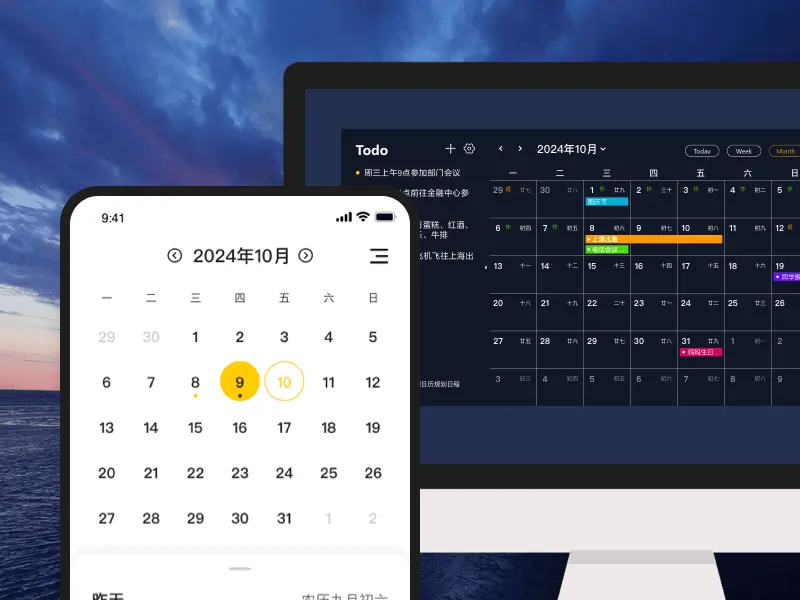
Its "date countdown" and "repeat to-do" functions are very considerate. You can set deadlines for important goals, and the desktop can dynamically display the remaining days, thereby creating a moderate sense of urgency. For fixed matters such as weekly meetings and monthly repayments, you only need to set a repeat rule to automatically generate to-do items, thereby achieving a once-and-for-all effect.
What is the overall rating of TickTick? 2. The overall rating is 8.0/10.
This is a task management application that is praised all over the world. It is comprehensive and powerful. It integrates a series of functional modules such as to-do list, calendar view, and habit tracking, and almost covers all the needs of personal time management.
Its reminder system is quite flexible and can support natural language input. For example, if you say "There will be a meeting at three o'clock tomorrow afternoon", the system will be able to identify the date and time on its own and then set the reminder. At the same time, it provides a variety of reminder methods, including in-app notifications, emails and mobile push notifications, to ensure that important matters are not missed. Its calendar view has the ability to clearly display daily and weekly schedules, and is suitable for users who need to make strict block planning of time.
However, some of its advanced features can only be used by subscribing members. For those users who pursue a minimalist desktop integration experience, it is more like an "efficiency hub" that needs to be actively opened and managed, rather than an "environmental" tool that is completely passive and can be seamlessly integrated into the work background like YYNote.
Third, the overall score is seven points and five points divided by ten. This is Microsoft To Do.
If you are an in-depth user of the Microsoft ecosystem, then Microsoft To-Do is a seamless option. It has good integration with the Windows system, has good integration with the Outlook calendar, and also has good integration performance with the Office suite. For example, you can directly mark an Outlook email as a task, and then it will automatically appear in the to-do list.
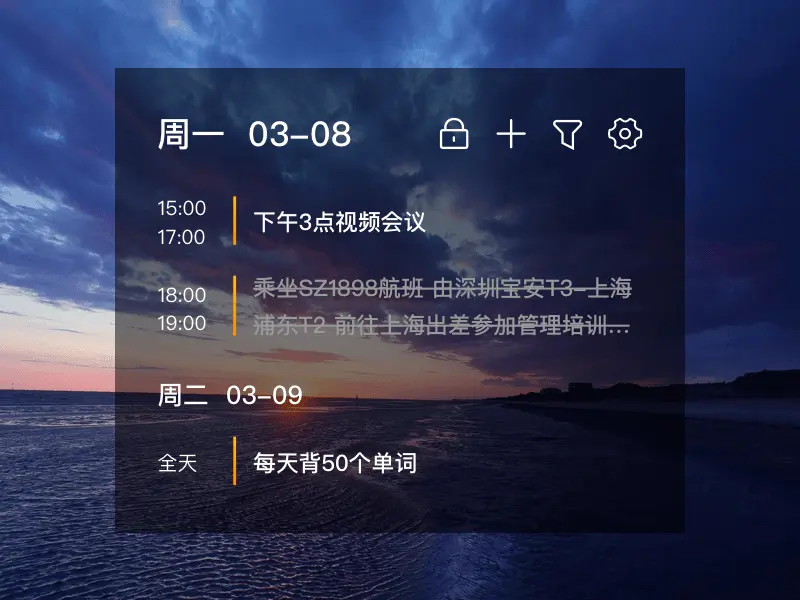
The application itself is designed to be concise, with the ability to create multiple lists, the ability to set task steps, and the ability to customize themes. Its "My Day" function helps you select the most critical and prominent tasks of the day from the general list every day, and then focus on execution. Its basic functions are completely free and are sufficient to meet basic list management needs.
It has some limitations. Its desktop side mainly exists in the form of an independent application window and lacks the plug-in form that is deeply embedded in the desktop. Its reminders rely more on system notifications. In terms of "always visualizing" and "scenario-based integration", what software is available on your computer to remind you of what you need to do is not as direct as a dedicated desktop plug-in tool.
Which tool to choose is determined by your core needs. If you're looking for a full-featured productivity system with powerful features and proactive management. Tick List and Microsoft To-Do are solid options.
If what you desire is an easier and more automated management method, if you want tasks to grow on your desktop and you can see them clearly at a glance without opening the software, if you want to break down the barriers between devices and software and let to-do items naturally appear wherever you want to use them, then. The concept of "minimum effort, maximum return" represented by YYNote (little yellow bar) may be the answer you are looking for.
What it brings is not just forgetting things, but a return of a sense of control. Turn on the machine, and all the to-do items are clearly displayed. After completing them, click on the tick to archive them. When you have inspiration, you can record it and synchronize it to all devices, making your computer desktop an efficient, orderly, and reassuring starting point for work.
Today, why not spend a minute to download and experience this new feeling of an organized desktop? You can do it. Start using it for free and feel how it can help you take care of everything in the quietest way.
Download Now → Unlock Desktop Efficiency Center:

Microsoft Store

Google Play

App Store