
Do you always create notepad documents one after another on your desktop, just to temporarily record a few sentences? Or, you have set up shortcut notes in various software, but you always feel that they are either unpleasant to look at, or hidden too hidden, and you can never find them when you want to use them?
This little looming annoyance is quietly stealing your ability to focus one by one. His thoughts were interrupted by scattered records one by one, and the desktop was occupied by messy icons and files. What you need is not a special "place" to store text, but a "partner" that can accompany you in your thinking at all times without interfering with your work, that is, a notepad that truly belongs on the desktop. Just today, let’s take a look at where an efficient desktop notepad should be “set”.
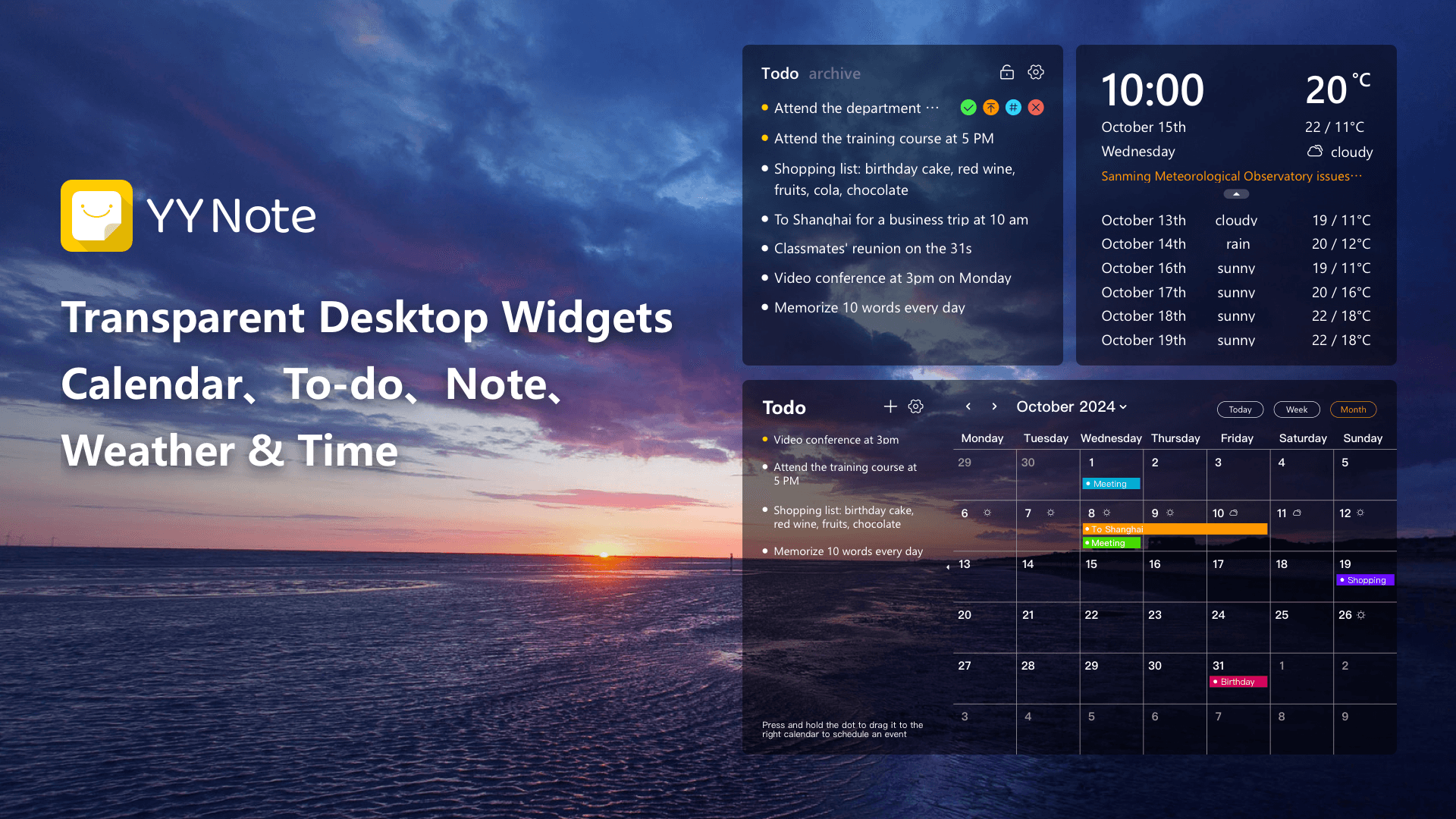
A real desktop notepad, never "hidden" in a menu.
In the past, the usual way of thinking was to go to "Settings" to find the option to open. However, a tool built for efficiency has exactly the opposite concept, and it should be. Set yourself as part of the work background and think about it. When you turn on the computer, the things you need to do, the thoughts that suddenly flash in your mind, and the key points recorded in the meeting, should these be directly reflected in the places in front of you that are very commonly used but will never interfere with your visual focus? Yes, it's yours. It is like a transparent thinking layer above the desktop wallpaper , which fits closely below your work interface. You can see it when you turn on the computer, and you don’t need to search for it.
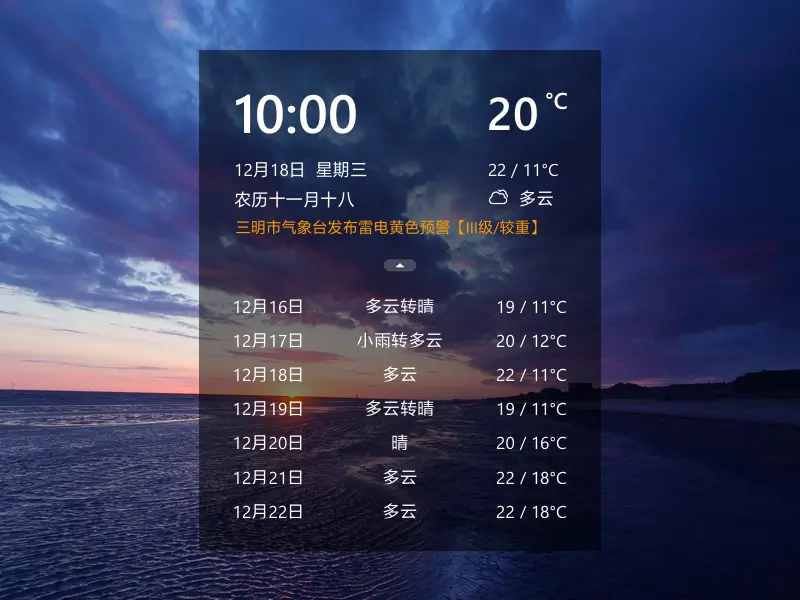
It is not only a "notepad", but also your information center.
Imagine a desktop notepad, ideally as it should be, with key points of “settings” built closely around your workflow. It should have such a function that allows you to easily create a large number of lists, and can use the simple "[tag]" method to distinguish different scene categories such as work, life, inspiration, etc. When you write something like "[Project A] Check the first draft with the team tomorrow afternoon", the system can automatically classify this record according to the established rules, and when you switch to the corresponding tag, it will only display all the information associated with the tag. What this means is that your desktop can have many "set" focused views at the same time, which can be switched with one click, and even if the content is complex, it will not appear cluttered.
More importantly, its "placement" is smart and private.
You don’t need to manually adjust the window, and you don’t have to worry about it blocking important content. There is a desktop plug-in, which is very well designed and allows you to drag freely towards any edge of the screen, and it can. Intelligent Fitting Edge is semi-hidden or fully hidden . When you devote all your attention to your work and are in a full-screen concentration state, it will quietly retreat to the side; when you need to view it, just lightly touch the edge of the mouse or use a shortcut key, and it will immediately appear. This kind of experience has the characteristics of "setting up the desktop notepad and leaving it at once", making recording and viewing extremely smooth and natural, and at the same time, it perfectly protects your screen privacy.
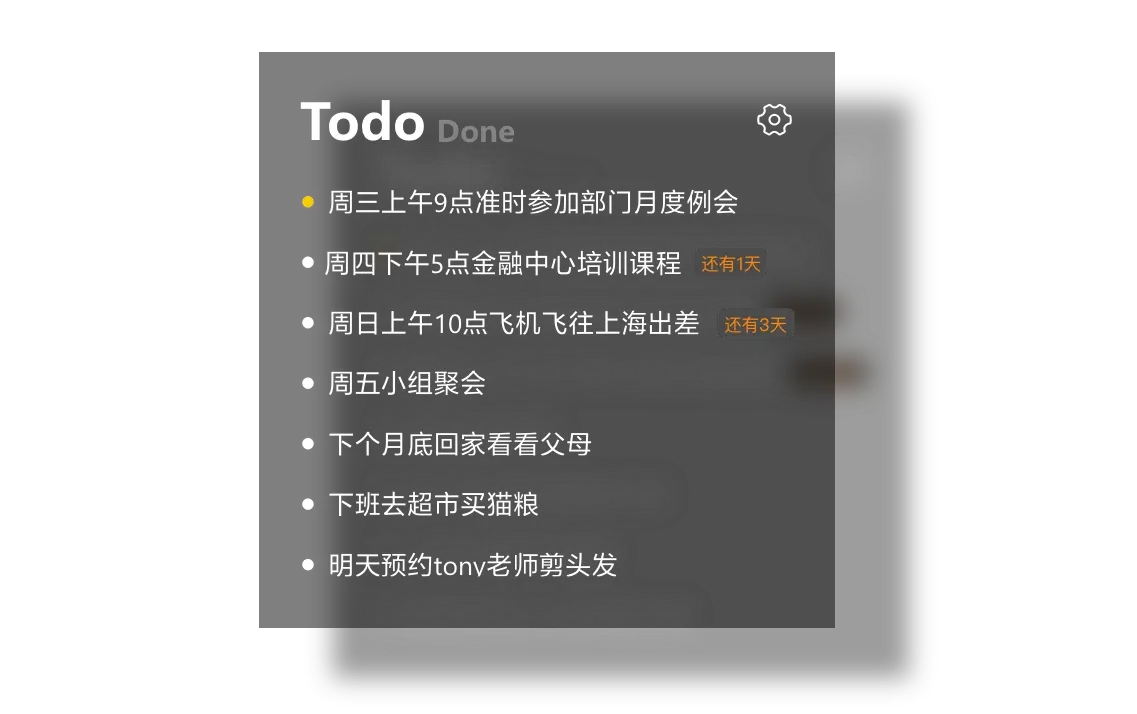
All settings are designed to "forget" the settings themselves.
A desktop notepad has the ultimate goal of making you forget it exists, but it is everywhere. Its font can be adjusted at will, its color can also be adjusted at will, and its transparency can also be adjusted at will, so that it can perfectly blend into any of your exquisite wallpapers. It uses multi-end synchronization to make your shorthand on your mobile phone appear on your computer desktop in the next second. You no longer need to think about "where do I record it", and you no longer need to think about "how do I open it", all settings are reduced to no trace, just to achieve one purpose: to allow you to. Capture and recall the most important information with minimal operating costs .
When you get used to this way of working, you will find that the desktop is no longer a place where files are piled up, but has transformed into a dynamic and intelligent place. Working cockpit . Your clearly visible to-do list, temporary inspiration saved instantly, and important schedule at a glance. Everything is in an orderly state, and the starting point of all this is probably just that you downloaded and tried to use a tool that fits the concept. Instead of searching for setting options in numerous software, it is better to try a more intuitive and easier work philosophy now. Make your desktop actually work for you.
Download Now → Unlock Desktop Efficiency Center:

Microsoft Store

Google Play

App Store