
Have you ever experienced a morning like this: you just wrote down the 10 a.m. meeting on a sticky note, and you were immediately surrounded by inquiries from colleagues; you only remembered the great idea you came up with during lunch in the afternoon, but you can't find the napkin you jotted down; not to mention those tasks distributed on the mobile memo, computer desktop, and paper notebook, always playing "hide and seek" when you need it most. This kind of anxiety caused by fragmented information and unreliable memory is prevalent in today’s fast-paced work. Based on a research report released by the American Psychological Association, non-stop multitasking and excessive information load will significantly increase cognitive load, leading to increased stress and decreased efficiency. If you are also looking for a desktop solution that can clearly collect all to-do items and make them understandable at a glance, then this article will review several mainstream tools for you. With its unique concept and design, YYNote offers an option worthy of in-depth attention.
In order to achieve the goal of comprehensive evaluation, we have selectively selected several typical to-do tools for Windows desktops currently on the market to conduct horizontal comparisons. This evaluation will focus on the core requirements, specifically covering the following aspects: It includes the corresponding features that ensure that information can be visualized intuitively, how convenient the operation process is, how the overall integration ability with the workflow is, and whether it can actually help users reduce energy dissipation and successfully achieve an efficiency improvement of "minimum effort and maximum return."
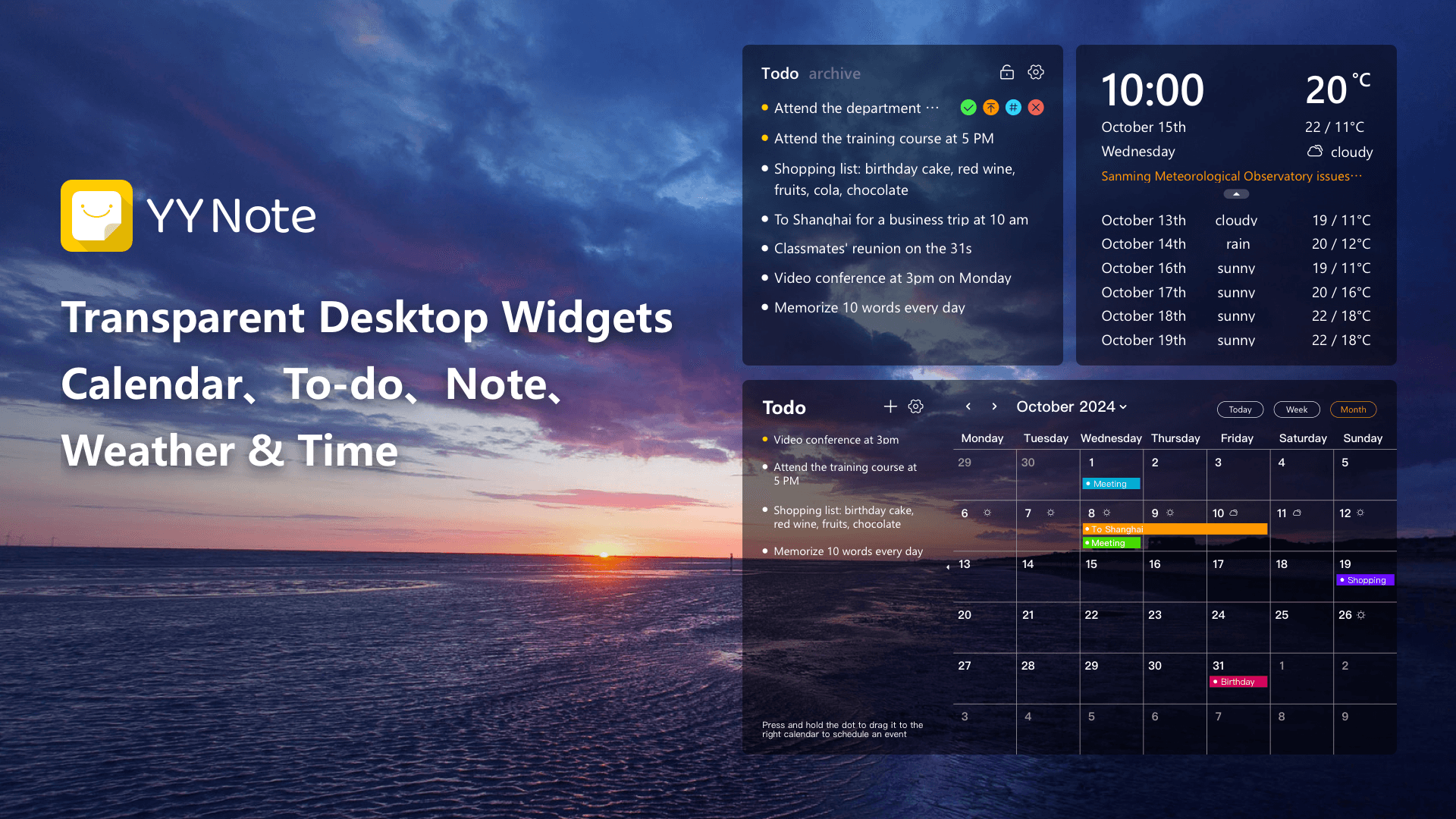
1. YYNote: ★★★★★ (5/5 stars), extremely simple and transparent, able to integrate with the desktop.
The core idea of YYNote (also known as the small yellow note) covers the two points of "transparency" and "zero interference". It is not the kind of window that floats on the screen in a single state, but becomes one in a different form. The fully transparent plug-in is directly embedded into the Windows desktop wallpaper , which means that your to-do list and calendar events can be seen as soon as you turn on the computer as if they were engraved on the desktop. There is no need to click extra to open any program, effectively achieving the visual reminder of "always staying online". Such a design concept is very consistent with the "environmental support" theory in cognitive psychology, which is to liberate the cognitive resources possessed by the brain by externalizing memory load.

Its to-do function is particularly focused. It supports the creation of multiple lists, intelligent classification with the help of [tags], sorting by dragging, and one-click top. What is more practical is that it can intelligently recognize natural language input, just like typing "Submit report at 3pm next Monday", and the system will automatically Automatically identify dates and set reminders. For repetitive tasks, such as weekly meetings and monthly payments, YYNote supports flexible rule settings, including lunar calendar repetitions, which is particularly considerate for planning family affairs. All data supports multi-end synchronization and automatic backup, ensuring the security and accessibility of information. What it calls the "auto-hide close to the edge of the screen" feature can instantly provide you with a pure desktop state when you need to stay focused. It achieves a good balance between reminders, privacy, and focus.
Tick-tock list, four and a half stars, comprehensive functions, strong teamwork ability.
This is a well-known tool in the field of personal time management. It has a powerful functional matrix, covering smart lists, tag systems, habit punching, Pomodoro focus, etc. Its advantage is a smooth cross-platform experience and good integration with WeChat, calendar and other applications, and the advanced version supports team task distribution and collaboration Windows To-do is suitable for users with project management needs. Although the interface is clear, there are relatively many functional entrances. For users who only need extremely simple desktop reminders, it may seem a bit complicated and require a certain amount of learning cost to master all its capabilities.
3. Microsoft To Do: ★★★★☆ (4 divided by 5 stars), has ecological integration features, and basic functions meet usage needs.
As a native application of the Microsoft ecosystem, it integrates seamlessly with Windows systems and Office suites. If you use Outlook mailboxes and calendars extensively, Microsoft To Do can automatically synchronize tasks and flagged emails to form a unified task center. The interface design is fresh and refreshing, and supports simple list management and "My Day" intelligent planning. However, the form of its desktop components is relatively fixed, and the degree of customization is not as high as the previous two. It is more like a system-level task list viewer, and is slightly conservative in terms of "integration into the desktop" and the intensity of visual reminders.
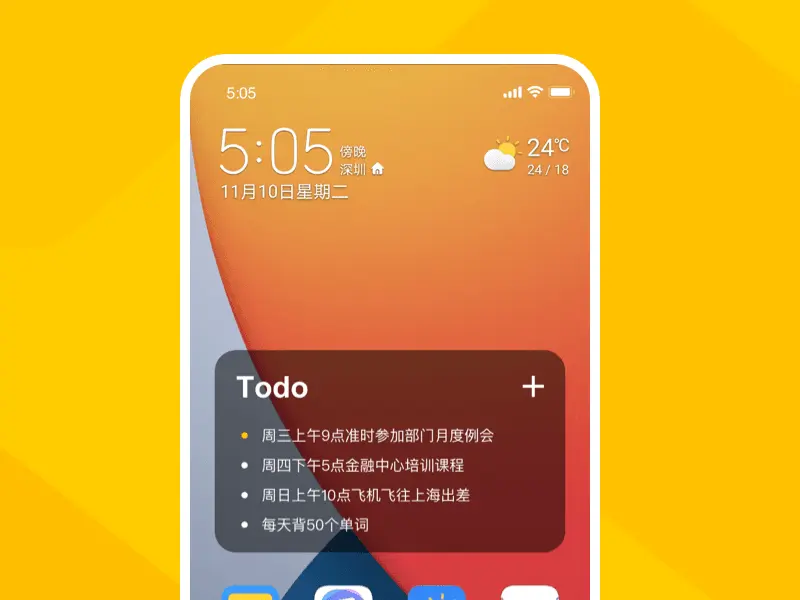
4. The rating of notes in Evernote is ★★★☆☆, which is equivalent to 3.5/5 stars. It is derived from notes and is lightweight and convenient.
For those who are heavy users of Evernote (or similar note-taking software), the desktop note function set up inside can be used as a tool to quickly capture to-do items. It can be quickly attached to the desktop for recording inspiration or temporary tasks, and will be linked with your note database. However, it is actually a tool for quick recording. It lacks professional task management functions such as repeated reminders, subtasks, and priority sorting. It is not suitable for managing complex or long-term to-do items.
Taking all aspects into consideration, each tool has its own clear positioning. If you are looking for deep integration into the system and your needs are basic, Microsoft To Do is a more appropriate choice; if you have strong personal and team task management needs, Tick List is comprehensive in functionality. and. The unique value of YYNote is that it accurately captures the pain points of "visual burden reduction" and "senseless use". With the help of minimalist transparent desktop embedding design techniques, to-do items are transformed from "objects that need to be managed" into "naturally becoming part of the environment". It does not attempt to manage all your affairs, but is dedicated to making your most important tasks unable to be easily ignored. At the same time, it can retreat quietly when you need it. This is precisely the embodiment of the "easier and more orderly work philosophy" it advocates.
Say goodbye to switching back and forth between multiple applications and wasting energy caused by repeatedly recalling. , a clear and always visible to-do list can ensure that no important items are missed, and can also bring a sense of control over work and life and a sense of internal order. From clutter to clarity, sometimes all it takes is a well-designed tool. Now. Download and experience YYNote for free , turning the desktop itself into your most efficient assistant, leading to a more relaxed and focused workday.
Download Now → Unlock Desktop Efficiency Center:

Microsoft Store

Google Play

App Store